

Daily Dose Of Jazz…
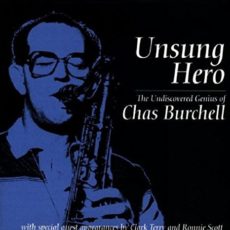
Chas Burchell was born Charles Burchell on October 30, 1925 in London, England. Originally a George Formby fan, he began learning the ukelele and then guitar, before hearing an Artie Shaw record that inspired him to take up the clarinet and play jazz.
Switching to alto saxophone, he started his own quintet in 1943. He tried the tenor saxophone before being drafted into the Royal Air Force, and then was transferred to the army in 1944. During the next three years he played in Greece with the British Divisional Band and following his discharge in 1947, worked in London with the Toni Antone Big Band.
By 1949 he gave up full-time musicianship and worked in a factory so that he would not have to perform music he did not like in order to make a living. A disciple of Lennie Tristano and a devoted admirer of Warne Marsh, Burchell continued to play part-time, leading his own quintet for more than 20 years, guesting with distinguished visitors such as Clark Terry, Emily Remler and Nathan Davis.
He recorded for Peter Ind’s Wave label and played with Ind in the group that backed Lennie Tristano’s only UK concert at Harrogate in 1968. Tenor saxophonist Chas Burchell, a supple, lyrical musician whose unpredictable twists and turns of phrase recall the style of his idol Marsh, died of a heart attack on June 3, 1986.

Put A Dose In Your Pocket

#preserving genius
More Posts: saxophone
Daily Dose Of Jazz…
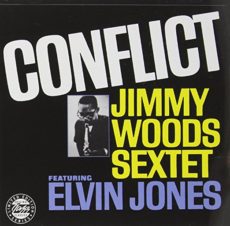
Jimmy Woods was born on October 29, 1934 in St. Louis, Missouri. Woods began playing saxophone with Homer Carter’s R&B band in 1951, then served in the Air Force from 1952 to 1956. After being discharged honorably he played with Roy Milton and was with Horace Tapscott and Joe Gordon in the start of the Sixties. Following this he played and recorded two albums with Gerald Wilson and two with Chico Hamilton to the middle of the decade.
in the early 1960s Woods recorded two albums, Awakening and Conflict, both released on Contemporary Records. The second of these albums, Conflict, featured Elvin Jones, Harold Land, Carmell Jones, Andrew Hill, and George Tucker. During the decade he also performed and recorded with Teddy Edwards and Joe Gordon
Since the end of the Sixties not much has been heard from jazz alto saxophonist Jimmy Woods.
Sponsored By

Double Impact Fitness
More Posts: saxophone
Daily Dose Of Jazz…
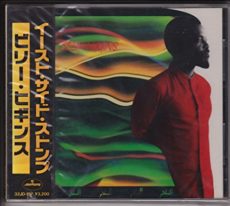
Billy Higgins was born on October 11, 1936 in Los Angeles, California. A jazz drummer who mainly played free jazz, he played on Ornette Coleman’s first records, beginning in 1958 and then freelanced extensively with hard bop and post-bop players. He was one of the house drummers for Blue Note Records and played on dozens of Blue Note albums of the 1960s. On a whole, he played on over 700 recordings, including recordings of rock and funk, and appeared as a jazz drummer in the 2001 movie Southlander.
Tipping his hat into the educator ring, in 1989 Higgins cofounded a cultural center, The World Stage, in Los Angeles to encourage and promote younger jazz musicians. The center provides workshops in performance and writing, as well as concerts and recordings. He also taught in the jazz studies program at the University of California, Los Angeles. Drummer Billy Higgins passed away of kidney and liver failure on May 3, 2001 at age 64 in Inglewood, California.
He left a legacy of music, having recorded eight albums as a leader and his sideman duties had him performing and recording with a who’s who list of musicians including but not limited to Gene Ammons, Robert Stewart, Chris Anderson, Gary Bartz, Paul Bley, Sandy Bull, Jaki Byard, Donald Byrd, Joe Castro, Don Cherry, Sonny Clark, George Coleman, John Coltrane, Bill Cosby, Stanley Cowell, Ray Drummond, Teddy Edwards, Booker Ervin, Art Farmer, Curtis Fuller, Stan Getz, Dexter Gordon, Grant Green, Charlie Haden, Slide Hampton, Herbie Hancock, Barry Harris, Eddie Harris, Jimmy Heath, Joe Henderson, Andrew Hill, Richard “Groove” Holmes, Paul Horn, Freddie Hubbard, Bobby Hutcherson, J. J. Johnson, Hank Jones, Dave Holland, Sam Jones, Clifford Jordan, Fred Katz, Steve Lacy, Charles Lloyd, Pat Martino, Jackie McLean, Charles McPherson, Pat Metheny, Blue Mitchell, , Red Mitchell, Hank Mobley, Thelonious Monk, Lee Morgan, Bheki Mseleku, David Murray, Horace Parlan, Niels-Henning Orsted Pedersen, Art Pepper, Dave Pike, Jimmy Raney, Sonny Red, Freddie Redd, Joshua Redman, Sonny Rollins, Charlie Rouse, Pharoah Sanders, John Scofield, Shirley Scott, Archie Shepp, Sonny Simmons, Sonny Stitt, Idrees Sulieman, Sun Ra, Cecil Taylor, Bobby Timmons, Mal Waldron, Cedar Walton, Don Wilkerson, David Williams and Jack Wilson, among others.
Sponsored By
Voices From The Community
More Posts: drums
Daily Dose Of Jazz…
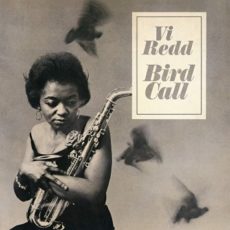
Elvira “Vi” Redd was born September 20, 1928 in Los Angeles, California to New Orleans drummers and Clef Club co-founder Alton Redd. She was deeply influenced during her formative years by her father, who was one of the leading figures on the Central Avenue jazz scene, as well as her other important musical mentor, her paternal great aunt Alma Hightower.
After working for the Board of Education from 1957 to 1960, Redd returned to jazz. She played in Las Vegas, Nevada in 1962, toured with Earl Hines in 1964 and led a group in San Francisco, California in the mid-1960s with her husband, drummer Richie Goldberg. During this time Vi also worked with Max Roach.
She toured as far as Japan, London, that included an unprecedented 10 weeks at Ronnie Scott’s, Sweden, Spain and Paris. In 1969, she settled back in Los Angeles where she played locally while also working as an educator. She recorded albums as a leader for United Artists and Atco and her 1963 album Lady Soul features Bill Perkins, Jennell Hawkins, Barney Kessel, Leroy Vinnegar, Leroy Harrison,Dick Hyman, Paul Griffin, Bucky Pizzarelli, Ben Tucker and Dave Bailey, with liner notes by Leonard Feather. She also performed with Count Basie, Rahsaan Roland Kirk, Linda Hopkins, Marian McPartland, Dizzy Gillespie, Gene Ammons and Dexter Gordon.
A graduate of California State University, Los Angeles, she earned a teaching certificate from University of Southern California. She taught and lectured for many years from the ’70s onward upon returning to Los Angeles. She served on the music advisory panel of the National Endowment for the Arts in the late 1970s. In 1989 she received the Lifetime Achievement Award from the Los Angeles Jazz Society. In 2001 she received the Mary Lou Williams Women in Jazz Award from the Kennedy Center.
Bebop, hard bop and post bop alto saxophonist, vocalist and educator Vi Redd remained active, performing and recording until 2010. Retiring from music she passed away on February 6, 2022 at 93 years old.
Put A Dose In Your Pocket
More Posts: saxophone
Daily Dose Of Jazz…
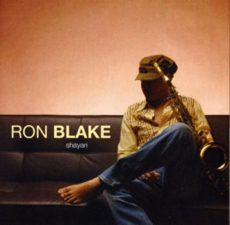
Ron Blake was born on September 7, 1965 in San Juan, Puerto Rico. He was eight when he began studying the guitar, and at the age of ten, he started learning to play the saxophone after being exposed to the record collection of his father, who was seriously into hard bop, soul-jazz and organ combos.His first saxophone was an alto, but eventually, he learned the tenor, soprano, and baritone saxes, as well as the flute.
After leaving home for the Midwest, Ron graduated from the Interlochen Arts Academy in Michigan before moving to the Chicago area and attending Northwestern University in Evanston, Illinois. Though studying classical saxophone with Dr. Frederick Hemke, jazz ultimately won out. By the late Eighties he was playing a lot of bop gigs in Chi-Town, crossing paths with tenor man Von Freeman and pianist Jodie Christian.
Blake moved to Florida in 1991 to accept a teaching position at the University of South Florida. Then it was off to New York City the following year where he spent five years in trumpeter Roy Hargrove’s quintet and seven years in flugelhornist Art Farmer’s group. By the early 2000s, he was leading his own quartet, which included pianist Shedrick Mitchell, bassist Reuben Rogers, and drummer Greg Hutchinson.
Releasing his first album as a leader, Up Front & Personal on the Tahmun label in 2000, was followed in 2003 with a Christian McBride-produced Lest We Forget on the Mack Avenue release that found Ron paying tribute to three soul-jazz greats who had died: saxophonists Grover Washington, Jr. and Stanley Turrentine, and organist Charles Earland.
He is a member of the Saturday Night Live Band, Dion Parson & 21st Century Band and the Grammy-winning Christian McBride Big Band. As an educator he holds a position as professor of Jazz studies at The Juilliard School. His discography has four albums as a leader/co-leader and has more than fifty credits as a sideman for Roy Hargrove, Art Farmer, Reuben Rogers, Joey DeFrancesco, Razor & Tie, Ropeadope, Gerald Wilson, Latin pop group, Yerba Buena, Jack DeJohnette, Michael Cain, Regina Carter, among others.
Saxophonist Ron Blake is also a band leader, composer and music educator who continues to compose, record, and perform.

More Posts: saxophone