

Daily Dose Of Jazz…
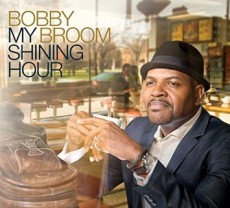
Bobby Broom was born Robert Broom Jr. on January 18, 1961 in New York City and began studying the guitar at age 12, taking lessons in the American Folk music style. A year later, he studied with jazz guitarist Jimmy Carter in Harlem where he took weekly lessons for the next two years.
His interest in jazz began in earnest at age 15 and as a result he began his research, study and practice of the jazz art. Broom attended the Laguardia High School of Performing Arts where he played in the jazz ensemble. He received an award for Outstanding Jazz Improvisation during his senior year.
Broom began his career while still in high school, performing at New York clubs with Charlie Parker’s pianists, Al Haig and Walter Bishop Jr. By 1977 he was playing with Sonny Rollins and Donald Byrd at Carnegie Hall. He went to Berklee School of Music in 1978, then returned to New York the next year in order to pursue his career while attending Long Island University.
At this time he began working in New York as guitarist for Art Blakey and The Jazz Messengers, Dave Grusin, Hugh Masekela and Tom Browne and landed his own recording contract with GRP Records. He earned three DownBeat Critics Poll nods from 2012 to 2014 as one of the world’s foremost jazz guitarists.
He has performed with Max Roach, Stanley Turrentine, Kenny Garrett, Miles Davis, Dr. Lonnie Smith, Charles Earland, Dr. ohn, Ron Carter, Dianne Reeves, Eon Blake, Eric Alexander, Ron Carter and Ramsey Lewis among others. He has recorded as a leader with The Deep Blue Organ Trio, The Bobby Broom Organi-Sation and his trio with Kobie Watkins and Makaya McCraven..
In the mid 1980s Broom relocated and as an educator, Broom began his work in 1982 for Jackie McLean, Director of African American Music at Studies for the Hartt School of Music at the University of Hartford. Over the years he has also been a lecturer/instructor at the American Conservatory of Music, Chicago Musical Colege-Roosevelt University, DePaul University and North Park University. He currently instructs and coaches Chicago area high school students for the Ravinia Festival Organization’s community outreach — Jazz Scholar Program, as well as the Thelonious Monk Institute.

Take A Dose On The Road
More Posts: guitar
Daily Dose Of Jazz…
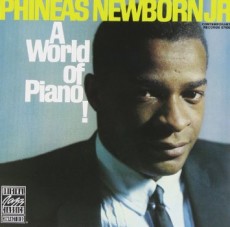
Phineas Newborn, Jr. was born into a musical family on December 14, 1931 in Whiteville, Tennessee. His father Phineas Sr. was a blues musician and his younger brother Calvin, a jazz guitarist. He studied piano as well as trumpet, tenor and baritone saxophone. His principal influences were Art Tatum, Oscar Peterson and Bud Powell.
Newborn first played in an R&B band led by his father on drums, his brother Calvin on guitar, bassist Tuff Green, Ben Branch and Wilie Mitchell before moving on to work with Lionel Hampton, Charles Mingus and others. From 1947 to ’51 they recorded B.B. King’s first recording, toured with Jackie Brenston, recorded Sam Phillips Roclet 88 which became the first #1 record for Chess Records.
His earliest Fifties recordings for Sun Records with blues harmonica player Big Walter Horton, We Three with drummer Roy Haynes and bassist Paul Chambers, and his debut as a solo artist with Phineas’ Rainbow for RCA Victor. By 1956, Phineas was in New York City performing in trio and quartet form with Oscar Pettiford, Kenny Clarke, George Joyner and Philly Joe Jones. He created enough interest internationally to work as a solo pianist in Stockholm and Rome towards the ned of the decade.
In 1960, the 29-year-old Newborn replaced Thelonious Monk and performed It’s Alright with Me on the ABC-TV series, Music for a Spring Night. A move to Los Angeles, California saw him recording a sequence of piano trio albums for the Contemporary label, however, some critics found his playing style rather facile. He developed emotional problems as a result an during certain periods pent time at Camarillo State Mental Hospital. He also suffered a hand injury which hindered his playing.
Newborn’s later career was intermittent due to ongoing health problems. During the mid-1960s to mid-1970s Newborn faded from view, underappreciated and under-recorded. He made a partial comeback in the late 1970s and early ‘80s, although this return apparently failed to benefit his financial situation.
Pianist Phineas Newborn, Jr. recorded twenty-three albums as a leader and another seven as a sideman before he passed away on May 26, 1989 after the discovery of a growth on his lungs. He is buried in Memphis National Cemetery. It is said that his financial and medical plight spurred the founding of the Jazz Foundation of America in 1989.
Dose A Day – Blues Away
More Posts: piano
Daily Dose Of Jazz…
Art Davis was born in Harrisburg, Pennsylvania on December 5, 1934 where he began studying the piano at the age of five, switched to tuba, and finally settled on the bass while attending high school. He studied at Juilliard and the Manhattan School of Music, but graduated from Hunter College.
Davis earned a Ph.D in clinical psychology from New York University in 1982 and four years later he moved to Southern California, where he balanced his teaching as a professor at Orange Coast College and practicing of psychology with jazz performances.
Art recorded three albums as a leader with Herbie Hancock, Hilton Ruiz, Greg Bandy, John Hicks, Idris Muhammad, Pharoah Sanders, Ravi Coltrane, and Marvin Smith.
As a sideman he performed and recorded with Joe Albany, Gene Ammons, Count Basie, Art Blakey, John Coltrane, Curtis Fuller, Dizzy Gillespie, Eddie Harris, Freddie Hubbard, Elvin Jones, Etta Jones, Clifford Jordan, Roland Kirk, Abbey Lincoln, Booker Little, Lee Morgan, Tisziji Munoz, Dizzy Reece, Max Roach, Lalo Schifrin, Shirley Scott, Clark Terry, McCoy Tyner and Leo Wright.
He also launched a legal case that led to the current system of blind auditions for orchestras. Double bassist Art Davis passed away from a heart attack on July 29, 2007.
Inspire A Young Mind
More Posts: bass

Daily Dose Of Jazz…
Melton S. Mustafa was born on November 23, 1947 in Miami, Florida, the younger brother of Jesse Jones, Jr. He started playing the trumpet in junior high school and as a teenager played in a five-piece R&B/calypso band led by his brother. As a young adult in the Sixties, he studied at Berklee College of Music and Mississippi Valley State College before graduating from Florida A&M with a degree in music education.
During this period he started played behind Sam and Dave, Betty Wright, Lattimore, the Marvelettes and Joe Simon. His love for jazz never waning, his visibility on the Miami jazz scene increased when Melton joined hard bopper multi-instrumentalist Ira Sullivan. By the 80s he was playing with the Duke Ellington Orchestra led by mercer Ellington, Jaco Pastorius, James Williams, Bobby Watson and John Hicks and Mingus Dynasty among others.
Mustafa joined the Count Basie Orchestra in 1984 and stayed for eight years. In 1992 he formed his own big band and a couple years later signed with Contemporary/Fantasy releasing his debut album Boiling Point. He followed up with his sophomore project St. Louis Blues in 1997. Never far from jazz standards and ballads his quintet recorded his latest CD titled The Softer Side, Scenes from Miami Vol. 1 featuring Duffy Jackson on drums, Dennis Marks on bass and Jim Gasior on piano.
He produces his Annual Melton Mustafa Jazz Festival at the university that has welcomed Jon Faddis, Abraham Laboriel, Benny Golson, Dr. Nathan Davis, Dr. Grover Washington Jr., Dr. James Moody, Idris Muhammad, George Cables, Wallace Roney, Patrice Rushen, Geri Allen, Jimmy Owens, Billy Cobham, Herbie Mann, Dr. Billy Taylor, Clark Terry, Curtis Fuller, Nestor Torres, Winard Harper, Najee, Randy Brecker, and others.
As an educator he is the Director of Jazz Studies at Florida Memorial University, teaching Music Theory, Jazz Composition and other jazz related courses. The hard bop, post bop, soul and swing trumpeter, composer, arranger and producer and educator Melton Mustafa continues to perform, record and tour.
Put A Dose In Your Pocket
More Posts: trumpet
Daily Dose Of Jazz…
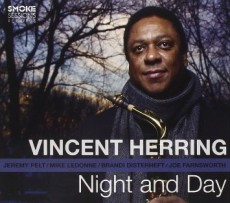
Vincent Herring was born November 19, 1964 in Hopkinsville, Kentucky. His formal musical education began at age 11, when he started playing saxophone in school bands and studying privately at Dean Frederick’s School Of Music in Vallejo, California. At age 16, he entered California State University at Chico on a music scholarship.
A year later, Vincent auditioned for a spot in the United States Military Academy Band Jazz Knights playing lead alto saxophone. He made the move to West Point, served one enlisted tour, which turned out to be a steppingstone to the New York jazz scene.
He first began touring Europe and the United States with Lionel Hampton’s big band. Since that turning point in his career Herring has recorded and performed over 200 sessions as a sideman working with Nat Adderley, Art Blakey and the Jazz Messengers, the Horace Silver Quintet, Jack DeJohnette’s Special Edition, Larry Coryell, Cedar Walton, Freddie Hubbard, Dizzy Gillespie, the Mingus Big Band, Nancy Wilson, the Roy Hargrove Big Band, Arthur Taylor, Dr. Billy Taylor, Carla Bley and the Phil Woods Sax Machine.
Vincent has been a special guest soloist with Wynton Marsalis and Lincoln Center as well as with Jon Faddis and the Carnegie Hall Big Band. As a leader he has recorded fifteen albums and taken bands to Japan and Europe, has appeared in nearly every major jazz festival in the world. Wearing his educator hat he gives clinics throughout Europe and the United States. He is currently performing with the Cannonball Legacy Band, which plays in jazz festivals, jazz clubs and occasionally small towns for benefit concerts.
Dose A Day – Blues Away