

Daily Dose Of Jazz…
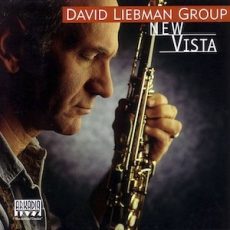
David Liebman was born September 4, 1946 into a Jewish family in Brooklyn, New York. As a child he contracted polio and began classical piano lessons at the age of nine and saxophone by twelve. His interest in jazz came when he saw John Coltrane perform live in New York City clubs aand throughout high school and college, Liebman pursued his jazz interest by studying with Joe Allard, Lennie Tristano, and Charles Lloyd. Upon graduation from New York University he began to seriously devote himself to the full-time pursuit of being a jazz artist.
In the early 1970s, he organized the cooperative, Free Life Communication, which became an integral part of the New York loft jazz scene. He landed a place with Elvin Jones’ band then an apprenticeship with Miles Davis from 1970 to 1974. Liebman explored his own music with the groups Open Sky Trio and Lookout Farm.In 1977 he toured the world with pianist Chick Corea, followed by his own quintet over three years.
David has worked with George Mraz, Al Foster, Ron McClure and Billy Hart, Vic Juris, Tony Marino, Bobby Avey, Matt Vashlishan and Alex Ritz, Joachim Kühn, Daniel Humair, Paolo Fresu, Jon Christensen, Bobo Stenson among others. He played with several European orchestras, and his artistic output is straight-ahead classic jazz, chamber music, fusion and avant garde.
As an educator he has published instructional DVDs, has taught at universities and clinics, and has regularly received grantees to study with him funded by the NEA, the Canadian Arts Council, as well as Arts Councils of numerous European countries. In 1989, he was the artistic director of the International Association of Schools of Jazz.
Saxophonist, flautist and jazz educator David Liebman, who received a NEA Jazz Masters lifetime achievement award, continues to perform and record.

More Posts: bandleader,educator,flute,history,instrumental,jazz,music,saxophone
Daily Dose Of Jazz…
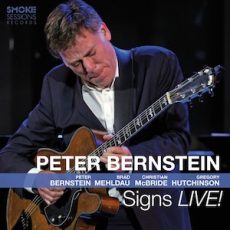
Peter Andrew Bernstein was born on September 3, 1967 in New York City, He began playing piano when he was eight but switched to guitar when he was thirteen, learning the instrument primarily by ear. He studied jazz at Rutgers University with Ted Dunbar, and Kenny Barron.
While a student at the New School in New York City, he met guitarist Jim Hall, who offered him a job performing at the JVC Jazz Festival in 1990. He then appeared on albums with Jesse Davis, Lou Donaldson, Larry Goldings, Michael Hashim, Geoff Keezer, and Melvin Rhyne. He released his first album as a leader with pianist Brad Mehldau.
He has worked with Jimmy Cobb, Tom Harrell, Diana Krall, Lee Konitz, Eric Alexander, Joshua Redman, Dr. Lonnie Smith, and Walt Weiskopf. In 2008, Bernstein became part of The Blue Note 7, a septet formed that year in honor of the 70th anniversary of Blue Note Records. The group recorded the album Mosaic.
Guitarist Peter Bernstein continues to perform, record and tour.
More Posts: bandleader,guitar,history,instrumental,jazz,music
Daily Dose Of Jazz…
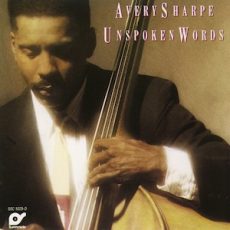
Avery George Sharpe was born on August 23, 1954 in Valdosta, Georgia. His first instrument was the piano, which he started playing at eight years old. His mother was a pianist and church choir director and gave him lessons. In his youth he studied the accordion, electric bass, then double bass at the University of Massachusetts, Amherst. He studied double bass with Reggie Workman, and also studied with Max Roach, Archie Shepp, Horace Boyer and Fred Tillis.
He came to prominence under the tutelage of Archie Shepp and Art Blakey, played as a sideman with Yusef Lateef, Ricky Ford, and Joe Ford, among others. As an educator he is Artist Associate and Jazz Coach at Williams College. In addition he serves as Faculty Advisor for the Williams Gospel Choir, and has an affiliation with the Africana Studies department.
In 2004, he wrote a musical portrait for the stage for Chamber Music, and was featured with Jasmine Guy in the stage production of Raisin’ Cane. His composition January in Brazil is on McCoy Tyner’s Grammy winning big band album Journey.
Double and electric bassist, composer, educator and founder of the artist-owned record label, JKNM Records Avery Sharpe, who has released 14 albums as a leader and 40 as a sideman, continues to utilize all of his talents.

More Posts: bandleader,bass,composer,educator,history,instrumental,jazz,music
Daily Dose Of Jazz…
Adrian Tilbrook was born on July 20, 1948 in Hartlepool, Co. Durham, England. The son of a tenor saxophone/clarinet player, he studied drums for two years with Max Abrams. In 1974 he replaced Tony Hicks in the blues-influenced rock trio Back Door and toured extensively in Germany and the UK in the 70s with British blues giant Alexis Korner.
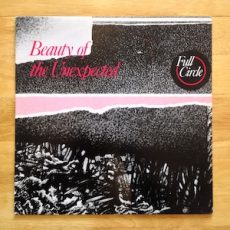
Tilbrook formed Full Circle with trombonist Rick Taylor in 1984 and ventured into jazz. Throughout his freelance career, played with many American musicians, including Eddie ‘Lockjaw’ Davis, Al Grey, James Moody, Jimmy Witherspoon and Al Casey, as well as British artists such as Ian Carr, Allan Holdsworth, Don Weller and Stan Tracey.
A powerful and tasteful technician, he has been influenced by Elvin Jones and Billy Higgins. Drummer Adrian Tilbrook, who has taught percussion for many years and since 1986 has worked with Northern Arts/Yorkshire Arts as Jazz Development Officer based at Jazz Action in Darlington, continues to perform and record.

More Posts: bandleader,drums,educator,history,instrumental,jazz,music
Daily Dose Of Jazz…
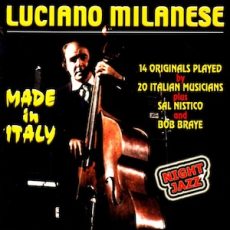
Luciano Milanese was born on Juy 15, 1950 in Genoa, Italy. Little is known about his family life during his early years, however, he learned to play the bass during his formative years. Over the course of his continual career he went on to play in Italy with numerous American jazz musicians including Harry “Sweets” Edison, Art Farmer, Chet Baker,Eddie “Lockjaw” Davis, Johnny Griffin, Sal Nistico, James Moody, George Coleman, Steve Grossman, Slide Hampton, Ray Bryant, Kenny Drew, Walter Bishop, Barney Kessel, Joe Pass, Louis Hayes, Alvin Queen, and Bobby Durham, to name a few.
Bassist Luciano Milanese currently continues to perform and record with important Italian musicians like Gianni Basso, Andrea Pozza, Dado Moroni, Tullio De Piscopo.

More Posts: bandleader,bass,history,instrumental,jazz,music