

Daily Dose Of Jazz…
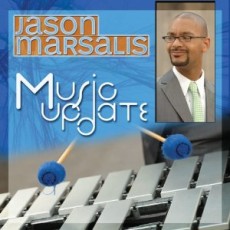
Jason Marsalis was born on March 4, 1977 in New Orleans, Louisiana and is the youngest son of pianist Ellis Marsalis. Inheriting the virtuosity and compositional skills associated with the Marsalis family, Jason developed a distinctive, polyrhythmic drumming style. His first professional gig was with his father at the age of twelve, he studied classical percussion at Loyola University in New Orleans, and has worked as a sideman with straight-ahead combos, funk fusion bands, with Casa Samba, a Brazilian percussion ensemble and even a Celtic group.
Jason introduced percussionist Bill Summers to trumpeter Irvin Mayfield and together they co-founded the wildly successful Los Hombres Calientes. Then, at the height of that band’s popularity he left to join up with acclaimed pianist Marcus Roberts.
Most recently, Jason has been playing vibraphone, releasing his first album as a leader on vibes in 2009 titled “Music Update”. Earning 4.5 out of 5 stars in Downbeat Magazine, it showcases Jason playing the vibes with his working quartet as well as several over-dubbed drum ensembles titled the “Disciplines”.
Jason also continues to work as a sideman with among others Marcus Roberts, Ellis and Delfeayo Marsalis, John Ellis, Dr. Michael White and Shannon Powell. Along with his father and brothers, he is a recipient of the 2011 NEA Jazz Masters Award and is featured in the non-fiction film on New Orleans jazz culture, “Tradition Is A Temple”.
More Posts: drums,vibraphone
Daily Dose Of Jazz…
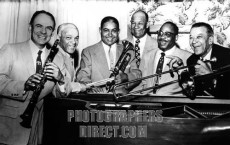
Wallace Bishop was born February 17, 1906 in Chicago, Illinois and started on drums as a teenager, studying under Jimmy Bertrand. His first professional gig was with Art Sims and his Creole Roof Orchestra in Milwaukee in 1926. Around this time he also played with Jelly Roll Morton, Bernie Young, Hughie Swift, Richard M. Jones and Tommy Dorsey.
Often addressed as “Bish”, from 1928 to 1930 he played with Erskine Tate followed with the Earl Hines Orchestra from 1931-1937. By the 1940s he was playing with Jimmie Noone, Coleman Hawkins, Don Redman, Phil Moore, Foots Thomas, John Kirby and Sy Oliver among others.
While touring Europe with Buck Clayton in 1949, Wallace elected to remain there, and found work both with noted European jazz musicians and with touring or expatriate Americans, including Bill Coleman, Don Byas, Ben Webster, Kid Ory, Milt Buckner, Buddy Tate and T-Bone Walker. Bishop recorded only two pieces as a bandleader in 1950, with a trio, but he continued to record regularly into the 1970s.
Wallace Bishop, a subtle and supportive jazz drummer who was one of the finest drummers of the swing era, passed away on May 2, 1986 in Hilversum, Holland.
Daily Dose Of Jazz…
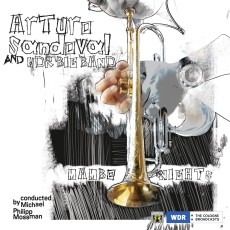
Arturo Sandoval was born in Artemisa, Cuba on November 6, 1949 and began to play music at age 12 in the village band. After playing many instruments, he fell in love with the trumpet. In 1964, he began three years of serious classical trumpet studies at the Cuban National School of Arts. By the age of 16 he had earned a place in Cuba’s all-star national band and was totally immersed in jazz influenced by Charlie Parker, Clifford Brown and with Dizzy Gillespie as his idol and later mentor and colleague.
In 1971 he was drafted into the military. Luckily, Sandoval was still able to play with the Orquesta Cubana de Musica Moderna. In Cuba, Sandoval co-founded the band Irakere with Chucho Valdes and Paquito D’Rivera. They quickly became a worldwide sensation. Their appearance at the 1978 Newport Jazz Festival introduced them to American audiences and garnered them a recording contract with Columbia Records.
Arturo defected to the United States while touring in Spain with Dizzy in 1990, becoming a naturalized citizen in 1999 and has enjoyed a successful career. He has played with Woody Herman, Herbie Hancock, Woody Shaw, Stan Getz, Celine Dion, Tito Puente, Patti LaBelle, Frank Sinatra, Paul Anka, Gordon Goodwin and numerous others.
His life was the subject of the 2000 TV film For Love or Country: The Arturo Sandoval Story, starring Andy Garcia. He currently continues to perform, tour and record around the globe.
More Posts: flugelhorn,piano,trumpet
Daily Dose Of Jazz…
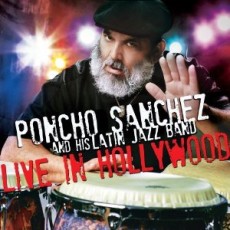
Poncho Sanchez was born October 30, 1951 in Laredo, Texas, the youngest of eleven children, but was reared in Norwalk, California. Exposed to and influenced by Afro-Cuban music (mambo, son, cha-cha, rumba, guaracha, salsa) and bebop jazz, he originally started as a guitarist. Discovering his talent for singing during an R&B band audition, he become the group’s lead vocalist. He later taught himself the flute, drums and timbales before finally deciding to pursue conga playing in high school.
In 1975, Sanchez’s idol, vibraphonist Cal Tjader invited him to perform one set with his band. Seeing the young man’s talent, Tjader hired Sanchez for a week before officially making him a full member of the ensemble. Sanchez played a crucial role as conguero for several years until Tjader’s death in 1982.
Before his death, Tjader suggested to Carl Jefferson, Concord Records founder, to sign Sanchez and his soon-to-be-formed group under the Concord Picante label. Tjader’s wishes were honored, and the first two records were composed and arranged by long-time Tjader collaborator Clare Fischer. Poncho produced 19 albums for the label and garnered a Grammy for his “Latin Soul” album.
He has played with Mongo Santamaria, Hugh Masekela and a host of jazz and Latin musicians and vocalists to numerous to name along with the iconic funk band Tower of Power on his “Do It” project. Poncho Sanchez is respected as one of the top percussionists of our time and continues to perform worldwide.
More Posts: conga,percussion
Daily Dose Of Jazz…
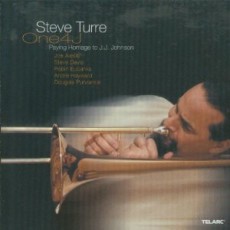
Steve Turre was born September 12, 1948 in Omaha, Nebraska but was raised in San Francisco, California to Mexican American parents. He began studying the violin but switched to trombone by age ten, later studying at the University of North Texas. By 1968 he was playing with Rahsaan Roland Kirk, went on to gig with Carlos Santana and toured with Ray Charles in 1972.
In 1970, encouraged by Kirk, Turre started playing conch and other seashells as musical lip-reed instrument. He has a collection of shells of various sizes, which he has picked up during his travels around the world. Turre leads “Sanctified Shells,” which is a “shell choir” made up of brass players who double on seashell releasing their first album in 1993.
Steve has had a long experience with Latin jazz he has become a skilled cowbell and Venezuelan maracas player. The internationally renowned trombonist, recording artist, arranger, and educator has won the Down Beat Reader’s poll for best trombonist in 1998, 1999, 2001, 2002 and 2006. He has been the trombonist for the Saturday Night Live band since 1985 and has taught jazz trombone at the Manhattan School of Music since 1988.
Turre has recorded 18 albums as a leader and has worked as a sideman on another 206 sessions with such luminaries as Monty Alexander, Carl Allen, Art Ensemble of Chicago, Frank Wess, Ray Barretto, Andy Bey, Art Blakey, Lester Bowie, Don Braden, Cecil Bridgewater, McCoy Tyner and Kenny Burrell among others. He continues to perform, record and tour.