

Daily Dose Of Jazz…
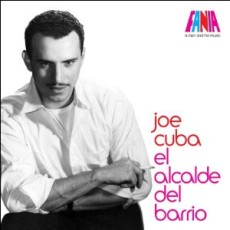
Joe Cuba was born Gilberto Miguel Calderon to Puerto Rican parents on April 22, 1931 in Spanish Harlem in New York City. Playing in his father’s organized stickball club “the Devils”, Cuba broke his leg and his attention shifted to the conga. Practicing every free moment between school, after graduating from high school he joined a band.
In 1950, when he was 19 years old, he played for J. Panama and also for a group called La Alfarona X. The group soon disbanding, Cuba enrolled in college to study law. While at college he attended a concert in which Tito Puente performed. He went up to Tito and introduced himself as a student and fan and soon they developed what was to become a lifetime friendship. This event motivated Cuba to organize his own band and in 1954, his agent recommended that he change the band’s name from the Jose Calderon Sextet to the Joe Cuba Sextet, making their debut at the Stardust Ballroom.
In 1962, Cuba recorded “To Be With You” with the vocals of Cheo Feliciano and Jimmy Sabater, Sr. The band became popular in the New York Latin community. The lyrics to Cuba’s music used a mixture of Spanish and English, becoming an important part of the Nuyorican Movement.
In 1965, the Sextet got their first crossover hit with the Latin and soul fusion of “El Pito” (I Never Go Back To Georgia) a chant taken from Dizzy Gillespie’s intro to the seminal Afro-Cuban tune, “Manteca”. Sabater later revealed, “None of them had ever been to Georgia.
Along with fellow Nuyorican artists such as Ray Barretto and Richie Ray, Cuba was at the forefront of the developing Latin soul sound in New York, merging American R&B styles with Afro-Cuban instrumentation. Cuba was one of the key architects behind the emerging Latin Boogaloo sound, which became a popular and influential Latin style in the latter half of the 1960s.
By 1966, his band which included timbales, congas, bongos, bass, vibraphones and piano among its musical instruments scored a U.S. “hit” on the National Hit Parade List with the song “Bang Bang”, kicking off the popularity of the boogaloo. He also had a Billboard #1 hit that same year with “Sock It To Me Baby” .
Inducted into the International Latin Music Hall of Fame in 1999, Joe was named Grand Marshall of the Puerto Rican Day Parade celebrated in Yonkers, New York in 2004; and was also the director of the Museum of La Salsa, located in Spanish Harlem, Manhattan, New York.
Joe Cuba, conga player and Father of Latin Boogaloo was hospitalized for a persistent bacterial infection and passed away on February 15, 2009 in New York City, after being removed from life support.
More Posts: conga
Daily Dose Of Jazz…
Patrick Bruce Metheny was born August 12, 1954 in Lee’s Summit, Missouri, a suburb southeast of Kansas City. At 15 he won a Down Beat scholarship to a one-week jazz camp, taken under the wing of guitarist Atilla Zoller and met Jim Hall and Ron Carter In NYC. Following high school graduation in 1972, he briefly attended the University of Miami, was quickly offered a teaching position but moved to Boston, accepting a teaching assistantship at Berklee College of Music with vibraphonist Gary Burton, making his name as a teenage prodigy.
In 1974, Metheny gained notoriety playing two sessions with Paul Bley and Carol Goss’ Improvising Artists label along with bassist Jaco Pastorius. He entered the wider jazz scene in 1975 when he joined Gary Burton’s band and his musical momentum carried him rapidly to the point that he had soon written enough material to record his debut album “Bright Size Life” with Pastorius and drummer Bob Moses.
One of the most successful and critically acclaimed jazz and New Age musicians to come to prominence in the 1970s and ’80s, he is the leader of the Pat Metheny Group, is involved in side projects, and has released notable solo, trio, quartet and duet recordings. He has worked with musicians such as Jim Hall, Dave Holland, Roy Haynes, Toninho Horta, Gary Burton, Joni Mitchell, Chick Corea, Pedro Aznar, Jaco Pastorius, Charlie Haden, John Scofield, Jack DeJohnette, Herbie Hancock, Bill Stewart, Ornette Coleman, Brad Mehldau and many others.
His style incorporates elements of progressive and contemporary jazz, post-bop, new age, Latin jazz and jazz-fusion. He has been voted Guitarist of the Year by the Down Beat Magazine Readers Poll several times, was granted the Miles Davis Award by the Montreal International Jazz Festival, has amassed an impressive catalogue of 97 albums as a leader, collaborator or sideman, has three gold albums and has received 20 Grammy Awards.
Guitarist Pat Metheny has been touring for more than 30 years, playing between 120-240 concerts a year.
More Posts: guitar
Daily Dose Of Jazz…
Naná Vasconcelos was born in Recife, Brazil on August 2, 1944. At age 12 he began playing his father’s guitar and joined the city’s marching band. His intense curiosity and inquisitive ear prompted him to listen to music from Brazil’s greatest composer Villa Lobos to Jimi Hendrix. He played with every imaginable musical configuration in Recife from orchestras to street bands until finally moved to Rio where he began performing with Milton Nascimento.
By 1970 Argentinean tenor, Gato Barbieri came through Rio and invited Nana to join his group and everywhere the played Nana created a sensation. After the tours end he settled in Paris where he made his first recording, “Africa Deus”. He returned to Brazil to record Amazonas, began an eight-year collaboration with guitarist Egberto Gismonti, returned to New York and formed the group “Cordona” with Don Cherry and Collin Walcott, while touring and recording with Pat Metheny.
Throughout his career he has worked with everyone from B.B. King to Jean Luc Ponty to the Talking Heads but has never become a studio musician. With over two-dozen albums as a leader, Nana has contributed special energies to another sixteen albums with such musicians as Walter Bishop Jr., Jan Gabarek, Pierre Favre and Danny Gottlieb that go well beyond the usual contributions of a percussionist.
A master all of Brazil’s percussion instruments, specializing in the berimbau and taking it far beyond its traditional uses, he currently leads his own group “Bushdance” and has developed a theatrically staged piece that explores the full, fascinating range of sounds and songs that lie in the heart of his music.
Nana Vasconcelos has performed at the Woodstock Jazz Festival, “Luz De Candeeiro” to the AIDS benefit compilation album Onda Sonora: Red Hot + Lisbon produced by the Red Hot Organization and was awarded the Best Percussionist Of The Year by the Down Beat Critics Poll for seven consecutive years, from 1984 to 1990. He continues to perform, record and tour.
More Posts: percussion
Daily Dose Of Jazz…
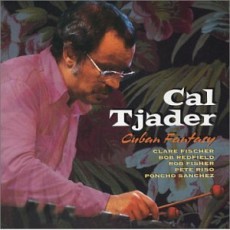
Callen Radcliffe Tjader, Jr. a.k.a. Cal Tjader was born July 16, 1925 in St. Louis, Missouri to touring Swedish-American vaudevillians, a tap dancing father and pianist mother. At two, his parents settled in San Mateo, California, opened a dance studio where he received piano and tap instruction from his parents. Tapping alongside his father in the Bay area he landed a role in the film “The White of the Dark Cloud of Joy” tapping with Bill “Bojangles” Robinson.
Playing in a Dixieland band around the Bay area, at sixteen Cal entered and won a Gene Krupa solo contest but the win was dampened by Pearl Harbor. After serving in the Army, he enrolled at San Jose State College and under the G.I. Bill majoring in education. He later transferred to San Francisco State College, took timpani lessons, met Dave Brubeck who introduced him to Paul Desmond. The three formed the Dave Brubeck Octet with Tjader on drums and recorded one album.
Disbanding the octet, Tjader and Brubeck formed a trio that became a fixture in the San Francisco jazz scene. During this period he taught himself the vibraphone, alternating between it and the drums depending on the song. A diving accident in 1951 forced Brubeck’s trio to dissolve, however, Tjader continued trio work with bassist Jack Weeks and pianists John Marabuto or Vince Guaraldi, recording his first 10″ LP as a leader with them for Fantasy. He went on to work with George Shearing and continued recording for Fantasy.
After a gig at the Blackhawk Cal quit Shearing and in 1954 formed The Cal Tjader Modern Mambo Quintet that produced Mambo with Tjader. The Mambo craze reached its peak in the late 1950s, and his band opened the second Monterey Jazz Festival in 1959. The Sixties was his most prolific period and his biggest success was the 1964 album Soul Sauce, the title track, a Dizzy Gillespie composition.
The 70s were lean years suffering like most jazz artists due to rock and roll’s explosive growth. During his later years he cut what most consider his seminal work “Onda Va Bien”, roughly translated as The Good Life, earning him a Grammy for Best Latin Recording.
Just as he was born on tour, he died touring on the road with his band in Manila, succumbing from a heart attack on May 5, 1982. Cal Tjader, who 40 year career playing vibraphone, drums, bongos, congas, timpani and piano stands alongside Lionel Hampton and Milt Jackson as a vital influence and is linked with swinging freely between jazz and Latin music.
More Posts: percussion,piano,vibraphone
Daily Dose Of Jazz…
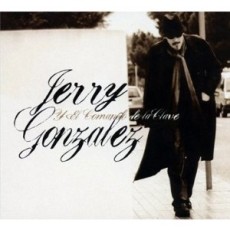
Jerry Gonzalez was born in the Bronx, New York City on June 5, 1949. Of Latin heritage, he grew up with jazz and Afro-Cuban music that left a deep impact on his musical appreciation. Listening to his father’s jazz collection he was influenced by Miles Davis, Dizzy Gillespie and Louis Armstrong along with gleaning inspiration from Tito Puente, Eddie Palmieri and Mongo Santamaria.
Studying music in junior high school, Gonzalez took up the trumpet and later the congas, continuing he formal training at New York College of Music and New York University. He began his professional career in 1963 playing with Lewellyn Mathews in New York State World’s Fair. In 1970 playing with Dizzy Gillespie, under whose tutelage he fused African based rhythms onto jazz elements seamlessly without detracting from either.
After playing with Manny Oquendo and Eddie Palmieri, Jerry created the Fort Apache Band with Andy Gonzalez (his brother), Larry Willis and Steve Berrios. A later reconfiguration and naming, Jerry Gonzalez & the Fort Apache Band became much more successful performing at European jazz festivals and subsequent recordings. Three albums later, “Rumba Para Monk” released in 1989, topped a readers’ poll in Down Beat magazine and was named the “Jazz Album Of The Year” in France by the Academie du Jazz. In 1998 they won both the industry and journalist polls in the New York Jazz Awards Latin Jazz category.
Gonzalez has played and/or collaborated with Tito Puente, McCoy Tyner, Jaco Pastorious, Chet Baker, Woody Shaw, Tony Williams, Larry Young, Freddie Hubbard, Chico O’Farill, Papo Vasquez, Ray Barretto, The Beach Boys, Chico Freeman and Paquito D’Rivera among others but his most noteworthy contribution is to Afro-Cuban jazz and a resurgence in Latin jazz in the 80s and 90s. With seventeen albums as a leader under his belt and a host of recording sessions as a sideman, since 2000, trumpeter Jerry Gonzalez has lived and played in and around jazz clubs in Madrid.