

Daily Dose Of Jazz…
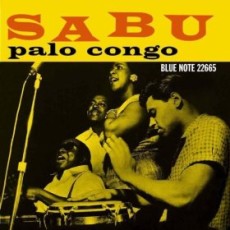
Louis “Sabu” Martinez was born on July 14, 1930 in New York City and made his professional debut in 1941 at age 11. He replaced Chano Pozo in Dizzy Gillespie’s orchestra in 1948, and began performing with Benny Goodman’s Bebop Orchestra in 1949.
Over the next 15 years, Martinez worked with jazz luminaries Charlie Parker, Duke Ellington, Count Basie, J.J. Johnson, Mary Lou Williams, Horace Silver, Thelonious Monk, Charles Mingus and Lionel Hampton; vocalist Tony Bennett, Sammy Davis Jr. and Harry Belafonte as well as Latin favorites Noro Morales, Marcelino Guerra, Tito Rodriguez and the Lecuona Cuban Boys.
A prominent conguero and percussionist in the Cubop movement in the 1950s, Martinez appeared on many important recordings and live performances during that period. Martinez also recorded several Latin jazz albums, now recognized as classics of the genre.
Martinez first recorded with Art Blakey in 1953, and contributed to his Orgy in Rhythm and Holiday for Skins projects from 1957–58. Martinez became a bandleader in 1957, recording his debut album, Palo Congo for Blue Note Records. He followed it up with releases on Vik and Alegre Records.
Martinez moved to Sweden in 1967 and recorded with the Francy Boland-Kenny big band, releasing two albums. Subsequently he led the group Burnt Sugar, which was active into the mid ’70s, but, on January 13, 1979, he died in Sweden at the age of 48.

Take A Dose On The Road
More Posts: conga,percussion

Daily Dose Of Jazz…
Raymond Mantilla was born on June 22, 1934 in New York City and his early drumming inspiration came from Afro-Cuban jazz. He played with a number of Latin jazz ensembles from the 1950s including the La Playa Sextet, Xavier Cugat, Lou Perez, Rene Touzet, Miguelito Valdez and Monguito Conjunto.
He played behind Eartha Kitt in 1955 and by 1960 was touring with Herbie Mann and recording with Max Roach. He recorded with Al Cohn, Freddie Hubbard, Buddy Rich and Larry Coryell in the early Sixties and then led his own band in Puerto Rico from ’63 to ’69. This was followed with Ray becoming a founding member of Max Roach’s M’Boom percussion ensemble in 1970.
Mantilla was a member of Art Blakey’s Jazz Messengers in the 70s and toured the U.S., Europe, and Japan. He then recorded with Gato Barbieri, Joe Farrell, Richie Cole, Don Pullen, Charles Mingus, Walter Bishop, Jr., and Morgana King and toured Cuba with Dizzy Gillespie.
By the end of the decade he once again founded his own ensemble, the Ray Mantilla Space Station, and through the 1980s toured or recorded with Muhal Richard Abrams, Kenny Burrell, Shirley Scott and Warren Chiasson. In 1991 the noted session player and bandleader put together a new ensemble, the Jazz Tribe and has been recording, performing and touring ever since.
Take A Dose On The Road
More Posts: drums
Daily Dose Of Jazz…
Marc Ribot was born on May 21, 1954 in Newark, New Jersey and worked extensively as a session musician. His early sessions with Tom Waits helped define Waits new musical direction in 1985.
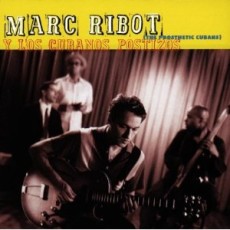
His own work has touched on many styles, including n wave, free jazz and Cuban music. Ribot’s first two albums featured The Rootless Cosmopolitans, followed by an album of works by Frantz Casseus and Arsenio Rodriguez. Further releases found him working in a variety of band and solo contexts including two albums with his self-described “dance band”, Marc Ribot y Los Cubanos Postizos.
His relatively limited technical facility is due to learning to play right-handed despite being left-handed. He currently performs and records with his group Marc Ribot’s Ceramic Dog. Marc’s studio work involves several tracks accompanying the legendary pianist McCoy Tyner’s “Guitars” project. He has performed and recorded with Jack McDuff, John Scofield, Wilson Pickett, Cibo Matto, Bela Fleck, Derek Trucks, Madeline Peyroux, Medeski Martin & Wood, Elton John and many others.
He has toured Europe with his band Sun Ship, had a biographical documentary film called the The Lost String and has also judged the 8th Annual Independent Music Awards to support indie careers in music. He has twenty-one albums as a leader, a filmography that includes five and a biographical documentary about him titled The Lost String. Guitarist Marc Ribot also plays banjo, trumpet, cornet and sings and continues to perform, record and tour.
Dose A Day-Blues Away
Daily Dose Of Jazz…
Alejandro Santos was born on April 11, 1956 in Buenos Aires, Argentina. He is widely-recognized both in his home country of Argentina and internationally as an extraordinary flutist and multi-instrumentalist playing the piccolo, bass flute, native wood-flutes, tenor and soprano sax, piano, and synthesizers.
He has developed a career as a composer with a unique style, which fuses modern jazz with traditional Argentinean rhythms like candombe, tango, and folk music. He has collaborated on recording and performing projects with Dino Saluzzi, Gonzalo Rubalcaba, Anthony Jackson, Bob Moses, Claudio Roditi, Toquinho, Maria Creuza, Fito Paez and others. Since 2001 he has steadily worked with Al Di Meola’s World Symphony and has recorded on De Meola’s latest album “Flesh on Flesh”.
Alejandro released three solo albums with RCA and GNA/Invasion Records, one of them: 5 Carnavales 4, released in the States, received excellent reviews and reached into the top 30 jazz playlist of the Gavin Report magazine. Alejandro Santos currently performs with his quartet that includes bandoneon, bass and drums.
Jazz Is Global – Share
More Posts: flute,piano,piccolo,saxophone,synthesizer
Daily Dose Of Jazz…
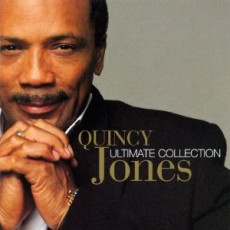
Quincy Delight Jones, Jr. was born on March 14, 1933 in Chicago, Illinois. When he was ten, his family moved to Bremerton, Washington, a suburb of Seattle. He first fell in love with music when he was in elementary school, and tried nearly all the instruments in his school band before settling on the trumpet. While barely in his teens attending Garfield High, Quincy befriended then-local singer-pianist Ray Charles and the two youths formed a combo, eventually landing small club and wedding gigs.
At 18, the young trumpeter won a scholarship to Berklee College of Music in Boston, Massachusetts but dropped out abruptly when he received an offer to go on the road with bandleader Lionel Hampton. The stint with Hampton led to work as a freelance arranger and settling in New York, throughout the 1950s he wrote charts for Tommy Dorsey, Gene Krupa, Sarah Vaughan, Count Basie, Duke Ellington, Dinah Washington, Cannonball Adderley and Ray Charles.
In 1964 Quincy won his first Grammy for Best Instrumental Arrangement of “I Can’t Stop Loving You”, in 1968 he won his second Grammy for Best Instrumental Performance with “Walking In Space” and that same year along with his songwriting partner Bob Russell became the first African Americans to be nominated for an Academy Award for Best Original Song for “The Eyes Of Love” and he became the first African American to be nominated twice within the same year when for Best Original Score for the 1967 film In Cold Blood.
His firsts would continue in 1971 when named musical director/conductor of the Academy Awards ceremony, being first to win the Academy’s Jean Hersholt Humanitarian Award, and He is tied at 7 with sound designer Willie D. Burton as the most Oscar-nominated African American.
His musical achievements are too numerous to list as they span the gambit from film scores such as The Pawnbroker, In The Heat of the Night, The Italian Job, MacKenna’s Gold, The Getaway and The Color Purple to his jazz works “Body Heat” and “Big Band Bossa Nova” from which Soul Bossa Nova was used in the Austin Powers movies to his crowning glories with Miles Davis last release “Live at the Monteux Jazz Festival”, his work with Michael Jackson’s “Thriller” and the charity song “We Are The World”. He continues to produce, conduct, arrange and compose.
More Posts: drums,french horn,piano,synthesizer,trumpet,vocal