

Daily Dose Of Jazz…
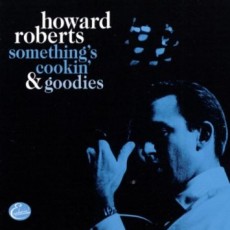
Howard Roberts was born on October 2, 1929 in Phoenix, Arizona and began playing guitar at the age of 8. By the time he was 15 he was playing professionally locally. He moved to Los Angeles in 1950 and with the help of Jack Marshall he began working with musicians, arrangers and songwriters including Neal Hefti, Henry Mancini, Bobby Troup, Chico Hamilton, George Van Eps and Barney Kessell.
Around 1956 Troup signed Howard to Verve Records as a solo artist and he he decided to concentrate on recording. He recorded both as a solo artist and “Wrecking Crew” session musician, a direction he would continue until the early 1970s. He would go on to play guitar on television themes such as The Twilight Zone, The Munsters, Bonanza, The Brady Bunch, Green Acres, Get Smart, Batman, Beverly Hillbillies, Andy Griffith, Peter Gunn, Mannix, Dick Van Dyke, I Dream of Jeannie, The Odd Couple and Mission Impossible among others. He also performed the theme for the classic Steve McQueen film Bullitt.
In 1961, Roberts designed a signature guitar, which was originally produced by Epiphone, a division of Gibson. The Howard Roberts signature was borne by two other models made by Gibson: the Howard Roberts Custom and the Howard Roberts Fusion III.
By 1963, Roberts recorded Color Him Funky and H.R. Is A Dirty Guitar Player, his first two albums after signing with Capitol Records. They both featured the same quartet with Roberts (guitar), bassist Chuck Berghofer, Earl Palmer on drums and Paul Bryant alternating with Burkley Kendrix on organ. He would go on to record nine albums with Capitol before signing with ABC Records/Impulse Records.
Over the course of his career he recorded with David Axelrod, June Christy, Buddy Collette, Milt Jackson, Hank Jones, John Klemmer, Charles Kynard, Herbie Mann, Thelonious Monk, Lalo Schifrin, Bud Shank, Bob Cooper, Gabor Szabo and Larry Williams, to name a few. As a member of the Wrecking Crew, he was a part of Phil Spector’s ‘Wall of Sound’ and played guitar on some of the most famous songs in pop music history.
From the late 1960s, Roberts began to focus on teaching rather than recording. He traveled around the country giving guitar seminars, and wrote several instructional books. For some years he also wrote an acclaimed column called “Jazz Improvisation” for Guitar Player magazine. he developed accelerated learning concepts and techniques, which led to the founding of Playback Music Publishing and the Guitar Institute of Technology. As a co-founder of GIT, now known as the Musicians Institute, his philosophy remains an integral part of the curriculum.
Guitarist Howard Roberts, who played rhythm and lead guitar, bass and mandolin, passed away of prostate cancer in Seattle, Washington on June 28, 1992. His life in music inspired the opening of Roberts Music Institute in Seattle, Washington, which is currently owned by his son, Jay Roberts.

Jazz Is Global – Share
Daily Dose Of Jazz…
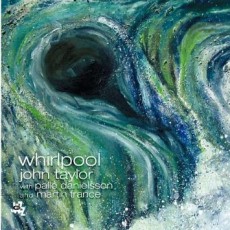
John Taylor was born on September 25, 1942 in Manchester, England. The pianist first came to the attention of the jazz community in 1969 when he partnered with saxophonists Alan Skidmore and John Surman. In the early 1970s he was accompanist to the singer Cleo Laine and started to compose for his own sextet.
Taylor worked with many visiting artists at Ronnie Scott’s Jazz Club in London and later became a member of Scott’s quintet. He was later reunited with Surman in the short-lived group Morning Glory and in the 1980s in the Miroslav Vitous quartet. In 1977 formed the trio Azimuth with Norman Winstone and Kenny Wheeler. They made several recordings for ECM Records, performed in the United States, Europe and Canada.
The 1980s saw John working with Jan Garbarek, Enrico Evans, Gil Evans, Lee Konitz, Charlie Mariano, Tony Coe, Steve Arguelles, Stan Sulzman and David Sylvian. From 2006 he was a member of the Kenny Wheeler’s quartet and large ensemble and performed in duo and quartet settings with John Surman. During the 1990s he made several recordings with Peter Erskine Tio with bassist Palle Danielsson.
By the turn of the century he was performing and recording with a new Azimuth collaboration, the Steve Smith Quartet, Maria PiaDe Vito and Ralph Towner, toured with his new trio, received the BBC Jazz Award for Best New Work’ for his Green Man Suite and continued to record.
As an educator he was professor of Jazz Piano at the Cologne College of Music, became a Lecturer in jazz at the University of York, coached and taught undergraduate jazz musicians and was of central importance to the new Master’s degree jazz pathway and in advancing doctoral research and performance in jazz.
While performing at the Saveurs Jazz Festival in Segre, France he suffered a heart attack. Although he was resuscitated at the venue, pianist John Taylor, who occasionally performed on the organ and the synthesizer, passed away after being taken to the hospital on July 17, 2015.
Jazz Is Global – Share
More Posts: organ,piano,synthesizer
Daily Dose Of Jazz…
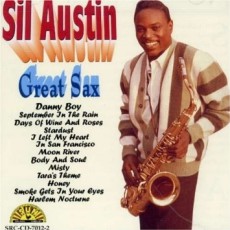
Sil Austin was born September 17, 1929 in Dunnellon, Florida. He taught himself to play saxophone when he was 12, won the Ted Mack Amateur Hour in St. Petersburg, Florida in 1945 playing Danny Boy and his performance got him a contract with Mercury Records. He moved to New York City and studied for a time at the Juilliard School of Music.
Austin briefly played with Roy Eldridge in 1949, with Cootie Williams in 1951-52 and Tiny Bradshaw from 1952-54, before setting up his own successful touring group. He recorded over thirty albums for Mercury, and had a number of Top 40 hits with popular tunes like Danny Boy, that became his signature song, My Mother’s Eyes and Slow Walk, the latter hitting #17 on the charts.
After leaving Mercury in the 1960s, he recorded with a few other labels, including SSS, owned by Shelby Singleton, and recorded a few albums in Japan in the 1970s. Saxophonist Sil Austin, who regarded Coleman Hawkins, Lester Young and Sonny Stitt as his major influences, passed away of prostate cancer on September 1, 2001.
Give A Gift Of Jazz – Share
More Posts: saxophone

Daily Dose Of Jazz…
Stacy Rowles was born on September 11, 1955 to jazz pianist and composer Jimmy Rowles. Picking up an old trumpet in the family home she took right to it. She first performed with her father at the Monterey Jazz Festival and for a period she studied with vibraphonist Charlie Shoemake.
Perpetually undiscovered in America except on the West Coast but was better known in Europe. Stacy made her name partly in the company of her father, with whom she often played until shortly before his death in 1996.
She played restful, melodic solos with a warm tone and sang in a wise, honest voice, shy but swinging. She recorded her debut and only album Tell It Like It Is in 1984. Rowles recorded albums with her father titled I’m Glad There Is You, Me and the Moon and Looking Back. She also recorded with the Ben Sluijs Quartet and Frank Mantooth.
For a stretch in the early ’90s, father and daughter shared a weekly gig at Linda’s, a Los Angeles jazz club. On her own, Stacy also played regularly in several all-female jazz groups, including the all-female quintet the Jazz Birds, Maiden Voyage, in both of which she played alongside the trumpeter Betty O’Hara, the Jazz Tap Ensemble, the DIVA Big Band and the European band Witchcraft, with which she had toured since 2002.
Trumpeter, flugelhorn player and singer Stacy Rowles who had been active on the Los Angeles jazz scene since the 1980s, passed away from complications due to a car accident on October 30, 2009 at her home in Burbank, Calif. She was 54.
Jazz Is Global – Share
More Posts: flugelhorn,trumpet,vocal
Daily Dose Of Jazz…
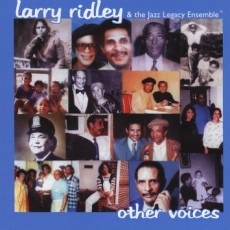
Larry Ridley was born September 3, 1937 in Indianapolis, Indiana and began playing bass professionally while still in high school in the 1950s. He studied at Indiana University School of Music and then would later study at the Lenox School of Jazz. As a college student he would go on to matriculate through be bassist in his mentor’s ensemble, the David Baker Big Band.
Ridley served as chairman of the Jazz Panel of the National Endowment for the Arts (NEA) and was the organization’s National Coordinator of the “Jazz Artists in Schools” Program for five years. He was awarded the Mid Atlanti Arts Foundation’s Living Legacy Jazz Award, the Benny Golson Jazz Award from Howard University, and inducted into the International Association for Jazz Education Hall of Fame,
Over the course of his career Larry has recorded two albums as a leader and performed and/or recorded with Chet Baker, Al Cohn, Dameronia, Red Garland, Dexter Gordon, Stephane Grappelli, Joe Venuti, Roy Haynes, Freddie Hubbard, Jackie McLean, Hank Mobley, James Moody, Lee Morgan and Horace Silver to name a few.
Bassist and music educator Larry Ridley has been involved in jazz education, heading the jazz program at Rutgers University, and Professor of Jazz Bass at the Manhattan School of Music is a Jazz Artist in Residence at Harlem’s New York Public Library/Schomberg Center for Research in Black Culture, and continues to perform with his Jazz Legacy Ensemble.
Give A Gift Of Jazz – Share
More Posts: bass