

Daily Dose Of Jazz…
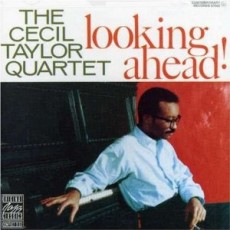
Cecil Percival Taylor was born March 25, 1929 in New York City and began playing piano and classical training at age six. He studied at the New York College of Music and New England Conservatory. After first steps in R&B and swing-styled small groups in the early 1950s, he formed his own band with soprano saxophonist Steve Lacy in 1956, in which he release his first recording Jazz Advance.
Throughout the 1950s and 1960s, Taylor’s music grew more complex and moved away from existing jazz styles. Gigs were often hard to come by, and club owners found Taylor’s approach to performance (long pieces) unhelpful in conducting business. Forming his group The Unit in 1961 with Jimmy Lyons, Sunny Murray and later Andrew Cyrille produced landmark recordings, like “Unit Structures” in 1966, they continued to record although sporadically and many of his recording sessions remained unreleased for sometimes decades.
By the 70s he was performing solo concerts and Taylor’s work began to be released for the next two decades, garnering critical if not popular acclaim. He began lecturing at universities, was awarded the Guggenheim Fellowship, performed a White House lawn concert for President Jimmy Carter, was awarded a MacArthur Fellowship, returned to the trio setting, collaborated with ballet companies and as an accomplished poet often incorporates his poems into his musical performances.
He is the co-founder of the Jazz Composers Guild to enhance the working possibilities of avant-garde musicians. Acknowledged as one of the pioneers of free jazz, his music is characterized by an extremely energetic, physical approach, producing complex improvised sounds, frequently involving tone clusters and intricate polyrhythms. His piano technique has been likened to percussion, described as “eighty-eight tuned drums” referring to the number of keys on a standard piano. He continues to perform, compose and record.
More Posts: bandleader,composer,piano,poet
Daily Dose Of Jazz…
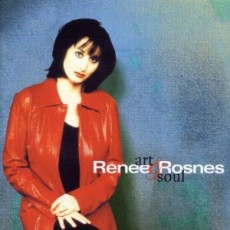
Renee Rosnes was born Irene Louise Rosnes on March 24, 1962 in Regina, Saskatchewan but grew up in North Vancouver, B.C. where she attended Handsworth Secondary School. She was three when she began taking classical piano lessons and became interested in jazz in high school. She went on to the University of Toronto pursuing classical performance, was awarded a Canada Council of the Arts grant in 1985 and moved to New York City to further her studies.
Saxophonist Joe Henderson hired her to play with his quartet that kick-started her international career. Since then, Rosnes has worked with many of the top names in jazz including J.J. Johnson, Wayne Shorter, James Moody, Bobby Hutcherson and Jon Faddis among others.
Renee is a founding member of the San Francisco Jazz Collective, whose members have included the likes of Joshua Redman, Brian Blade, Bobby Hutcherson, Dave Douglas, Eric Harland, Nicholas Payton, Joe Lovano, Stefon Harris and others.
The pianist, composer and arranger performs and records in the hard bop and post-bop mediums, has nearly two dozen albums as a leader and several more as a sidewoman with her latest project “Double Portrait” recorded with her husband Bill Charlap. Renee Rosnes continues to perform, tour and record.
More Posts: piano
Daily Dose Of Jazz…
Stefon Harris was born March 23, 1973 in Albany, New York and started playing the piano at age 6 and learned to read music by the time he began elementary school. By the time he reached 8th grade Stefon played nearly twenty different instruments from string bass to trombone. After seeing the Empire State Youth Orchestra on television, he auditioned for the ensemble and was accepted as the principal percussionist.
A few years later, he earned a full merit scholarship to attend Eastman School of Music in Rochester, where his roommate introduced him to jazz via Charlie Parker records. Smitten by the music, Harris moved to New York City and began gigging on the jazz scene as a vibraphone player while finishing his B.A. and Master’s degrees at the Manhattan School of Music.
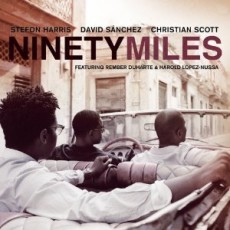
Harris has released several critically acclaimed albums, composed numerous works and is one of the foremost young artists in demand today having played with such luminaries as Kenny Barron, Steve Turre, Kurt Elling, Charlie Hunter, Joe Henderson, Steve Coleman, Cassandra Wilson, Buster Williams, Wynton Marsalis and the Lincoln Center Chamber Music Society. In 2011 he ventured to Havana, Cuba with saxophonist David Sanchez and trumpeter Christian Scott to record their critically acclaimed Ninety Miles. Having performed worldwide, vibraphonist Stefon Harris sits at the forefront of New York music.
More Posts: marimba,vibraphone
Daily Dose Of Jazz…
Marian McPartland was born Margaret Marian Turner on March 20, 1920 in Windsor, England. A musical prodigy from the time she could sit at a piano at age three, she pursued classical studies on piano and violin at the Guildhall School of Music and Drama in London. However, much to the dismay of her family, she developed a love for American jazz and musicians such as Duke Ellington, Fats Waller, Teddy Wilson, and Mary Lou Williams among many others.
By 1938, despite her family’s efforts to keep her at Guildhall, Marian left to join Billy Mayerl’s Claviers, a four-piano vaudeville act, performing under the stage name of Marian Page. The group toured throughout Europe during WWII entertaining Allied troops where she met and performed with Jimmy McPartland, and later married, moving to the United States.
1944 saw the McPartlands in New York with Marian forming her own trio and enjoying an 8-year engagement at the Hickory House bringing drummer Joe Morello into the fold. After many years of recording for labels such as Capitol, Savoy, Argo, Sesac, Time, and Dot, in 1969 she founded her own record label, Halcyon Records, before having a long association with the Concord Jazz label.
Marian launched a weekly radio program that featured recordings and interviews with guests in 1964 on WBAI-FM in New York City. This series paved the way for the NPR program Marian McPartland’s Piano Jazz that began on June 4, 1978 and is the longest-running cultural program on NPR as well as being one of the longest-running jazz programs ever produced on public radio.
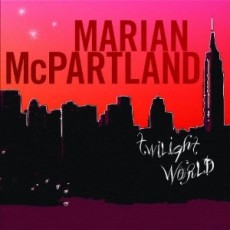
A master at adapting to her guest’s musical styles and having a well-known affinity for beautiful and harmonically rich ballads, McPartland also has recorded many tunes of her own. Her compositions include “Ambiance”, “There’ll Be Other Times”, “With You In Mind”, “Twilight World”, and “In the Days of Our Love”.
Marian a participated in 60 years of jazz evolution, was awarded a Trustees’ Lifetime Achievement Award Grammy for her work as an educator, writer, and host of Piano Jazz, and was appointed Officer of the Order of the British Empire (OBE) in 2010. Pianist and composer Marian McPartland passed away on August 20, 2013 of natural causes at her home in Port Washington, New York. She was 95 years old.
More Posts: piano
Daily Dose Of Jazz…
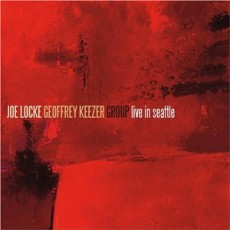
Joseph Paul Locke was born on March 18, 1959 in Palo Alto, California but grew up in Rochester, New York. A self-taught improviser, he benefited from his early studies in classical percussion and composition at the Eastman School of Music and played with Mongo Santamaria, Pepper Adams, and Dizzy Gillespie before graduating from high school.
Since moving to New York City in 1981, Locke has performed with Grover Washington, Jr., Kenny Barron, Dianne Reeves, Eddie Daniels, Jerry Gonzales’ Fort Apache Band, Rod Stewart, Beastie Boys, Eddie Henderson, Hiram Bullock, Bob Berg, Ron Carter, Jimmie Scott, Geoffrey Keezer, The Mingus Big Band and Randy Brecker among many others.
Joe has toured extensively throughout the world, both as leader and guest soloist. In 2006, 2008 and 2009 Joe Locke received the “Mallet Instrumentalist of the Year” Award, presented by the Jazz Journalist Association. His ability to play cool and funky, heady and relaxed has had him voted the #1 vibist in Down Beat Magazine’s Critic’s Poll and Brazil’s International Jazz Poll.
Locke has recorded nearly 36 projects as a bandleader, including a tribute to the music of Henry Mancini and since 2012 has released a symphonic album, an orchestra project Wishing On A Star, and Lay Down My Heart: Blues & Ballads, Vol. 1. As a producer and sideman, Joe appears on more than 65 recordings and continues to compose, perform and record.
More Posts: vibraphone