

Daily Dose Of Jazz…
Csaba Deseo was born February 15, 1939 in Budapest, Hungary. His mother was a violin teacher and he began playing the instrument at the age of 10. He continued his musical education at Béla Bartók Conservatory in Budapest, and got his diploma in 1961. He taught in music schools until 1967 when he became a member of the Hungarian National Philharmonic Orchestra, where he played until 1999. During the time he played innumerable concerts in Hungary and in many countries of the world from Japan to the United States. He performed with artists like Sir Georg Solti, Leonard Bernstein, Ádám Fischer, and Yehudi Menuhin, to name a few.
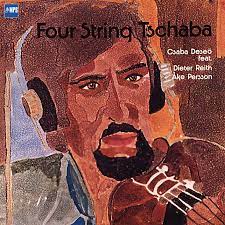
His career took off in 1963 when he appeared with his first group at the legendary Dalia Club in his hometown. From 1964 they gave regular concerts and were frequently featured on Hungarian Radio and TV. He would play at festivals and jamborees in the Sixties, then recorded his debut album under his own name Four String Tschaba in 1975 for MPS Records in West Germany. In that session Deseo played both violin and viola, and he would go on to record 4 LPs and 6 CDs with Hungarian and foreign musicians.
1975 saw Csaba meeting Zagreb vibraphonist Bosko Petrovic, with whom he played regularly until 2011. He also appears as a guest star in Germany, where he usually solos with the group of Walter Kurowski.
Since 1980 Deseo has fronted bands with different line-ups. His more important partners were pianist Laszlo Gardony, vibraphonist Richard Kruza, guitarist Andor Kovacs, bassist Bela Lattmann and drummer Imre Koszegi. Since 1990 he’s been working mainly in a trio and is a regular guest artist at the concerts of the Benko Dixieland Band and the Budapest Ragtime Band.
During the past few decades he has also played with international stars and is a regular contributor to the specialist Hungarian music magazine, Gramofon ~ Classical and Jazz. Violinist Csaba Deseo continues to perform and record.

More Posts: bandleader,history,instrumental,jazz,music,viola,violin
Daily Dose Of Jazz…
Barry Sweig was born on February 7, 1942 in Detroit, Michigan. His mother loved music and taught her son to clap on the 2 & 4 as a toddler. He received a ukulele for his fifth birthday, played violin from the age of eight until he was eighteen, but bought himself a guitar for ten dollars when he was 15. His first recording session was at age 17, at Capitol Records.
Drafted in the Army in 1964 Sweig was assigned to NORAD Band where he got the opportunity to study with guitarist Johnny Smith. After his discharge he joined Buddy Rich’s band and after recording an album with Sammy Davis Jr. that led to him joining the latter’s band. Touring with Davis ended fourteen months later and he settled in Los Angeles, California and broke into the music scene where he performed and recorded for a host of who’s who vocalists and musicians.
He played his final gig at The Lighthouse Cafe in Hermosa Beach. Guitarist Barry Sweig, who taught at UCLA, USC, and the University of Texas, El Paso, transitioned on March 15, 2020 of complications from Crohn’s disease.
More Posts: bandleader,educator,guitar,history,instrumental,jazz,music
Daily Dose Of Jazz…
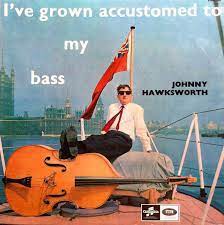
Johnny Hawksworth was born in London, England on February 2, 1924 and initially trained as a pianist, but also played double bass in the Ted Heath Orchestra during the early 1950s and through the 1960s. Becoming one of the most popular jazz bassists in the UK, he won numerous polls and was often featured as a soloist on Heath concerts and recordings.
As a composer Johnny wrote many television themes including Salute to Thames, Thank Your Lucky Stars, Roobarb, Man About the House and George and Mildred. He contributed some of the incidental music used in the 1967 Spider-Man cartoon, and his composition, Er Indoors, was frequently used in SpongeBob SquarePants. While working on films, he scored The Naked World of Harrison Marks, The Penthouse, and Zeta One.
Hawksworth has also written many pieces of stock music for the De Wolfe Music library. He also provided the hypnotic musical soundtrack to Geoffrey Jones’s classic British Transport Films Snow and has composed American-style blues-based material under the name Bunny J. Browne and classically-based material under the name John Steinway.
Bassist and composer Johnny Hawksworth transitioned on February 13, 2009 in Sydney, Australia at the age of 85.
More Posts: bandleader,bass,composer,history,instrumental,jazz,music
Daily Dose Of Jazz…
Bob Harrington was born Robert Maxon Harrington in Marshfield, Wisconsin on January 30, 1912. He played piano with Charlie Barnet in the early 1950s and worked with both Red Nichols and Bud Freeman during that decade as a drummer.
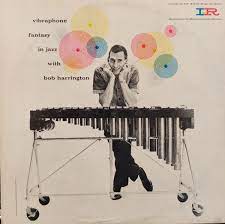
On vibraphone, he played with Georgie Auld, Buddy DeFranco, Vido Musso, Ben Webster, Ann Richards, and Harry Babasin’s Jazzpickers. He released one solo album, Vibraphone Fantasy in Jazz, on Imperial Records in 1957, which is now a collector’s item.
Vibraphonist Bob Harrington, who was adept on drums and piano, transitioned on August 20, 1983 in Kona, Hawaii.

More Posts: bandleader,drums,history,instrumental,jazz,music,piano,vibraphone
Daily Dose Of Jazz…
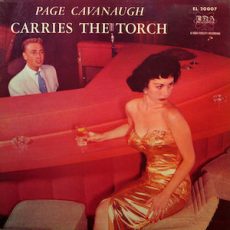
Page Cavanaugh was born Walter Page Cavanaugh on January 26, 1922 in Cherokee, Kansas and began on piano at age nine. By the time he turned 16 he was playing with Ernie Williamson’s band for a year before moving to Los Angeles, California and joining the Bobby Sherwood band at age 20.
While serving in the military during World War II, he met guitarist Al Viola and bassist Lloyd Pratt, and they formed a trio. After the war’s end they performed together in the style of the Nat King Cole Trio, scoring a number of hits in the late 1940s, including The Three Bears, Walkin’ My Baby Back Home, and All of Me. The trio appeared in the films A Song Is Born, Big City, Lullaby of Broadway and Romance on the High Seas. He recorded dozens of tracks with Doris Day, Frank Sinatra, Dinah Shore, June Christy, Mel Torme and other legendary singers.
During the early Fifties he had a program, Page Pages You, on the short-lived Progressive Broadcasting System, the trio played on Frank Sinatra’s radio program, Songs by Sinatra, and on The Jack Paar Show. Cavanaugh played in Los Angeles nightclubs through the 1990s, both in a trio setting and as a septet, the Page 7. He recorded with Bobby Woods & Les Deux Love Orchestra, and as a bandleader with MGM, Capitol, RCA, Star Line, Tiara, and Dobre Records over the course of his career, releasing his final trio album, Return to Elegance, in 2006.
Pianist, vocalist, and arranger Page Cavanaugh transitioned from kidney failure on December 19, 2008 in Los Angeles, California.
More Posts: arranger,bandleader,history,instrumental,jazz,music,piano,vocal