

Daily Dose Of Jazz…
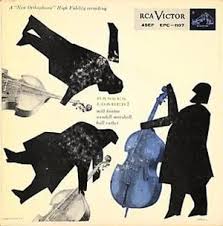
Wyatt Robert Ruther was born on February 5, 1923 in Pittsburgh, Pennsylvania. Playing trombone in high school before picking up the double-bass, he studied at the San Francisco Conservatory of Music and the Pittsburgh Musical Institute.
From 1951 to 1952 he played in New York City with Dave Brubeck and Erroll Garner from 1951-55. A sought after bassist Wyatt toured with Lena Horne in 1953 and recorded an album under his own name alongside Milt Hinton in 1955 for RCA Records entitled Basses Loaded. Following this he played with Toshiko Akiyoshi in 1956, then studied at the Royal Conservatory of Music in Toronto, Canada.
While in Canada he played with the Canadian Jazz Quartet for two years beginning in 1956 and then in 1957 with Peter Appleyard. During the same period back in the States, Ruther played with Ray Bryant, Zoot Sims, Bob Brookmeyer, and Chico Hamilton. From the end of the Fifties to the mid~Sixties he toured with George Shearing, went on a world tour with Buddy Rich, played in Gerry Mulligan’s quartet, then joined Count Basie.
In the late 1960s, Wyatt worked freelance in the San Francisco area, and played at the Olympic Hotel in Seattle, Washington in the early Seventies. Moving to Vancouver, British Columbia, Canada he played with Fraser MacPherson from 1975 to 1979. He went on to play at the Ankor Hotel in Vancouver in the early 1980s, and while there worked with Sammy Price, Jay McShann, and Dorothy Donegan. Returning to San Francisco in 1984, he played with Stan Getz, Lou Stein, John Handy, Benny Carter, and Jerome Richardson late into thedecade and early Nineties. Bassist Wyatt Ruther played until he passed away of a heart attack at age 76 on October 31, 1999 in San Francisco, California.

More Posts: bandleader,bass,history,insrumental,jazz,music
Daily Dose Of Jazz…
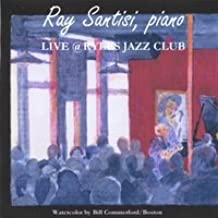
Ray Santisi was born on February 1, 1933 in Boston, Massachusetts and grew up in Jamaica Plain. He won an honors scholarship to attend Schillinger House and by the time he graduated it had been renamed Berklee School of Music, and later became Berklee College of Music..
He played as featured soloist with Charlie Parker, Stan Getz, Dexter Gordon, Mel Torme, Irene Kral, Herb Pomeroy and Natalie Cole to name a few. He performed with Buddy DeFranco, Joe Williams, Gabor Szabo, Milt Jackson, Zoot Sims & Al Cohn, Carole Sloane, Clark Terry and Bob Brookmeyer. As a leader he performed with his own ensemble, The Real Thing and in the 1960s performed with the Benny Golson Quartet.
As an educator, in 1957 Ray became a professor of piano and harmony at Berklee College of Music. His students include many notable jazz musicians, including Diana Krall, Makoto Ozone, Joe Zawinul, Keith Jarrett, Jane Ira Bloom, Jan Hammer, Alan Broadbent, Arif Mardin, Gary Burton, John Hicks, Danilo Perez and Hiromi. Fourteen of his students received Grammy awards.
He was awarded grants from the National Endowment for the Arts in composition and performance. He taught at Stan Kenton’s summer jazz clinics throughout the United States, performed in Europe, Scandinavia, and Asia. He performed at the first Jazz Workshop, and in 2008 was nominated to IAJE Jazz Education Hall of Fame.
He authored two books, Berklee Jazz Piano, and his instructional book, Jazz Originals for Piano. His trio played the first Sunday of each month for eleven years at Ryles Jazz Club until the month of his death. Pianist, composer, arranger, and educator Ray Santisi passed away on October 28, 2014 in his hometown.
More Posts: arranger,bandeader,composer,educator,history,instrumental,jazz,music,piano
Daily Dose Of Jazz…
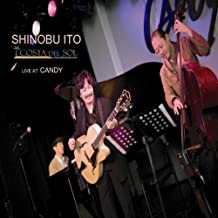
Shinobu Ito was born in Oiso, Kanagawa, Japan on January 28, 1951. While a young boy, his interest was in American pop songs, so his father bought him a guitar and gave him lessons. Devoting great efforts to his study of the guitar, in junior high school he organized his own pop music group and performed at various musical events. He became interested in jazz guitar during his high school days when he listened to Wes Montgomery. While attending Tokai University, he studied guitar with Ikuo Shiosaki, and became a member of the university’s Jazz Workshop.
He began his professional career at this time, performing at clubs and on recordings. In 1975, during a 6-month stay in Los Angeles, California he met Toshiko Akiyoshi, who introduced him to many musicians and strongly suggested to him that he go to New York to learn and play jazz on his next visit to the States.
When he returned to Japan in 1975, Shinobu joined vocalist Yoshiko Kimura’s group, and also resumed activities with top Japanese musicians such as Kohsuke Mine, Seiichi Nakamura, Shigeharu Mukai, Hidefumi Toki and Takao Uematsu. He also performed with Tete Montliu, Bill Reichenbach, Ronnie Foster, Stanley Banks in this era.
Back in New York City again in 1977 he became a member of a 10-piece band directed by Reggie Workman, joined Teruo Nakamura & his Rising Sun Band and Shinobu appeared on pianist Tsuyoshi Yamamoto’s album in 1981. Once settled he performed and recorded with Joe Jones Jr., Sadik Hakim, John Orr, Tommy Turrentine, Bob Mintzer, Rickey Ford and Kenny Kirkland, Valery Ponomarev, Lonnie Plaxico, Eddie Henderson, Lonnie Smith, Jesse Davis, Kenny Davis and Jeff Williams, Mike Formanek, Vincent Herring and Judy Niemack among others.
Shinobu released his first CD in 1991 with Tom Harrell, Danny Gottlieb, Gary King, Mark Soskin and Dick Oates. While Shinobu is known as a jazz guitarist who plays with a pick, he also plays only with his fingers, and his improvisations effectively fuse classical guitar and jazz.
As an educator he has worked as an instructor in the Jazz Division of the Senzoku College of Music in Tokyo, Japan. Returning to New York City in 2009 guitarist Shinobu Ito resumed performing and recording and continues to explore new directions.
More Posts: bandleader,history,instrumental,jazz,music,saxophone
Daily Dose Of Jazz…
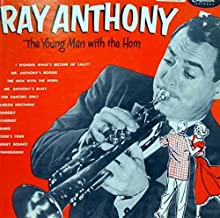
Ray Anthony was born Raymond Antonini on January 20, 1922 into an Italian family in Bentleyville, Pennsylvania but moved with his family to Cleveland, Ohio, where he studied the trumpet. From 1940~1941 he played in Glenn Miller’s band and appeared in the Glenn Miller movie Sun Valley Serenade before joining the U.S. Navy during World War II. After the war he formed his own group and the Ray Anthony Orchestra became popular in the early 1950s with The Bunny Hop, Hokey Pokey, and the theme from Dragnet. He had a No. 2 chart hit with a remake of the Glenn Miller tune At Last in 1952, the highest charting pop version of the song in the United States.
The following year his orchestra was featured when Helen O’Connell and Bob Eberly headlined a summer replacement program for Perry Como’s CBS television show. From 1953–1954 Ray was musical director of the television series TV’s Top Tunes.
After appearing as himself in the 1955 film Daddy Long Legs and starring in a short-lived television variety show, The Ray Anthony Show. Anthony he revved up his acting appearing in films during the late 1950s. In 1957, Anthony and his orchestra recorded the music score for the film This Could Be The Night, with vocals performed by Julie Wilson.
After his marriage to Mamie van Doren ende so did his brief film career. He continued his musical career and had another hit record with the theme from Peter Gunn, which reached No. 8 on the Billboard Hot 100 pop chart. Among his pianists was Allen “Puddler” Harris, and Kellie Greene, who also played the vibraphone. As a composer he wrote Thunderbird, The Bunny Hop, Trumpet Boogie, Big Band Boogie, and Mr. Anthony’s Boogie. Trumpeter Ray Anthony remains active today.
More Posts: bandleader,history,instrumental,jazz,music,trumpet
Daily Dose Of Jazz…
Streamline Ewing was born John Richard Ewing on January 19, 1917 in Topeka, Kansas and began his career when he was seventeen. Four years later he was with Horace Henderson, then with Earl Hines live and on record from 1938 to 1939 and from 1941 to 1942. He worked for short spans with Louis Armstrong and Lionel Hampton in the 1940s, in addition through the 1940 decade he worked with Jimmie Lunceford, Cab Calloway, Jay McShann, Cootie Williams, Louis Jordan, and Earl Bostic.
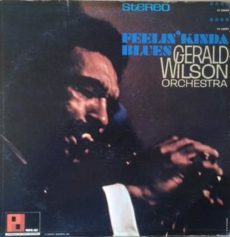
Moving to California in the early 1950s Ewing played with George Jenkins and in the studio with T-Bone Walker and Gerald Wilson. He began playing with Teddy Buckner in 1956 and the two would play together on and off into the 1980s. He led his band the Streamliners for recording sessions in 1958 and 1960. In 1962 he toured with Henderson again and with Rex Stewart in 1967. Late in the 1960s he played in the Young Men of New Orleans band.
In 1983 he played with the Eagle Brass Band and recorded with Johnny Otis in 1990. In the 1990s he played on two Willy DeVille albums: Backstreets of Desire and Big Easy Fantasy.
A prolific session player he recorded with Hoyt Axton, David Bromberg, Roy Brown, Bobby Bryant, Teddy Buckner, Red Callender, Papa John Creach, Willy DeVille, Judy Henske, Earl Hines, Diana Ross, Ike & Tina Turner, and Bob Thiele among others. Trombonist Streamline Ewing passed away on February 1, 2002 in Pasadena, California.
More Posts: history,instrumental,jazz,music,trombone