

Daily Dose Of Jazz…
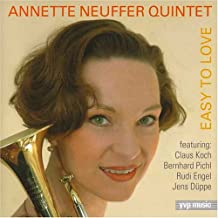
Annette Neuffer was born on January 15, 1966 in Munich, Germany. She didn’t start playing the trumpet until he was 18. Three years later she began studying music at the Graz University of Music , majoring in jazz trumpet . Another two yearsand she moved to the Stuttgart University of Music and Performing Arts, where she completed her diploma under Claus Stötter in 1996.
As a trumpeter she has worked with the Sarah Morrow Allstars in Paris, Benny Golson, Hal Singer, Mike Carr, Benny Waters, Jimmy Woode, and Horst Jankowski. In 1994 Annette was invited by the Sunday Night Orchestra as a singer for a project with Al Porcino. In 1995 she brought Porcino into his own big band, of which she was a singer for eleven years.
Since 2001 she has released four albums with her own quintet. She is an active composer and lyricist. She performed with the Bobby Burgess Big Band Explosion, Alexander’s Swingtime Band and Pete York. Vocalist, trumpeter, composer and lyricist Annette Neuffer continues to compose, perform and record.
More Posts: bandleader,history,instrumental,jazz,music,trumpet,vocal
Daily Dose Of Jazz…
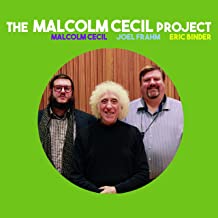
Malcolm Cecil was born on January 9, 1937 in London, England. By the time he came of age he was a founding member of the UK’s leading jazz quintet of the late 1950s, The Jazz Couriers, before going on to join a number of British jazz combos led by Dick Morrissey, Tony Crombie and Ronnie Scott into the early 1960s.
Malcolm later joined Cyril Davies and Alexis Korner to form the original line-up of Blues Incorporated. With Robert Margouleff he formed the duo TONTO’s Expanding Head Band, a project based on a unique combination of synthesizers. This led to them collaborating on and co-producing several of Stevie Wonder’s Grammy-winning albums Talking Book, Music of My Mind, Innervisions and Fulfillingness’ First Finale of the early 1970s. They are also credited as engineers for the Stevie Wonder produced 1974 album Perfect Angel by Minnie Riperton.
Their unique sound made them highly sought-after and they went on to venture in not only jazz, but rock and r&b to collaborate with, amongst others, Quincy Jones, Gil Scott-Heron, Weather Report, Bobby Womack, The Isley Brothers, Billy Preston, Stephen Stills, The Doobie Brothers, Dave Mason, Little Feat, Joan Baez and Steve Hillage. Bassist, engineer and record producer Malcolm Cecil continues to perform and produce.
More Posts: bandleader,bass,history,instrumental,jazz,music,record producer
Daily Dose Of Jazz…
Dick Charlesworth, born Richard Anthony Charlesworth on January 8, 1932 in Sheffield, England. Attending King Edward VII School, at 16, he became a clerk in the Ministry of Labour and was in due course transferred to London. He bought a clarinet and started playing jazz as a hobby in 1952. Entirely self-taught, he became good enough to play clarinet and saxophone in a dance band and performed with jazz bands in south London including Jim Weller’s Jazzmen.
He formed his first group in 1956 and his Dick Charlesworth’s Jazzmen won the South London Jazz Band Championship in 1957. His group was signed by the Melodisc label, and they recorded an EP in December 1957 and produced an album for Doug Dobell’s 77 Records.
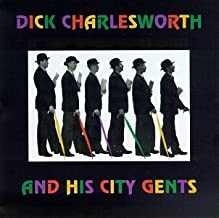
Leaving the Civil Service in 1959 he became a professional musician and signed a recording contract with EMI, remarketing the group as Dick Charlesworth’s City Gents. This was the time of light jazz, sporting distinctive attire of pin stripes and bowler hats, with their Latin motto, Dum vivimus vivamus, simply translated as “While we live, let us enjoy life”. They charted one single Billy Boy on the UK Singles Chart in 1961.
When jazz went out of vogue in the Sixties, Dick broke up his band, and from 1964 to 1969 fronted a band on the cruise liners. He then settled in Mojacar, Spain where he ran a music bar. Returning to Britain in 1977, he was active on the London jazz scene until the early 2000s working with, among others, Keith Smith, Rod Mason, Alan Littlejohn, Denny Wright, and appeared on the BBC Radio series, Jazz Score.
In his later years, Charlesworth lived in Thames Ditton, Surrey, and played a residency at various pubs with his band The Dick Charlesworth’s Fraternity Four, and released their final recording in 2004. Clarinetist, saxophonist and bandleader Dick Charlesworth passed away following a heart attack on April 15, 2008, at the age of 76.
More Posts: bandleader,clarinet,history,instrumental,jazz,music,saxophone
Daily Dose Of Jazz…
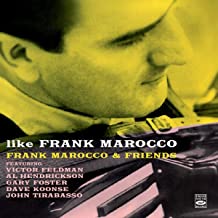
Frank L. Marocco was born January 2, 1931 in Joliet, Illinois but grew up in Waukegan, near Chicago, Illinois. At the age of seven years, his parents enrolled him in a six-week beginner class for learning to play the accordion. His first teacher was George Stefani, who supervised the young accordionist for nine years. Beginning with studying classical music, he soon encouraged the young musician to explore other musical genres. He went on to study piano and clarinet, as well as music theory, harmony, and composition.
At 17, Frank won the first prize in the 1948 Chicago Musicland Festival, and a guest performance with the Chicago Pops Orchestra. His success sent him on a professional music career, establishing a trio and touring the Midwestern states. In the early 1950s he married and moved to Los Angeles, California.
Creating a new band, Marocco played hotels and clubs in Las Vegas, Nevada, Lake Tahoe, Nevada and Palm Springs, California. He later began working in Hollywood, where television studios and movie production companies provided him a successful career.
In the 1960s, Frank recorded a solo album released by Verve Records, worked together with Brian Wilson and the Beach Boys, and performed on the world-famous album Pet Sounds. He performed on a USO tour in the Pacific, appearing onstage with Bob Hope, and also played in the Les Brown big band, during six Love Boat cruises. He performed and recorded in collaboration with hundreds of world-famous jazz musicians, classical artists and conductors during his career.
Marocco wrote and arranged music for solo, duet, and orchestra in a wide variety of musical styles, including jazz, popular standards, international, Latin, religious, and classical. He was the musical director and conductor of an annual music camp, the Frank Marocco Accordion Event, that brought together over 50 accordionists from around the U.S. and Canada.
Accordionist Frank Marocco passed away on March 3, 2012 at his home in San Fernando Valley, California from complications following hip replacement surgery. He was 81 years old.
More Posts: accordion,arranger,bandleader,composer,history,instrumental,jazz,music
Daily Dose Of Jazz…
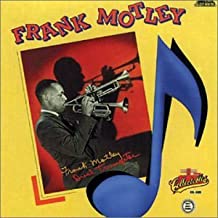
Frank Motley, Jr. was born December 30, 1923 in Cheraw, South Carolina and took trumpet lessons when he was young from Dizzy Gillespie, who was from the same town. He developed a technique of playing two trumpets at the same time, becoming known as “Dual Trumpet” and “Two Horn” Motley. Getting a degree in mechanical engineering at South Carolina State College, before joining the military, he performed in the Navy Band entertaining troops in the Pacific. After the end of the war he played in nightclubs in New York City before settling in Washington, D.C. and forming his own band in 1949.
He recorded extensively for Lillian Claiborne’s DC Records from 1951, and many of his recordings were licensed to other labels including RCA Victor and Specialty. His band, the Motley Crew, included singer and keyboardist Curley Bridges, drummer Thomas E. “TNT” Tribble, and vocalist Elsie “Angel Face” Kenley.
From 1952, he played mainly in Canada, marrying and moving to Toronto in 1955. However, he continued to perform and record in the United States. His biggest commercial success came in 1963, when his version of William Bell’s song Any Other Way, recorded with vocalist Jackie Shane for a small Boston label.
Disbanded the Motley Crew in 1966 he formed a new band in Toronto, the Hitch-Hikers, at first with Shane and then with singer Earle The Mighty Pope Heedram. The band broke up in 1970 but he continued to perform with another new band, the Bridge Crossings, until the mid 1980s. With his health declining he retired to Durham, North Carolina, where he continued to play in local dance bands. Trumpeter Frank Motley, who also sang, passed awayin Durham in 1998, aged 74.
More Posts: bandleader,history,instrumental,jazz,music,trumpet