

Daily Dose Of Jazz…
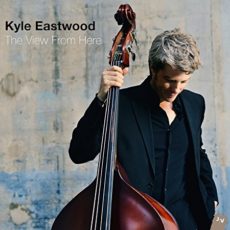
Kyle Eastwood was born on May 19, 1968 in Los Angeles, California and is the son of actor Clint Eastwood. Growing up with a father’s love of jazz for the music of Miles Davis, Dave Brubeck, Thelonious Monk and the Stan Kenton Big Band, he developed a similar love for jazz that was prominent in the home. This was coupled with a father and mother who played piano and a and grandmother who taught music at Northwestern University. Attending several Monterey Jazz Festivals in his youth with his dad, got him access backstage to meet people who a great influence on him like Dizzy Gillespie and Sarah Vaughan.
Eastwood began playing electric bass in high school, learning R&B, Motown, and reggae tunes by ear. After studying with French bassist Bunny Brunel, he began playing gigs around the New York and Los Angeles areas, eventually forming the Kyle Eastwood Quartet. In 1996 he contributed to Eastwood After Hours: Live at Carnegie Hall performance and ultimate recording, then two years later released his debut CD as a leader, From There to Here, on the Sony label. He moved on to record with the UK’s Candid Records and then to Rendezvous.
He has contributed music to nine films The Rookie, Mystic River, Million Dollar Baby, Flags of Our Fathers, Changeling, Gran Torino, Invictus and J. Edgar and has been nominated for a Chicago Film Critics Association Award for Original Score for the film Letters from Iwo Jima. He has also contributed to the score of the documentary Homme Less about homeless photographer Mark Reay. Bassist and bass guitarist Kyle Eastwood currently has eight albums released, tours around the world playing clubs and festivals and continues to write, compose, arrange and perform.
Sponsored By


#preserving genius
Daily Dose Of Jazz…
Mike Zwerin was born May 18, 1930 in New York on May 18, 1930. He studied at the High School of Music and Art and began leading bands in his teens, employing several up-and-coming musicians. At the age of 18, while on summer break from the University of Miami, he was the trombonist in Miles Davis’s nonet at the Royal Roost club in New York. This band was recorded performing the live sessions in 1948 and its music the following year culminated in the album that became immortalized as Birth of the Cool.
He abandoned his musical life for much of the 1950s but after a spell in France he returned to New York in 1958 and played the trombone in several big bands. However, in 1960 after his father’s death, he returned to the world of business and he took over as president of his dad’s company, the Capitol Steel Corporation. Over the next four years Mike kept a hand in jazz, working in John Lewis’s big band Orchestra USA, with whom he recorded and directed a small group. He also worked briefly with pianist Earl Hines but by the mid-1960s he withdrew from the business.
Zwerin moved to London in 1969 and then, in 1972, to Paris, which would be his home for the rest of his life. Nevertheless, he kept his hand in as a trombonist throughout the 1980s, working with his fellow expatriate Hal Singer and with the guitarist Christian Escoudé. In 1988 he toured with the Big Band Charles Mingus, played briefly with t Swiss bandleader George Gruntz and played with the French fusion band Telephone.
As a music critic and columnist he wrote for the Village Voice, Down Beat, Rolling Stone, Penthouse, the International Herald Tribune and Bloomberg News. He authored several books about his own life in the world of jazz, most notably The Silent Sound of Needles, about his struggles with drug addiction, Close Enough for Jazz and The Parisian Jazz Chronicles: An Improvisational Memoir, but his most ambitious book may be La Tristesse de Saint Louis: Swing Under the Nazis that included the story of the Kille Dillers and the Ghetto Swingers, two bands that played in concentration camps, and how jazz survived across Europe though banned by the Nazis and labeled degenerate music.
Throughout his career trombonist and bass trumpeter Mike Zwerin would perform and record with Miles Davis, Maynard Ferguson, John Lewis, Archie Shepp, Claude Thornhill and Bill Russo, arrange, direct and produce an album of Kurt Weill songs with the Sextet of Orchestra U.S.A., before passing away after a long illness on April 2, 2010 in Paris, France at the age of 79.
Sponsored By

#preserving genius

Daily Dose Of Jazz…
Warren Smith was born on May 17, 1908 in Middlebourne, West Virginia and and taught by hi s multi-instrumentalist father, he began playing piano from age seven. He learned cornet and saxophone before settling on the trombone.
Starting out in Harrison’s Texans, a territory band in the 1920s, Smith followed with an extended half-dozen year run in Abe Lyman’s employ in the 1930s. He worked with Bob Crosby in Indianapolis, Indiana during late in the 1930s before returning to work with Lyman briefly and closing out the decade.
Moving to Chicago, Illinois in the Forties, he settled in with Bud Jacobson and Bob Scobey, before heading to the West Coast to work with Jess Stacy and Lu Watters. In 1955 he toured with Duke Ellington, then played with Joe Darensbourg from 1957 to 1960. Through the Sixties he performed with Wild Bill Davison and Red Nichols.
On August 28, 1975 in Santa Barbara, California swing and mainstream trombonist Warren Smith, who never led a recording session but was fortunate to be able to make his living performing, passed away of natural causes at age 67.
Sponsored By

#preserving genius
Daily Dose Of Jazz…
Jerry Rusch was born Jerome A. Rusch on May 8, 1943 in St. Paul, Minnesota and studied at the University of Minnesota from 1962 to 1964. Afterward he played trumpet in an Army Reserve band before moving to Los Angeles, California in 1966.
During his time in Los Angeles Rusch played with the Gerald Wilson Big Band beginning in 1967, then backed Ray Charles from 1972 to ‘73, followed by Clifford Jordan, Joe Henderson, Willie Bobo, Louie Bellson, Teddy Edwards, Frank Foster, and Thad Jones & Mel Lewis.
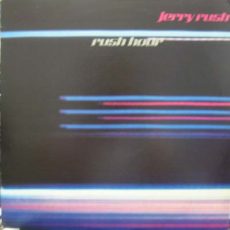
He played with Joe Haider’s orchestra in Europe from 1982 to 1984. As a leader he recorded five albums, Rush Hour on Inner City Records, Native L.A., Bright Moments and Back Tracks for Jeru and Serenata on Jazzschool Records. As a sideman Jerry recorded extensively; among his credits are work with Charles Kynard, Benny Powell, Stan Kenton, Moacir Santos, Henry Franklin, and Eddie Cleanhead Vinson.
Not limiting himself to jazz he also backed Gladys Knight, the Rolling Stones, Smokey Robinson, Diana Ross, and The Temptations. Though uncredited, he was one of the cornet players in the final parade scene in the 1962 film, The Music Man along with member of the University of Southern California’s marching band, the Spirit of Troy, and many junior high school students from Southern California.
Trumpeter, cornetist and composer Jerry Rusch, who was also credited as Jerry Rush, passed away from liver cancer on May 5, 2003 in Las Vegas, Nevada.
Sponsored By

Voices From The Community
#preserving genius

Daily Dose Of Jazz…
David Friesen was born on May 6, 1942 in Tacoma, Washington, the younger brother to actress Dyan Cannon. An autodidact on bass, he picked it up while serving in the U.S. Army in Germany.
He played with John Handy and Marian McPartland and following this, with Joe Henderson and in 1975 he toured through Europe with Billy Harper. His first album as a session leader, Cool Pool on the Muse label was recorded in ‘75. The following year Friesen began collaborating with guitarist John Stowell that produced many dates where they would work together.
He performed with Ted Curson at the Monterey Jazz Festival in 1977 and then worked with Ricky Ford, Duke Jordan, Mal Waldron, and Paul Horn. David’s 1989 album Other Times, Other Places reached No. 11 on the U.S. Billboard Top Jazz Albums chart. He would go on to perform or record with has Chick Corea, Michael Brecker, Stan Getz, Dexter Gordon, Kenny Garrett, and Dizzy Gillespie.
Double bass and electric upright bassist David Friesen has recorded forty-three albums as a leader and continues to perform and record.
Sponsored By

#preserving genius
More Posts: bass