

Daily Dose Of Jazz…
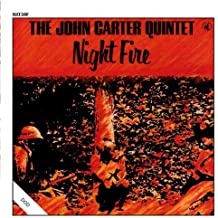
John Wallace Carter was born on September 24, 1929 in Fort Worth, Texas and attended I.M. Terrell High School, and played music with schoolmates Ornette Coleman and Charles Moffett in the 1940s. Earning a Bachelor of Arts from Lincoln University in Jefferson, Missouri in 1949 and a Master of Arts from the University of Colorado in 1956. He also studied at the North Texas State and University of California at Los Angeles, California.
From 1961, Carter was based mainly on the West Coast. There he met Bobby Bradford in 1965, with whom he subsequently worked on a number of projects, notably the New Jazz Art Ensemble. He also played with Hampton Hawes and Harold Land. In the 1970s Carter became well known on the basis of his solo concerts.
At the New Jazz Festival Moers in 1979, he and the German clarinet player Theo Jörgensmann performed for three days. Carter received complimentary reviews and wide recognition from around the world. He and Jörgensmann met again in 1984, and played the Berlin JazzFest, both as a soloist and in duo.
Between 1982 and 1990, John composed and recorded Roots and Folklore: Episodes in the Development of American Folk Music. It was a five album set that focused on African Americans and their history, and was acclaimed by jazz critics as containing some of the best releases of the 1980s.
He recorded seventeen albums as a leader and thirteen albums with Tim Berne, Clarinet Summit, Vinny Golia, Richard Grossman, John Lindberg, James Newton and Horace Tapscott. Carter planned a clarinet quartet with Perry Robinson, Jörgensmann and Eckard Koltermann was planned for 1991, but it never came to fruition.
Clarinetist, saxophonist, and flutist John Carter passed away from a non-malignant tumor on March 31, 1991. Later that year he was inducted into the Down Beat Jazz Hall of Fame.

More Posts: clarinet,flute,history,instrumental,jazz,music,saxophone
Daily Dose Of Jazz…
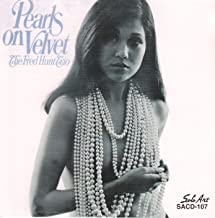
Herbert Frederick Hunt was born September 21, 1923 in London, England to musician parents. A self taught pianist, he started playing at the age of 13 and played local gigs before joining the Royal Air Force.
After demobilization, he began his musical career playing semi-professionally with Mike Daniels and the Cy Laurie Four in 1951. He then became professional and went on to join the Alex Welsh Band from 1954 to 1962 and again from 1964 to 1974.
As Welsh’s primary pianist and a featured soloist, he became one of Britain’s leading trad jazz musicians. He recorded with Eddie Davis, Bud Freeman, Eddie Miller, and Ben Webster in 1967. His work with Alex Welsh did not stop him from accompanying visiting Americans, including recording with the four-tenor group, Tenor Of Jazz, featuring Ben Webster and Eddie “Lockjaw” Davis, which toured in the late 60s.
After leaving Welsh in 1974, he played in Copenhagen, Denmark and South Africa, then after 1976 split his time between Britain, Denmark and Germany. He led a trio featuring drummer Lennie Hastings from 1978 although Hastings died that year. In 1979 the German label Erus Records released a live recording titled Yesterdays, featuring the Fred Hunt Trio, with Hunt on piano, bassit Brian Mursell and drummer Roger Nobes.
In the late Seventies Hunt toured with Wild Bill Davison and played with Welsh once more in the early 1980s. He retired due to failing health after being incapacitated and confined to wheelchair, though he worked frequently at London’s PizzaExpress Jazz Club until his death. Pianist Fred Hunt, who played in both modern and trad jazz musical settings, passed away in Weybridge, Surrey, England at the age of 62 on April 25, 1986.
More Posts: bandleader,history,instrumental,jazz,music,piano
Daily Dose Of Jazz…
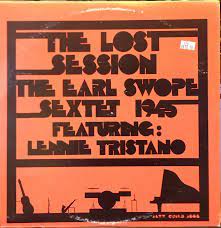
Earl Bowman Swope was born on August 4, 1922 in Hagerstown, Maryland into a musical family: his parents, a sister and two brothers were all musicians. When he was 20, he played with Sonny Dunham.
During the Forties, from 1943~47 he played with Boyd Raeburn, Georgie Auld, and Buddy Rich. Then, from 1947 to 1949 he worked with Woody Herman and recorded in small groups with Stan Getz and Serge Chaloff. The Fifties began with Earl working with Elliot Lawrence, then worked freelance in New York and Washington, D.C.
Later in the 1950s he returned to big band work, playing with Jimmy Dorsey and Louie Bellson. Residing in Washington, D.C. in the 1960s he played locally until his death. Trombonist Earl Swope, whose style was not influenced by J. J. Johnson and played in a modern barrelhouse style, passed away on January 3, 1968.

More Posts: history,instrumental,jazz,music,trombone
Daily Dose Of Jazz…
Barbara Gracey Thompson was born on July 27, 1944 in Oxford, England. She studied saxophone and classical composition at the Royal College of Music, but it was the music of Duke Ellington and John Coltrane that made her shift her interests to jazz and saxophone.
Around 1970, Thompson was part of Neil Ardley’s New Jazz Orchestra and appeared on albums by Colosseum. Beginning in 1975, she was involved in the foundation of three bands: United Jazz and Rock Ensemble, a group of bandleaders; Barbara Thompson’s Jubiaba, a nine piece Latin/rock band; and Barbara Thompson’s Paraphernalia, her most recent band with pianist Peter Lemer, vocalist Billy Thompson, bassist Dave Ball, and the late Jon Hiseman on drums.
Awarded the Most Excellent Order of the British Empire (MBE) in 1996 for her services to music, due to Parkinson’s disease diagnosed in 1997, she retired as an active saxophonist in 2001 with a farewell tour. After a period of working as a composer exclusively, she returned to the stage in 2003.
Following hospitalization with atrial fibrillation, she landed a role in an accident and emergency department featured in an episode of the Channel 4 fly-on-the-wall television documentary “24 Hours in A&E” in October 2020.
Thompson has worked closely with Andrew Lloyd Webber on musicals such as Cats and Starlight Express, his Requiem, and Lloyd Webber’s 1978 classical-fusion album Variations. She has written several classical compositions, music for film and television, a musical of her own and songs for the United Jazz and Rock Ensemble, Barbara Thompson’s Paraphernalia and her big band Moving Parts.
She played the incidental music in the ITV police series A Touch of Frost starring David Jason, and flute on Jeff Wayne’s Musical Version of The War of the Worlds. Saxophonist and flutist Barbara Thompson remains active.

More Posts: bandleader,flute,history,instrumental,jazz,music,saxophone
Daily Dose Of Jazz…
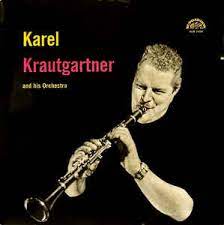
Karel Krautgartner was born on July 20, 1922 in Mikulov, Moravia into the family of a postmaster. He began studying clarinet on a private basis with Stanislav Krtička, and performed a demanding part of the Concertino by Leoš Janáček at the composer’s request at the festival of contemporary music in Frankfurt am Main, Germany in 1926. Acquiring the necessary skills of clarinet playing, and a fanatic passion for clarinet construction and components – reeds, mouthpieces, and barrels, which he later used his knowledge of wind instruments as a lecturer at German universities in Cologne and Düsseldorf.
In 1930 he began playing piano and by 1935 after moving to Brno, Czech Republic he became interested mainly in jazz radio broadcasts. 1936 saw Karel founding the student orchestra Quick band. In 1942, he signed his first professional contract as a saxophonist in the Gustav Brom orchestra in the hotel Passage in Brno. A year later he created Dixie Club and started to arrange in the Benny Goodman and Glenn Miller styles. From 1945 – 1955, the core of the Dixie Club moved to Prague and became a part of the Karel Vlach Orchestra.
He achieved a privileged position as the leader of the saxophone section and started to contribute with his own compositions. In 1956,along with Karel Velebný he put together the Karel Krautgartner Quintet, performed with the All Star Band, and with Studio 5. During the Sixties he became the head of the Dance Orchestra of Czechoslovakia Radio, renamed the Karel Krautgartner Orchestra. In 1968 he emigrated to Vienna, Austria and became the chief conductor of the 0RF Bigband. He eventually moved to Cologne, Germany. Clarinetist, saxophonist, arranger, composer, conductor and educator Karel Krautgartner passed away on September 20, 1982.
More Posts: arranger,clarinet,composer,conductor,educator,history,instrumental,jazz,music,saxophone