

Daily Dose Of Jazz…
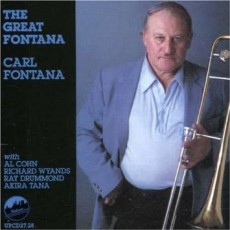
Carl Charles Fontana was born on July 18, 1928 in Monroe, Louisiana and learned jazz from his father Collie, a saxophonist and violinist. He first performed with his father’s band while in high school and would go on to attend the University of Louisiana Monroe for two years prior to transferring to Louisiana State University and getting a degree in Music Education.
Fontana got his first professional break on the jazz scene in 1951 when he was hired to stand in for Urbie Green in the Woody Herman band. Impressing the bandleader with his improvisational skills he kept him on as a permanent member of the band even after Green returned..
Three years later he left Herman and joined Lionel Hampton’s big band. In early 1955 he played briefly with Hal McIntyre before joining Stan Kenton’s big band later in the year. He recorded three albums with Kenton and also worked with fellow trombonist Kai Winding during this period. Being an inventive yet fluid player made it easy for him to record and tour, but Carl was also a master of the “Doodle Tonguing” technique, that allowed him to smoothly execute runs of notes at speeds many had not previously considered possible to achieve on a slide trombone.
By 1958, Fontana was living in Las Vegas, Nevada and would tour only on rare occasions. He primarily performed with house orchestras in Las Vegas during the 1960s, particularly Paul Anka’s band with Rosolino, and in the bands backing Sammy Davis Jr., Tony Bennett, Wayne Newton and the Benny Goodman Orchestra. This continued into the Seventies in addition to recording with Louie Bellson, Bill Watrous, and Supersax as well as co-leading a date with Jack Hanna, titled The Hanna-Fontana Band: Live at Concord.
The 1980s saw him appearing regularly on National Public Radio’s Monday Night Jazz program. And although he recorded on more than 70 albums over his long career, his first true record as a headliner did not appear until 1985 when Uptown Jazz released The Great Fontana. He continued performing and recording sporadically throughout the 1990s.
Trombonist Carl Fontana, who never earned great fame but was on every great trombonist’s list of greats, passed away in Las Vegas, Nevada aged 75 after suffering from Alzheimer’s disease on October 9, 2003.

Jazz Is Global – Share
More Posts: trombone
Daily Dose Of Jazz…
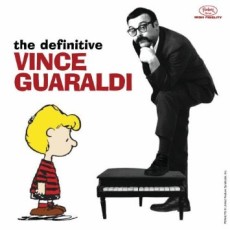
Vince Guaraldi was born Vincent Anthony Dellaglio on July 17, 1928 in San Francisco, California. Growing up in the North Beach area, taking the name of his stepfather Tony Guaraldi after being adopted and being around his maternal uncle was a musician, singer and whistle all became an important influence on his blossoming musical career. He attended Lincoln High School, went on to San Francisco State University and then enlisted and served as an Army cook during the Korean War.
His first recording was a self-titled LP recorded in 1953 with the Cal Tjader Trio and released early the following year. By 1955, Guaraldi had his own trio with Eddie Duran and and Dean Reilly. Reuniting with Tjader in 1956 he became an integral part of two bands that the vibraphonist assembled, the first band played mainly straight jazz with Al Torre on drums and Eugene Wright on bass and Luis Kant playing congas and bongos. The second band included Al McKibbon, Mongo Santamaria, Willie Bob, Paul Horn and Jose “Chombo” Silva. He made a big splash with his performance with Tjader at the 1958 Monterey Jazz Festival.
Vince left the group early in 1959 to pursue his own projects full-time. He probably would have remained a well-respected but minor jazz figure had he not written an original number to fill out his covers of Antonio Carlos Jobim/Luis Bonfá tunes on his 1962 album, Jazz Impressions of Black Orpheus. His label, Fantasy Records released the single Samba de Orpheus with his original Cast Your Fate To The Wind on the B-side trying to catch the building bossa nova wave. As providence would have radio DJs began flipping it over and playing the B-side and the gentle, likeable tune stood out from everything else on the airwaves and became a grassroots hit and won the Grammy for Best Original Jazz Composition.
Guaraldi would go on to record with Brazilian guitarist Bola Sete, began experimenting with electric piano and then composed a series of Latin influenced waltz tempos and jazz standards for the Eucharist chorus at the San Francisco Grace Cathedral. Through contact with Peanuts television producer Lee Mendelson, he was commissioned to score the upcoming Christmas special and played what would become Linus and Lucy over the phone two weeks later. The Vince Guaraldi Trio with drummer Jerry Granelli and bassist Fred Marshall recorded the soundtrack and he would go on to compose scores for seventeen Peanuts television specials, plus the feature film A Boy Called Charlie Brown.
Pianist and composer Vince Guaraldi passed away at age 47 on February 6, 1976. The evening before, he had dined at Peanuts producer Lee Mendelson’s home and was reportedly not feeling well, complaining of indigestion-like chest discomfort that his doctor had told him was nothing to worry about. The following evening, after concluding the first set at Butterfield’s Nightclub in Menlo Park, California with his interpretation of the Beatles’ Eleanor Rigby, Guaraldi and drummer Jim Zimmerman returned to the room they were staying in that weekend at the adjacent Red Cottage Inn, to relax before the next set. Walking across the room he just collapsed. That was it. The cause of death has been variously described as a heart attack or an aortic aneurysm. He had just finished recording the soundtrack for It’s Arbor Day, Charlie Brown earlier that afternoon. He left us a modest catalogue of some 32 albums as a leader or co-leader, 14 notable appearances as a sideman and another eleven showcasing or featuring his music.
Give A Gift Of Jazz – Share
Daily Dose Of Jazz…
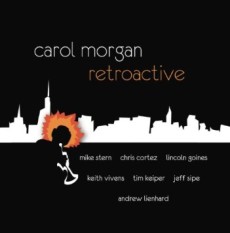
Carol Morgan was born on July 11, 1968. Originally from Texas, she decided to matriculate through and graduated from The Julliard School, subsequently making her home in New York City. A definitive voice unto herself, the influences of Woody Shaw, Freddie Hubbard, Miles Davis and Louis Armstrong can be heard in her playing. She has released five CDs as a leader working in trio, quartet and quintet setings with her latest in 2013 titled Retroactive.
She has worked with Chris Gekker, Mark Gould, Ingrid Jensen, Dennis Dotson Mike Stern, Chris Cortez, Danielle Reich, Harvie S, Rich DeRosa, Joel Frahm, Martin Wind and Matt Wilson among others. She has been a side-woman on recording dates with the DIVA Jazz Orchestra, Hawk-Richard Jazz Orchestra, the Manhattan Chamber Orchestra, and NPR’s The Engine Of Our Ingenuity.
As a composer Carol has been commissioned to create works for the Diverse Works, the Michele Brangwen Dance Ensemble, the Archdiocese of Houston/Galveston and the St. Thomas Presbyterian Church in Houston. She has authored The Practicing Improviser, a highly regarded method for jazz improvisation.
She is a member of the DIVA Jazz Orchestra, a variety of ensembles under the name of Stiggall & Associates and the group Gingerbread led by Brad Linde. Trumpeter, composer, educator and author Carol Morgan continues to record and perform across the United States and in Europe.
Jazz Is Global – Share
More Posts: trumpet
Daily Dose Of Jazz…
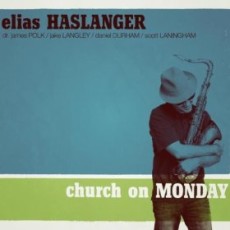
Elias Haslanger was born on July 9, 1969 in Austin, Texas. Growing up during the 1980s he listened to the Marsalis Brothers, Mark Whitfield and Roy Hargrove among others. In sixth grade he picked up the saxophone, and by the time he was in high school, he was playing gigs around his hometown and San Antonio.
After graduating from high school he attended the University of Texas at Austin studying with Harvey Pittel, then moved to New York to matriculate the Manhattan School of Music. From there his education took him back to study at Southwest Texas State University (TSU), during which time he received the Downbeat Student Music Award for College Outstanding Tenor Saxophone Performance.
His 1994 debut album Standards is a collection of straight-ahead bop and swing tunes featuring the top Austin area musicians. His second project titled For The Moment followed by his 1998 release of Kicks Are For Kids that brought the Marsalis patriarch in to collaborate. That same year Elias put on his educators cap and began teaching theory and composition at TSU.
A move to Brooklyn, New York in 2000 got the attention of Maynard Ferguson and in short order Haslanger was sitting in the same chair that Wayne Shorter once occupied. This experience help shaped him as a bandleader and performer.
In 2004 he returned to Austin, started his own label Cherrywood Records, released it debut release Dream Story. He has performed with Harry Connick Jr., Frank Foster, Clark Terry, Steve Turre, Al Grey, Lew Soloff, Marvin “Smitty” Smith, Ron Westray, Jesse Davis, J. J. Johnson, Peter Martin, Russell Gunn, among other jazz luminaries. He has also played with Chirstopher Cross, The Temptations, The Four Tops, Alejandro Escovedo, Asleep At The Wheel, Sheryl Crow and countless others in pop and soul genres.
Tenor, alto, and soprano saxophone player Elias Haslanger continues to perform, record and tour around the world with annual invites to play the North Sea and Montreux Jazz Festivals.
Inspire A Young Mind
More Posts: saxophone
Daily Dose Of Jazz…
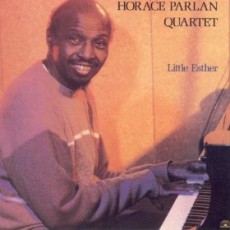
Massimo de Majo was born in Rome, Italy on July 8, 1957 and began studying music at a very young age. By 1980 while matriculating through Rome University studying Music and Literature he earned a Masters Degree in Percussion Instruments. He went on to study, apprentice and refine his skills under David Liebman, Elvin Jones, Marvin Bugalu Smith, Horace Parlan, Billy Hart, Max Roach, Richie Beirach, Wayne Shorter, Buster Williams, Harold Land, Carlos Santana and Larry Coryell.
He has developed an intense energy flow, wide dynamics and an acute sense for interplay, being comfortable playing free form music, as well as within more structured frameworks. Over the course of his career de Majo has spent most of his life outside Italy performing across Europe, the United States, Scandinavia and Japan. Though not widely known to the general public, the percussionist is regarded as a musicians’ musician and sought after on the jazz circuit.
During the last thirty years, focusing mostly on performing and teaching, he has recorded with Horace Parlan, Per Goldschmidt, Al Swainger, Andy Williamson, Biancamaria Stanzani Ghedini and Philip Clouts, among others. As a composer he has also created pieces for the theatre, contemporary dance, video, sound design and installation art. Drummer Massimo de Majo is also an educator and sits on the faculty of the University of Malta teaching several different courses in the Music Department. He continues to perform and record.
Dose A Day – Blues Away
More Posts: drums