


Daily Dose Of Jazz…
Mark Finkin was born to deaf parents in New York City on October 9, 1949 and has been making music since he was five. He started playing at Carnegie Hall at the age of seven and went on to study at Music and Art High School in New York City and later went on to the Midwest to study at The College of Emporia for music. He moved to Maui, Hawaii where he studied composition and piano at The Atlantic University.
Returning to New York City after several years on the island, he recorded with Boris Midney, a Soviet alto saxophonist who took Mark and his group Windmill under his wing. Performing in the New York, New Jersey area he relocated to Florida. While in Florida he honed his craft and recorded and performed with Music of the Spheres who fused laser light and sound to the Miami Space and Transit Planetarium.
Once again Mark returned to New York to settle in Saratoga Springs where he has been performing in and around the Capital district. He has played with Barry Manilow, Alexis Cole, Sherry Saba, Michael Panza, Larry Levine, Mike Wick, Sharron Edwards and Ron Mayfield to name a few.
Finkin’s talent lies beyond jazz as he has written the music for the local production of Popeye Canfield, is the pianist for the inspirational Christian group Revealer, and has played piano at The Lodge in Saratoga Springs for the last six years during the Saratoga, New York racing season.
Pianist Mark Finkin continues to perform, compose and record with Las Manos and his daughter Alexis Cole.


Daily Dose Of Jazz…
Clarence Williams was born on October 8, 1898 in Plaquemine, Louisiana to Dennis, a bassist, and Sally Williams. He ran away from home at age 12 to join Billy Kersands’ Traveling Minstrel Show, then moved to New Orleans, Louisiana. He first worked shining shoes and doing odd jobs, but soon became known as a singer and master of ceremonies.
By the early 1910s, he was a well-regarded local entertainer also playing piano, and was composing new tunes by 1913. Williams was a good businessman, working arranging and managing entertainment at the local Black vaudeville theater. He played at various saloons and dance halls around Rampart Street, and in the clubs and houses in Storyville.
He started a music publishing business with violinist/bandleader Armand J. Piron in 1915, which by the Twenties was the leading Black owned music publisher in the country. He toured briefly with W. C. Handy, and set up a publishing office in Chicago, Illinois before settling in New York City in the early 1920s. During the decade he and his blues singer/actress wife Eva Taylor moved to the borough of Queens with the intention of creating a community of black artists.
He was one of the primary pianists on scores of blues records recorded in New York during the 1920s. He supervised the 8000 race series recordings for the New York offices of Okeh phonograph company in the 1920s. He also recorded extensively, leading studio bands for OKeh, Columbia, Vocalion, Bluebird and occasionally other record labels.
As a producer he participated in early recordings by Louis Armstrong, Sidney Bechet, Bessie Smith, Virginia Liston, Irene Scruggs, his niece Katherine Henderson, and others. Most of his recordings were songs from his publishing house.
In 1943, he sold his extensive back-catalogue of tunes to Decca Records for $50,000 and retired. He bought a bargain used-goods store, the Harlem Thrift Shop.
Pianist, composer, promoter, vocalist, theatrical producer, and publisher Clarence Williams, died on November 6, 1965 in Queens, New York.
More Posts: bandleader,composer,history,instrumental,jazz,music,piano,producer,promoter,publisher,vocal
Daily Dose Of Jazz…
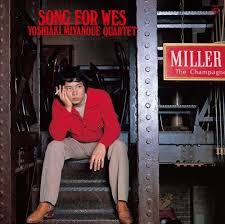
Yoshiaki Miyanoue was born in Setagaya, Tokyo, Japan on October 7, 1953. At the age of 10 he took up the guitar. In his last year of junior high school he heard a record by Wes Montgomery and became interested in jazz. During his years at Musashino High School he formed a band and after graduating he joined the New Group Trio with organist Joe Davis and drummer Jerry Eddy. They landed a residency at the N.C.O Club at Yokota Air Base in Yokosuka, Japan for three years. At the same time, he had his own quartet and played at jazz night clubs and bars in Tokyo.
1977 saw him traveling to New York City to develop his artistic strength and maturity. After returning home, Yoshiaki made his national debut, releasing the album Song for Wes for King Record, with Philly Joe Jones as a guest drummer, who was in country with Bill Evans. Thereafter he has released one album after another totalling seventeen to date. Among the guest performers were Jimmy Smith, Dr. Lonnie Smith, and Andrew Simpkins.
In 1981 Miyanoue put together his own group and named it Smokin’. To this day the group has played at night clubs in Tokyo and toured all over the nation. They have appeared on several television and radio music programs while playing at jazz concerts and festivals overseas.
Guitarist Yoshiaki Miyanoue, who was influenced by Wes Montgomery and plucks the strings with his thumb, continues to perform and record.
More Posts: bandleader,guitar,history,instrumental,jazz,music

Daily Dose Of Jazz…
Dieter Antritter was born in Pforzheim, Germany on October 6, 1929. After the end of World War II he started first to learn guitar, then later he switched to soprano saxophone. A move to Stuttgart, Germany gave him the opportunity to connect with the local jazz-scene.
On holiday in Paris, France in 1949, he unsuccessfully attempted to meet Sidney Bechet. However, Dieter eventually met Charles Delaunay, who opened him to the possibility of jamming with contemporary jazz greats living in Paris that time. Improving his playing, he built up a network with a few well-known jazz musicians.
Returning to Stuttgart in 1952 he founded the Latin Jazz Band. He used his concerts as a platform for guest musicians from his Paris connection to perform. From this band the Quartier Latin Jazz Band emerged, which existed until at least 2009. During those years this band accompanied numerous guest soloists such as Michel Attenoux, Peanuts Holland, Mezz Mezzrow, Benny Waters and Nelson “Cadillac” Williams.
In 1960, this led to several recordings for Deutscher Schallplattenclub, all recorded in Stuttgart venues. Antritter was one of the world’s longest-serving bandleaders, who led his band for 63 years, from 1952 until his death in 2015.
Bandleader, soprano and alto saxophonist Dieter Antritter died on August 5, 2015 in Königsbach-Stein, Germany.
More Posts: bandleader,history,instrumental,jazz,music,saxophone

Daily Dose Of Jazz…
Fred Norman was born on October 5, 1910 in Leesburg, Florida. After attending Howard University, in Washington, DC he joined the Claude Hopkins band in 1932. Touring with the group as both a trombonist and singer for much of the 1930s, he notably recorded his own composition, Church Street Sobbin’ Blues, as the trombone soloist with the band in 1937 for Decca Records. He also appeared in short films with the Hopkins band during the 1930s.
Moving away from performance in 1938 he went on to work as a full-time music arranger. The late Thirties and 1940s saw him writing arrangements for Bunny Berigan, Tommy Dorsey, Benny Goodman, Lionel Hampton, Gene Krupa, Teddy Powell, Artie Shaw, Charlie Spivak, and Jack Teagarden.
In the 1950s he was the music director and arranger for multiple records made by the singers Sarah Vaughan and Dinah Washington. He continued to work as an arranger until his retirement in the 1970s.
Composer, arranger, trombonist, and vocalist Fred Norman died on February 19, 1993 in New York City.
More Posts: arranger,bandleader,composer,history,instrumental,jazz,music,trombone,vocal