

Daily Dose Of Jazz…
Gene Ludwig was born on September 4, 1937 in Twin Rocks, Cambria County, Pennsylvania and raised in the boroughs of Wilkinsburg and Swissvale, near Pittsburgh, Pennsylvania. He began studying the piano at age 6 and became interested in rhythm and blues after hearing Ruth Brown, Big Joe Turner and organists Bill Doggett and Wild Bill Davis.
Graduating from Swissvale High School in 1955, he studied physics and mathematics at Edinboro State Teachers College. He left due to his father going on strike at Westinghouse Electric, and returned to Pittsburgh to work in construction.
Ludwig began performing in local vocal groups before hearing organist Jimmy Smith perform at the Hurricane nightclub in Pittsburgh’s Hill District. That initial encounter inspired him to take up the Hammond organ. He bought several organs before settling on the B-3 after sharing a bill with Jimmy Smith in 1964 in Atlantic City, New Jersey.
Traveling along the East Coast and to Ohio, he performed jazz and rhythm and blues, and released numerous singles and albums as a leader and a sideman. Gene released a 45-rpm single of the Ray Charles song Sticks & Stones in 1963, then in 1967 he released Mother Blues on Johnny Nash’s Jocida record label. He went on to replace Don Patterson in saxophonist Sonny Stitt’s band in 1969, appearing on Stitt’s album, Night Letter.
Ludwig toured with bass-baritone vocalist Arthur Prysock and guitarist Pat Martino. He released the album, Now’s the Time, in 1980 on Muse Records, and continued to travel and work through the ’80s and ’90s, regularly performing at Pittsburgh’s Crawford Grill and James Street Tavern. He signed with Loose Leaf/Blues Leaf Records in 1997 and released the albums Back on the Track, Soul Serenade, The Groove ORGANization, Hands On, and Live in Las Vegas, for the label.
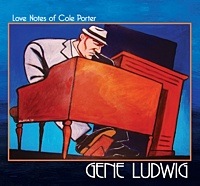
Hammond B-3 organist Gene Ludwig, who was a prominent figure on the Pittsburgh jazz scene, died in Monroeville, Pennsylvania on July 14, 2010. A posthumous album, Love Notes of Cole Porter, was released in 2011 by Jim Alfredson’s Big O Records.

More Posts: bandleader,history,instrumental,jazz,music,organ
Daily Dose Of Jazz…
Joe Rigby was born on September 3, 1940 in Harlem, New York and grew up in the Sugar Hill neighborhood where his neighbors included Johnny Hodges, Sonny Rollins, Jackie McLean, and Kenny Burrell. He started playing piano when he was six and began playing flute and clarinet in high school. His focus eventually switched to the saxophone after hearing John Coltrane and Charlie Parker.
Graduating from the College of Staten Island he earned a bachelor’s degree in Music and a minor in Music Education. Rigby would go on to study privately with Joe Allard, Garvin Bushell, and Anders Paulsson. He taught instrumental music with the New York City Board of Education from 1989 until he retired in 2004, and was named New York’s Music Teacher of the Year in 1996.
Performing on alto, soprano, baritone and sopranino saxophone, Joe began performing professionally with Milton Graves, Johnny Copeland, and Steve Reid, with whom he led the Master Brotherhood. In the late 1970s, he formed and led his own group, Dynasty.
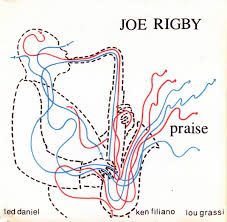
Establishing his Homeboy record label, he released a record with trumpeter Ted Daniel, and the album Music as a solo artist in 2009. The same year he recorded on French label Improvising Beings, releasing For Harriet with a quartet which included bagpiper player Calum MacCrimmon.
Tenor, alto, baritone, soprano and sopranino saxophonist Joe Rigby, who also plays flute and piccolo, died on July 16, 2019 at the age of 78.
More Posts: bandleader,flute,history,instrumental,jazz,music,piccolo,saxophone
Daily Dose Of Jazz…
Irene Aranda was born in Jaén, Andalucía, Spain on September 2, 1980 and started to play piano at age seven under the guidance of her maternal grandparents. She graduated from the Conservatory of Music in Granada and complimented her classical training by attending piano performance and composition classes with Gerardo López Laguna, Guillermo González, Fernando Puchol, Pilar Bilbao, Antonio J. Flores and Javier Darías, among the most notable.
She was self-taught in jazz and free improvisation, she later studied with Peter Zack, Eduard Simons, Chano Domínguez, Nikky Illes, Mike Ph. Mosman, Greg Hopkins, David Pastor, Jordi Farrés Tomás, Pete Churchill, Perico Sambeat, Tony Reedus, etc.
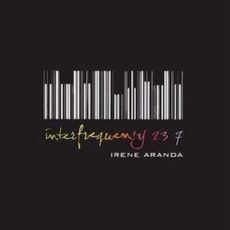
Her first work as a leader, Interfrequency 23 7, brought her great critical acclaim which led her to participate in numerous festivals. Since her debut release in 2007 she has released six more albums.
Freed from stereotypes, Irene has gone on to perform and collaborate with Paolo Fresu, Toots Thielemans, Maria Pia De Vito, Baldo Martínez and Bojan Z among others. Aranda has played with Don Malfon, Brandon López, Markus Breuss, Johannes Nästestjö, Samuel Blasser, Germán Díaz, Agustí Fernández, Joanna Mattrey, Lucía Martínez, Javier Carmona, Núria Andorrà, Marc Egea and numerous others.
Pianist, improviser, composer Irene Aranda continues to swim against the stream of pianists with her creativity and exploration in her music.
More Posts: bandleader,composer,history,improviser,instrumental,jazz,music,piano
Daily Dose Of Jazz…
Wolter Wierbos was born on September 1, 1957 in Holten, Overijssel, Netherlands. Self-taught, he started on a wind instrument in a drum band. He created a unique sound on his trombone and beginning in 1979 he became active in the Dutch creative jazz music scene.
He plays contemporary and improvised music, making excursions to post-punk and toured with various formations throughout Europe, Canada, the US and Asia. Wolter has played with Cumulus, JC Tans & Rockets, Theo Loevendie Quintet, Guus Janssen Septet, Loos, Maarten Altena Ensemble and Podiumtrio. He’s led his own band, Celebration of Difference, and has been involved in theater, dance, television and film projects. He has also played with Henry Threadgill, The Berlin Contemporary Jazz Orchestra, the European Big Band led by Cecil Taylor, the John Carter Project, Mingus Big Band.
Maintaining a solo career he has a running project under the name Wollo’s World, and has recorded on more than 100 compact discs and LPs, has released two solo cds, and a round-trip tour of his horn. The highlight in his career was the Boy Edgar award in 1995 and the Podiumprijs for Jazz and Improvised Music.
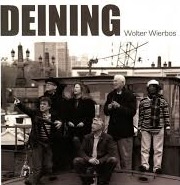
Trombonist Wolter Wierbos, who is best known as a member of the ICP Orchestra and is currently performing with Misha Mengelberg’s ICP, the Gerry Hemingway Quintet, Franky Douglas Sunchild and Bik Bent Braam, continues to perform, compose and record.
More Posts: bandleader,history,instrumental,jazz,music,trombone
Daily Dose Of Jazz…
May Alix was born Liza Mae Alix on August 31, 1902 in Chicago, Illinois and began her career as a teenager after winning a talent contest. She performed with the Jimmie Noone band in the clubs around the city. She later worked with bandleaders Carroll Dickerson, Duke Ellington, and Luis Russell.
She earned the nickname “Queen of the Splits” for the dance choreography included in her show, where she would do a split for every dollar thrown by a customer. Soon she joined Ollie Powers as a duo performing in cabarets.
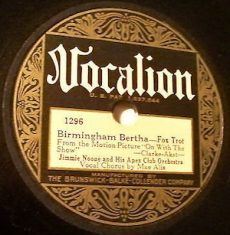
1926 saw her recording with Louis Armstrong and His Hot Five, one being Big Butter and Egg Man, which became Armstrong’s first chart hit. She went on to collaborate with Jimmie Noone on half a dozen recordings for Vocalion Records at the end of the decade including Ain’t Misbehavin, My Daddy Rocks Me, and Birmingham Bertha/Am I Blue?.
During the 1930s and early 1940s, she performed mainly in New York City. Jazz singer Alberta Hunter sometimes recorded under the name “May Alix”, with the permission of the real May Alix.
Vocalist May Alix, who left show business in 1941, died on November 1, 1983.

More Posts: bandleader,history,instrumental,jazz,music,vocal