

Daily Dose Of Jazz…
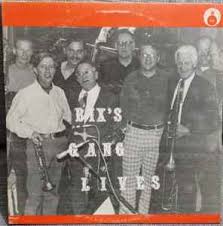
William C. Rank was born in Lafayette, Indiana, on June 8, 1904 and initially worked in Indiana and Florida. In 1922, He played trombone in Tade’s Singing Orchestra, which was led by violinist Tade Dolen. Between 1923 and 1927 he played with Jean Goldkette’s band in Detroit, Michigan and often recorded with Bix Beiderbecke.
After playing with Adrian Rollini in 1927 he had a period working freelance, then he joined Paul Whiteman’s band, and stayed until 1938. Rank became a studio musician in Hollywood into the early 1940s, when he moved to Cincinnati, Ohio It was while living here that he led a tenet for the rest of the 1940s.
After changing his musical lifestyle to performing part-time, he worked in the insurance industry. His one album as a leader, a tribute to Beiderbecke, was recorded in 1973.
Trombonist Bill Rank continued playing until a short time before his death, on May 20, 1979, in Cincinnati.

Daily Dose Of Jazz…
Eugene Porter was born in Pocahontas, Mississippi on June 7, 1910 and began on cornet, but when his instrument was stolen he picked up saxophone and clarinet, studying the latter under Omer Simeon. His family moved to Chicago while still in high school, but left school early to start a career in music
Moving to New Orleans, Louisiana in the Thirties he worked in and around town as well as on riverboats, with Papa Celestin, Joe Robichaux, and Sidney Desvigne. He was with the Jeter-Pillars Orchestra from 1935 to 1937, then played with Don Redman briefly before returning to Jeter-Pillars until 1942. Following this Gene worked with Jimmie Lunceford and then with Benny Carter until 1944, working as assistant bandleader under him. He appeared in several films, including with Fats Waller.
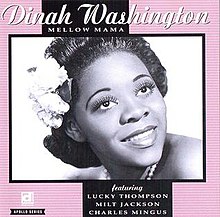
Porterer was in the Army in 1944-45 as a member of an Army band, then played with Carter again and recorded with Dinah Washington during this period. For the next two years he performed with Charles Mingus and Lloyd Glenn.
After moving to San Diego, California in 1948 he played with Walter Fuller until 1960. Gene led his own ensemble at the Bronze Room in La Mesa, California beginning in 1967.
Saxophonist and clarinetist Gene Porter, who was named a member of the St. Louis Jazz Hall of Fame in the 1980s, died in San Diego County, California, on February 24, 1993.
More Posts: bandleader,clarinet,history,instrumental,jazz,music,saxophone

Daily Dose Of Jazz…
Paul Lovens was born on June 6, 1949 in Aachen, Germany. In the early 1970s, he was part of a trio with pianist Alexander von Schlippenbach. He went on to work with Cecil Taylor, Harri Sjöström, Günther Christmann, Eugene Chadbourne, Peter Brötzmann, Teppo Hauta-Aho, Mats Gustafsson, Thomas Lehn, Phil Wachsmann, Rajesh Mehta and Joëlle Léandre.
He also played with Florian Schneider and Ebehard Kranemann in an early incarnation of Kraftwerk. Since 1967, Lovens has run the record label Po Torch with Paul Lytton
Drummer Paul Lovens, who also plays percussion, singing saw, and cymbals, has performed with the Aardvark Jazz Orchestra and Berlin Contemporary Jazz Orchestra, and continues his musical endeavors.
More Posts: bandleader,cymbals,history,instrumental,jazz,music,percussion,piano,singing saw

Daily Dose Of Jazz…
Karl Sterling was born in Ithaca, New York on June 5, 1961. Growing up in a musical household, it was a natural thing for him to take to music and drums. Both parents attended the Ithaca College School of Music with his father, a drummer, composer/arranger, and band leader, his mother, a vocalist and pianist.
His interest turned to medicine and he became a nuerorehabilitation specialist, educator, and advocate for people with Parkinson’s disease. So in 2018 Karl founded the Parkinson’s Global Project nonprofit corporation dedicated to funding research and supporting associations around the world.
Using his musical talents to raise awareness of the disease, in 2019, Sterling recorded Dream, a project in which Jimmy Haslip, Jeff Richman, Peter Erskine, Scott Kinsey, and other musicians donated their time and talent.
He has since traveled, researching with and educating neurologists, physical therapists, fitness trainers, people with Parkinson’s, and caregivers all over the world.
Drummer Karl Sterling has spent the majority of his life in the Syracuse, New York area and continues to perform, compose and educate.
More Posts: bandleader,composer,drums,educator,history,instrumental,jazz,music

Daily Dose Of Jazz…
Alan Branscombe was born on June 4, 1936 in Wallasey, Cheshire, England into a family of musicians. His father and grandfather were professional musicians and began on alto sax at age six. As a child he played drums with Victor Feldman in a talent show as a child.
During his time in the Army he played with Jeff Clyne in 1954–56. He toured and recorded with Vic Ash in 1958, recorded with Tony Kinsey the following year, and toured Japan with Stanley Black at the turn of the new decade. Alan worked with John Dankworth as pianist and vibraphonist intermittently between 1960 and 1972, including in the 1963 film The Servant.
Joining Harry South’s band at Ronnie Scott’s club in the mid-1960s, Branscombe went on to play as a sideman with Tubby Hayes, Stan Tracey, and Paul Gonsalves through the decade. He played with Ben Webster in 1965 and again in 1970, and in the Seventies he was with Albert Nicholas, toured in Europe with Stan Getz, and played with the Lamb-Premru group around 1971.
As a leader Branscombe recorded with Tony Kinsey and Tony Coe as sidemen on the album The Day I Met the Blues in 1977. As a session musician, he played tenor saxophone on The Beatles song Got To Get You Into My Life.
Pianist, vibraphonist, and alto saxophonist Alan Branscombe died on October 27, 1986.
More Posts: bandleader,history,instrumental,jazz,music,piano,saxophone,vibraphone