

Daily Dose Of Jazz…
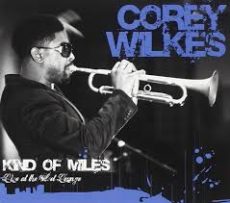
Corey Wilkes was born June 3, 1979 in Chicago, Illinois. He began his musical journey at a young age and received a full scholarship to Berklee College of Music in Boston, Massachusetts. After graduating, he became an in-demand touring and recording artist, collaborating with the Art Ensemble of Chicago, Roy Hargrove, Kahil El Zabar, James Carter, Tedeschi Trucks Band, Nicole Mitchell, Dr. Lonnie Smith, Makaya McCraven and many more.
Wilkes’ talents as a composer won him an Outstanding Achievement for Documentary Program ~ Historical Emmy Award for his film score for the Ida B Wells documentary. He is also a Grammy-nominated musician for his work as a member of the Ethnic Heritage Ensemble. His electro-acoustic soulmusic blends jazz, electronic music, and soulful vocals in his solo projects.
Beyond music Corey has also worked with visual artists such as Theaster Gates, Nick Cave, Lucy Slivinski and Rashid Johnson, creating multi-disciplinary performances that blend music, art, and culture. He has also worked with renowned House Music DJ’s such as Osunlade, Ron Trent, Jaimie Principle, and Vick Lavender, fusing jazz with electronic and house music.
Trumpeter, producer, composer and actor Corey Wilkes continues to captivate audiences around the world.

More Posts: bandleader,composer,history,instrumental,jazz,music,producer,trumpet
Requisites
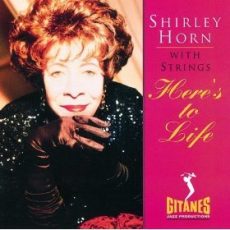
The very first time I heard Shirley Horn sings and play piano was in the 1970s at the Bohemian Caverns in Washington, D.C. and I fell in love with her voice and style. By then she had recorded five albums and when I was on the radio she became a part of my regular playlist. Here’s To Life is a studio album recorded in September 1991 by the vocalist, and released in 1992. The album was arranged by Johnny Mandel who composed three of the songs on the album. He also received a Grammy Award for Best Instrumental Arrangement Accompanying Vocals on this album. It’s a quiet album of ballads that once again showcases Shirley’s talent. Johnny Mandel arranged and conducted the recording session for the Verve label.
The album opens with the title track with Here’s To Life which became her signature song. The music was written by Artie Butler and the poignant lyrics were written by Phyllis Molinary. The lyric, known world-wide as one of her finest works and the song is considered a modern day jazz standard. She followed with a medley of Come A Little Closer/Wild Is the Wind. The former song is about New Yorkers, the city and the cell phone that disputes a couple’s marriage. The song is paired with Wild Is The Wind which was written as the theme song for the 1959 film of the same name and recorded by Johnny Mathis. It was nominated for an Oscar for Best Song.
How Am I to Know? by Jack King and Dorothy Parker takes the third slot on the album. A Time for Love was written for the 1966 film An American Dream. The Begman/ Mandel tune, Where Do You Start tells the story of a couple breaking up and undecided about what belongs to whom. The next song You’re Nearer is a Lorenz Hart/Richard Rodgers composition for the Broadway musical Too Many Girls. Our next entry in Return to Paradise was written for the 1953 film of the same name by Dimitri Tiomkin and Ned Washington. Isn’t It A Pity was composed by the Gershwins for the unsuccessful 1933 musical Pardon My English, however, the song became a part of the Great American Songbook.
Quietly There is taken from the noir film Harper that starred Paul Newman as a detective. If You Love Me is an English adaptation of the popular French song “Hymne à l’amour of Hymn To Love. The album closes with Summer is the first English version of the Italian standard Estate. She ordered English lyrics after hearing Joao Gilberto’s version, which spread the song to worldwide fame.
Shirley Horn sings and plays piano and is joined by bassist Charles Ables and dummer Steve Williams as her core trio. She invited trumpeter Wynton Marsalis – to play on A Time For Love and Quietly There. Richard Todd plays the French horn on the title track. Reminding me of how precious life is and how much we should live and love, this has become my favorite album by this vocalist. I hope you enjoy it just as much as I.
More Posts: choice,classic,collectible,collector,history,instrumental,jazz,music,vocal
Daily Dose Of Jazz…
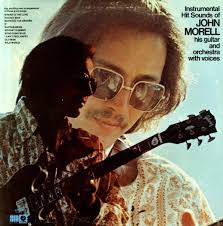
John Morell was born into a family of guitarists on June 2, 1958 in Niagara Falls, New York. His father was his first teacher and together they would play jazz with him leading and his father accompanying him and then they would switch.
As he matured he began composing and controlling the setting. His most recent recording Trading Places is an album that swings with a more contemporary sound. Morell often played with drummer John Guerin and added organist and keyboardist Steve Bohanon to make a trio.
He and Guerin have played on 40 films and countless TV soundtracks or at recording sessions for albums. The guitarist figures he’s played on 40 films, and countless TV soundtracks and recordings.
In 1968 Berkeley, California he played a concert with the Gil Evans Orchestra and the Miles Davis Quintet. For four years beginning in 1970, John was a member of the Shelly Manne outfit. Then, for a period of time Morell gave up playing to focus on building furniture. Though it paid the bills it wasn’t satisfying and he returned to music, operating his own studio and continued to flourish in a side career as a woodworker.
Guitarist, organist and composer John Morell, best known for his work with drummer Shelly Manne’s sextet, continues to perform and record.
More Posts: bandleader,composer,guitar,history,instrumental,jazz,music

Daily Dose Of Jazz…
Tony DiGregorio was born June 1, 1958 in Poughkeepsie, New York and started playing guitar at age 10. He later received informal lessons with uncle, Oscar DiGregorio, Louis E. Bruno, Gene Bertoncini, and Mark Diorio. He received his B.A.in music from Aaron Copland School of Music at Queens College. He studied classical guitar with Dennis Cinelli, composition with Schoenberg, harmony/counterpoint, piano and solfeggio with Paul Caputo, and improvisation/composition with Marty Ehrlich.
As a composer Tony created and performed incidental music for experimental theater productions of The Room, The Lady Aoi, and Journey into the Night in New York City and San Francisco, California with bassist Gerard Zanonico and clarinetist Robert Rossette.
From 1985 to 1994 DiGregorio played with the Swing Now Trio with various special guests Charlie Persip, Teddy Charles, Max Kaminsky, Chuck Wayne, Gene Bertoncini, Buddy Tate, Tom Harrell, Eddie Barefield, Mel Lewis, and Bobby Watson just to name a few.
Since 1994 Tony has worked with Laurel Watson, Hill Greene, Ken Filiano, Theo Wilson, Nicki Parrot, John Rasczka, Dave Hopkins Trio, Marco Katz, Tim Hays, and others including a performance of Terry Rielly’s “In C” with The Styrenes in 2003.
Guitarist and composer Tony DiGregorio continues to compose, perform and record.
More Posts: bandleader,composer,guitar,history,instrumental,jazz,music
Daily Dose Of Jazz…
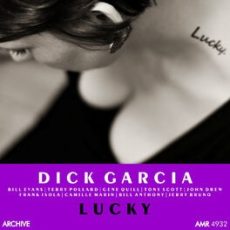
Dick Garcia was born Richard Joseph Garcia on May 31, 1931 in New York City. He began to play the guitar aged nine.
In 1950, he was a member of Tony Scott’s quartet. From 1952, he worked with George Shearing, Charlie Parker, Joe Roland, Milt Buckner, Johnny Glasel, Lenny Hambro, Aaron Sachs, and Bobby Scott.
He recorded again with Shearing in the late 1950s and early 1960s, then with Kai Winding, Milt Buckner, Nat King Cole, Johnny Glasel, Lenny Hambro, Joe Roland, Bobby Scott, Tony Scott, and Nancy Wilson.
Guitarist Dick Garcia, who recorded as a leader and sideman, still plays occasionally at age 93.
