

Daily Dose Of Jazz…
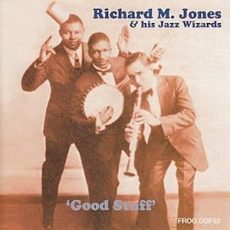
Richard M. Jones, born Richard Marigny Jones on June 13, 1892 in Donaldsonville, Louisiana and grew up in New Orleans, Louisiana. Suffering from a stiff leg he walked with a limp, causing fellow musicians to give him the nickname “Richard My Knee Jones” as a pun on his middle name. In his youth he played alto horn in brass bands. His main instrument, however, became the piano and by 1908 he was playing in Storyville, the red-light district of New Orleans. A few years later, he often led a small band which sometimes included Joe Oliver and also worked in the bands of John Robichaux, Armand J. Piron, and Papa Celestin.
In 1918, Jones moved to Chicago, Illinois where he worked as Chicago manager for publisher and pianist Clarence Williams. Jones began recording in 1923, making gramophone records as a piano soloist, accompanist to vocalists, and with his bands The Jazz Wizards and The Chicago Cosmopolitans. He recorded for Gennett, OKeh, Victor, and Paramount record labels in the 1920s.
He also worked for OKeh Records as supervisor of the company’s “Race” Records for most of the decade, separately the Caucasian artists from the Black. During this period he was the producer of Louis Armstrong’s influential Hot Five and Hot Seven recordings. In the 1930s, Jones performed a similar management role for Decca.
Pianist, composer, band leader, and record producer Richard M. Jones, sometimes written Richard Mariney Jones and who had numerous songs bearing his name as author, including Trouble in Mind and worked for Mercury Records until his death on December 8, 1945 in Chicago, at the age of 53.

Daily Dose Of Jazz…
Frank Fontaine was born June 12, in Los Angeles, California into a musical family, absorbing a great deal from his father Frank Sr., who is a ten year veteran of the Duke Ellington Orchestra. By age 16, he was performing with Harry Sweets Edison, Billy Higgins and Kenny Burrell. He has received his Bachelor degree from Seton Hall University, a Masters of Education from Boston University and is currently a Doctoral Candidate.
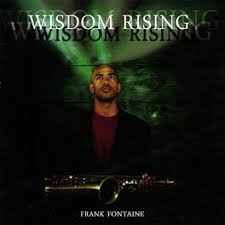
He released his debut album as a leader titled Wisdom Rising on the LifeForce Jazz Records label with John Beasley, Robert Hurst, and Marvin “Smitty” Smith. A saxophonist of choice for an array of artists, Frank is equally in demand as a flutist and arranger, while leading his organ trio or quartet.
The New York jazz scene has seen Fontaine become a favorite among elite jazz instrumentalists Francisco Mela, Ari Hoenig, George Garzone, Larry Harlow and Chembo Corniel. His collaboration with Chembo produced a Grammy Award Nomination for the album, Things I Wanted To Do. He has recorded as a sideman with Patti LaBelle, Gladys Knight, Celia Cruz, Bobby Matos, Anita Baker, Gym Class Heroes, Charanga Cubana and Tyler Perry’s Soundtracks.
Saxophonist Frank Fontaine, who is an educator teaching music as well as leading band and orchestra at McAuliffe Middle School, continues to cultivate his musical prowess at The Manhattan School of Music, a conservatory second to none, in a city second to none.
More Posts: bandleader,history,instrumental,jazz,music,saxophone
Daily Dose Of Jazz…
Jean Oh was born in Seoul, Korea on June 11, 1978 and began playing the guitar at the age of 13. He began studying music formally at Seoul Jazz Academy, and soon began playing gigs. After several years of playing with many different bands around town, he realized he needed different experiences which led him to Paris, France.
In Paris he studied jazz with Misja Fitzerald Michel, Sylvain Beof, Bernard Maury, Joe Malcolm, Emil Spanyl and Frederic Favarel. He performed in various clubs and after graduating from the music conservatory Jean moved to New York City to attend New York University where he obtained a master’s degree. During his two years at NYU, he studied with Ralph Alessi, George Garzone, John Scofield, and Gil Goldstein. He also attended the School of Improvisation Music, studying with Steve Coleman, Mark Helias, Uri Caine, David Binney, and Bily Hart.
Working his way into the New York Jazz scene he played different gigs that became his springboard to his professional career. He has played on several commercially released recordings and toured throughout the United States, Canada, Japan, South America, Philippine, Russia and has shared stages with George Garzone, John Lockwood, Jeff Hirshfield, Billy Drummond, Ralph Alessi, Ron McClure, Mike Richmond.
Guitarist Jean Oh released his debut album Invisible Worth featuring George Garzone, John Lockwood, and Jeff Hirshfield. He is pushing himself to have his voice defined in music, both as a sideman and as a band leader.
More Posts: bandleader,guitar,history,instrumental,jazz,music
Daily Dose Of Jazz…
John William Stevens was born on June 10, 1940 in Brentford, Middlesex, England, the son of a tap dancer. He listened to jazz as a child but was more interested in drawing and painting, through which he expressed himself throughout his life. He studied at the Ealing Art College and then started work in a design studio, but left at 19 to join the Royal Air Force. It was here that he studied the drums at its School of Music in Uxbridge, England and where he met Trevor Watts and Paul Rutherford, two musicians who became close collaborators.
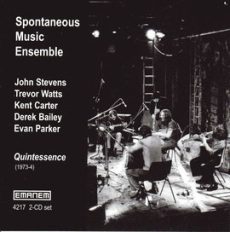
In the mid-1960s, Stevens began to play in London jazz groups with Tubby Hayes and Ronnie Scott, and in 1965 he led a quartet. He moved away from mainstream jazz when he heard free jazz from the U.S. by musicians like Ornette Coleman and Albert Ayler. By 1966, he formed the Spontaneous Music Ensemble (SME) with Watts and Rutherford. The band moved into the Little Theatre Club at Garrick Yard, St Martin’s Lane, London, England. In 1967, they released their debut album, Challenge, however, his interest turned to quiet music, non-Western music and improvisation.
Stevens would go on to play with free improvisors Derek Bailey, Peter Kowald, Julie Tippetts and Robert Calvert, until the mid-1970s when the SME settled down to regulars Stevens, Nigel Coombes on violin, and Roger Smith on guitar. During the same period he consistently played with guitarist and songwriter John Martyn as part of a trio that included bassist Danny Thompson, recording Martyn’s 1976 Live at Leeds.
The Eighties saw John becoming an educator involved with Community Music, an organisation through which he took his form of music making to youth clubs, mental health institutions, the Lewisham Academy of Music, and other unusual places. Notes taken during these sessions were later turned into a book for the Open University called Search and Reflect.
Drummer John Stevens died at the age of 54 from a heart attack on September 13, 1994.
More Posts: bandleader,drums,educator,history,instrumental,jazz,music
Daily Dose Of Jazz…
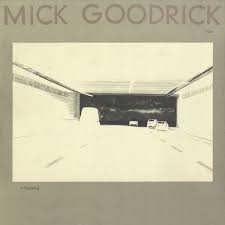
Mick Goodrick was born on June 9, 1945 in Sharon, Pennsylvania and began studying guitar in his pre-teens and was performing professionally a few years later. At sixteen he became interested in jazz at a Stan Kenton Band Camp. He moved to Boston, Massachusetts and attended the Berklee School of Music from 1963 to 1967, eventually teaching at Berklee,
After spending a few years touring with Gary Burton, he returned to Boston, he settled into a career largely as an educator. Goodrick’s notable students include Bill Frisell, Julian Lage, John Scofield, Lage Lund, Mike Stern, Avner Strauss, and Rale Micic.
During the 1980s to the late 1990s,Mick worked with Charlie Haden’s Liberation Music Orchestra, Jack DeJohnette and with Steve Swallow. He performed in a duo with Pat Metheny at the Montreal Jazz Festival in 2005 and with Wolfgang Muthspiel at the Jazz Standard in 2008.
Guitarist Mick Goodrick died November 16, 2022 from the long-term effects of Parkinson’s disease at the age of 77.
More Posts: bandleader,educator,guitar,history,instrumental,jazz,music