

Daily Dose Of Jazz…
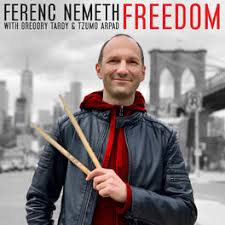
Ferenc Nemeth was born on May 20, 1976 in Keszthely, Hungary and at 14 left home to study classical percussion at the Richter János Conservatory in Győr, Hungary. Following this he attended the Franz Liszt Academy of Music and then received a scholarship to the Berklee College of Music in Boston, Massachusetts. He later enrolled in the graduate program at the New England Conservatory. In 2001 he became the first Hungarian to be accepted into the Thelonious Monk Institute of Jazz, studying there until 2003.
He has played with Herbie Hancock, Wayne Shorter, Christian McBride, John Patitucci, Terence Blanchard, John Abercrombie, Joshua Redman, Dave Samuels, Mark Turner, Ron McClure, Chris Cheek, Aaron Goldberg, Eli Degibri, and Illayaraja.
He is a founding member of Gilfema with Lionel Loueke and Massimo Biolcati. Since the group’s debut album as a leader he has released six more albums, and his sophomore release Night Songs being nominated for the 7th Annual Independent Music Awards for Jazz Album of the Year.
Based in New York City, drummer and composer Ferenc Nemeth, who has also recorded as a sideman, continues to perform, record and compose.

More Posts: bandleader,composer,drums,history,instrumental,jazz,music
Daily Dose Of Jazz…
Jan Leder was born May 19, 1958 and raised in New York City and pursued her love for improvisation after twelve years of studying classical music. She studied for three years with pianist Lennie Tristano and then continued her jazz studies with pianist Connie Crothers for over ten years. A self-styled course of study in jazz history at SUNY Purchase led to her compilation of the first comprehensive history of women in jazz titled Women in Jazz: A Discography of Instrumentalists 1913-1968.
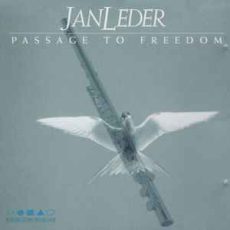
In February 1997 Monad Records released her first recording, Passage To Freedom, which was recorded live at the Five Spot in New York City. In 1999 Jan recorded Nonchalant, a collection of mostly original melodies.
Ms. Leder leads her own jazz ensembles in the New York City area, appearing at nightclubs, festivals, cultural functions and other public and private engagements. Her repertoire includes standard bebop, swing, blues and bossa novas as well as her own unique jazz compositions and those of her musical colleagues, including drummer/big band leader Art Lillard, with whom Jan collaborated on numerous compositions, mostly writing lyrics to his catchy songs.
From 1987 to 2012 Jan was a member of the flute section in Art Lillard’s Heavenly Band. Jan was also a member of a group of jazz flutists called the NY Jazz Flutet that included Dotti Anita Taylor, Elise Wood, Michele Smith and Chip Shelton along with drummer Art Lillard.
She entertains at healthcare facilities, teaches workshops and seminars, plays at fundraisers and jazz festivals. She has toured around the world, and composed pop, r&b, theater and film music. Leder has worked with the 9th Street Stompers, a popular local jazz band, playing their unique variety of jazz styles in parades, street fairs and other venues.
Flutist Jan Leder, who is a writer and publisher member of the American Society of Composers, Authors and Publishers and a member of the National Association of Music Publishers, continues to perform, compose and teach jazz improvisation.
More Posts: bandleader,flute,history,instrumental,jazz,music
Daily Dose Of Jazz…
Marco Cortesi was born on May 18, 1962 in Locarno, Switzerland. Though learning the guitar early he began taking music seriously at the age of 20. He attended several Italian summer camps with Joe di Jorio, Jim Hall, Mick Goodrick and others. From 1985 to 1991 he enrolled at the Swiss Jazz School (SJS) in Bern, Switzerland where he studied and played with Frank Sikora, Rachel Gould, Woody Shaw, Sal Nistico and others.
After graduation at SJS in 1991, he started a musical and artistic relationship with American and European musicians and started working regularly with Gene Calderazzo in a trio that features special guests such as Franco Ambrosetti, Walt Szymansky, Jon Davis, Mark Abrams, Dario Deidda, Jeff Gardner, Rick Margitza, Giorgio di Tullio, Alberto Bonacasa and many others. He went on to perform in trio to quintet configurations at festivals and in clubs.
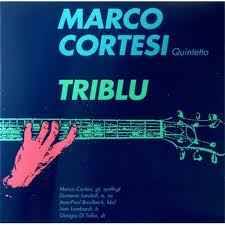
In 1997 he’s in London, England for a tour with the Gene Calderazzo Quartet. That same year the Swiss label Altri Suoni released his first CD Triblu. In 1999 he was in New York City he worked, toured and recorded with pianist Jeff Gardner. He went on to tour with tenor saxophonist Rick Margitza, with whom he also recorded with his sophomore project Why Not in 2000. He has collaborated with Franco Ambrosetti, trumpeter Hilaria Kramer, lute player Luca Pianca, and viola player Walter Fähndrich.
Guitarist Marco Cortesi composed all the music and soundtracks played and recorded by his group. He writes music for jingles, radio tunes, and electronic compositions for professional use in the media business.
More Posts: bandleader,guitar,history,instrumental,jazz,music

Daily Dose Of Jazz…
Gustave Joseph Viseur was born on May 17, 1915 was born in Lessines, Belgium and because his father was a bargeman, the family moved around a lot until 1920, when they settled in Paris, France. He was given basic instruction in how to play the accordion by his father from the age of eight, then received lessons from a music professor. Father and son played together in an amateur band from 1929. After his father died he began performing on the streets of Paris in fairs and markets.
In the early 1930s, Viseur played second accordion under bandleader Médard Ferrero. In 1933 he met René “Charley” Bazin and the two accordionists started improvising, inspired by hearing jazz. This led to him forming his own band in 1935. It played in a variety of styles and recorded four tunes that year.
Gus was a member of the Boris Sarbek Orchestra, then worked in France and Belgium with Philippe Brun, Joseph Reinhardt, and his own quintet. Together with guitarist Baro Ferret, he added elements of swing to traditional musettes that they played from 1938 and into World War II. He had more public attention after recording L’Accordéoniste with singer Édith Piaf in 1940.
He toured the United States in 1963, then stopped playing and opened a record shop in Le Havre. He started performing again around 1970, and recorded the album Swing Accordéon the following year.
Accordionist Gus Viseur died in Le Havre on August 25, 1974.
More Posts: accordion,bandleader,history,instrumental,jazz,music
Daily Dose Of Jazz…
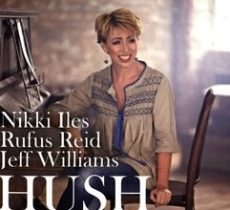
Nikki Anne Iles was born Nikki Anne Burnham on May 16, 1963 in Dunstable, Bedfordshire, England. Her primary school musical education began when she learned to play the harmonica and the clarinet. At eleven she won a junior exhibition at the Royal Academy of Music, where she studied clarinet and piano from 1974 to 1981. She became a member of the Bedfordshire Youth Jazz Orchestra before going to the Leeds College of Music from 1981 to 1984.
Settling in Yorkshire after graduating from the Leeds College of Music, she married trumpeter Richard Iles and took his name. She joined his band Emanon, with which she played some of her compositions. Iles began playing with several London-based bands, led by Steve Argüelles, Mick Hutton and Stan Sulzmann.
Iles won the 1996 John Dankworth Special Award at the BT Jazz Festival, but following a serious car crash after a gig, she opted to settle in London, England. She went on to be a senior lecturer at Middlesex University, and taught at the University of York, Leeds College of Music, the Guildhall School of Music, and in Bulgaria, Holland, France, and Finland.
Composer, pianist and educator Nikki Iles, who was awarded the British Empire Medal (BEM) at the 2022 New Year Honours for services to music, continues her career as a composer, educator and musician.
More Posts: bandleader,composer,educator,history,instrumental,jazz,music,piano