

Daily Dose Of Jazz…
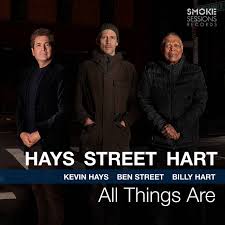
Kevin Hays was born in New York City on May 1, 1968 and was the youngest of four children. Raised in Greenwich, Connecticut, he began studying the piano at the age of six after hearing his amateur father play. He was initially interested in rock music and other things that he heard on the radio, and became more interested in jazz in his early teens. Initially self-taught, he later took lessons with Lou Stein, and attended several Interlochen Music Camps.
Hays played locally from 1982. He began playing in New York City in 1985 while still in high school, then had a period in Nick Brignola’s band. He attended the Manhattan School of Music for a semester in 1986 before dropping out to concentrate on performing. His debut recording as a leader came in 1990 with the album El Matador on the Japanese label Jazz City.
He played regularly with a number of Bob Belden’s ensembles from the late 1980s, and in the 1990s he toured Japan and recorded with the Harper Brothers and worked with Steve Wilson, Benny Golson, Joshua Redman, Seamus Blake, and Eddie Henderson.
Between 1991 to 1993 he recorded three albums for SteepleChase Records. After SteepleChase, Kevin signed an album deal with Blue Note Records who initially released three of his albums as a leader. In 1995 he toured with saxophonist Sonny Rollins.
His trio with bassist Doug Weiss and drummer Bill Stewart have played together for 15 years. Hays also recorded under Stewart’s leadership, performed and recorded duets with pianist Brad Mehldau, released a duo album with Lionel Loueke and he has released a solo album. His New Day Trio, with Rob Jost on bass and Greg Joseph on drums, also finds Kevin singing on their first release, New Day.
Pianist Kevin Hays, who has more than twenty albums to his credit as leader or co-leader, continues to perform and record.

More Posts: bandleader,history,instrumental,jazz,music,piano
Daily Dose Of Jazz…
August Rosenbaum was born on April 30, 1987 in Copenhagen, Denmark into a family of artists. He has had an eclectic and passionate vision since he first started learning to play the piano. As the only one at elementary school recitals who would perform Thelonious Monk, Wu Tang Clan and Erik Satie, the piano prodigy shows with equal conviction many sides of his talent.
Rosenbaum has won two Danish Music Awards for his composing, performed at the acclaimed Sónar Festival, and has been shortlisted for both the Nordic Music Prize and the National Danish Critics’ Award. He has wona Grammy for Best Alternative Album at the 2018 Danish Music Awards.
He is also known for collaborations with artists like Quadron, Rhye and MØ, Sonic Youth’s Kim Gordon and visual artist Jesper Just. He has been commissioned for works in film, theatre and performances at a.o. Palais De Tokyo, The Metropolitan Museum of Art, Brooklyn Academy of Music and The Royal Danish Ballet.
Pianist, composer and record producer August Rosenbaum continues to explore and record music.
More Posts: bandleader,composer,history,instrumental,jazz,music,piano,record producer
Daily Dose Of Jazz…
Jacques Butler was born on April 29, 1909 in Washington, D.C. but didn’t pick up the trumpet until his late teens. He began playing professionally with Cliff Jackson and Horace Henderson in New York City, then joined Marion Hardy’s Alabamians in 1931 for a year.
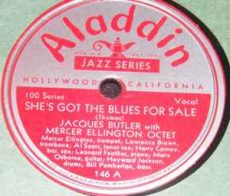
Leading his own ensemble in New York and touring from 1934-1935, Jacques also made recordings with Willie Bryant before relocating to Europe in 1936, where the two performed together until 1939. During that period he played with Frank “Big Boy” Goudie as well as with his own bands. He would tour Scandinavia before WWII and in 1940 he became well known in the Norwegian jazz community, and while visiting Oslo he recorded one 78 rpm. Returning to New York City that same year he played and recorded with Mercer Ellington, Art Hodes, Mezz Mezzrow, and Bingie Madison.
After a brief stay in Toronto he moved back to Europe in 1950, remaining there until 1968 as a regular at the La Cigale club in Paris, France. He appeared in the 1961 Paul Newman/Sidney Poitier film Paris Blues. In the 1970s he came home to the States and was seen working often in New York City, as a sideman with Clyde Bernhardt among others, and in the studio.
Trumpeter and vocalist Jacques Butler, who was sometimes listed as Jack, died in 2003. The date of his death is unknown.
More Posts: bandleader,history,instrumental,jazz,music,trumpet,vocal
Daily Dose Of Jazz…
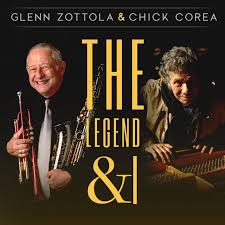
Glenn Paul Zottola was born in Port Chester, New York on April 28, 1947. He started playing jazz professionally in 1960.
Glenn is known for his work with Lionel Hampton, Benny Goodman, and Bob Wilber, and has accompanied a broad range of vocalists, including Mel Tormé, Frank Sinatra, Peggy Lee, Ella Fitzgerald, and Joe Williams.
He has recorded over 50 albums with Butch Miles, Bob Wilber, Mousey Alexander, Steve Allen, Phil Bodner, George Kelly, Peggy Lee, George Masso, George Masso, and Maxine Sullivan, among numerous others.
In 1988, was a featured soloist at the 50th anniversary of Benny Goodman’s Carnegie Hall Concert. In 1995, Zottola was bandleader on the Suzanne Somers daytime TV talk show at Universal Studios.
Trumpeter and saxophonist Glenn Zottola, who has recorded twenty-two albums as a leader, continues to perform and record.
More Posts: bandleader,history,instrumental,jazz,music,saxophone,trumpet
Daily Dose Of Jazz…
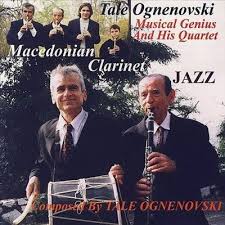
Tale Ognenovski was born April 27, 1922 in Brusnik, Bitola, Kingdom of Yugoslavia. He inherited his talent from his reed pipe great-grandfather Ognen and grandfather Risto and his father Jovan who played bagpipes. When he was seven he began playing on the reed pipe. With his father passing away in 1937 and when he was fifteen his grandmother gave him some money to buy his first clarinet.
During WWII he served as a Macedonian Partisan, Tale began playing clarinet at celebrations and concerts in villages and the town of Bitola with numerous musicians. For three years beginning in 1951 he worked as a member of the Police Wind Orchestra and from 1954 till 1956 he worked with the Public Town Skopje Orchestra.
1956 saw him performing to a capacity audienceat Carnegie Hall in New York City as a clarinet and reed pipe/recorder soloist of the Macedonian State Ensemble of Folk Dances and Songs. A seven year residency starting in 1960 had Ognenovski working with Radio Television Skopje. He went on to play in orchestras and ensembles that toured North America, and Europe.
HIs recordings were not singularly jazz, but included the works of Benny Goodman and Artie Shaw. Tale also recorded classical and folk dances, often interlinking the three genres. Alongside his son Stevan, they arranged for two clarinets the music of Mozart. He was the recipient of twenty-one prestigious awards, had several articles and was recognized as one of the top 100 clarinetists of all time.
Clarinetist Tale Ognenovski, who authored a book on Macedonia dance and was biographed by his son Stevan, died in Skopje, Macedonia on June 19, 2012.
More Posts: arranger,bandleader,clarinet,history,instrumental,jazz,music,recorder