


Daily Dose Of Jazz…
Mike Stern was born Michael Sedgwick on January 10, 1953 in Boston, Massachusetts and grew up in Washington, D.C. He attended the Berklee College of Music in Boston and when he was twenty-two, he became a member of Blood, Sweat & Tears, spending three years with the band. During this stint he appeared on the albums More Than Ever and Brand New Day.
1979 saw him joining Billy Cobham’s fusion band. Two years later he joined Miles Davis, making his public debut in 1981, a performance recorded on the album We Want Miles. He remained with Davis through 1983 until he was replaced by guitarist John Scofield. From 1983 to 1984 he toured with Jaco Pastorius and in 1985 returned to tour with Davis.
Stern’s solo debut, Upside Downside, with Jaco Pastorius, David Sanborn, and Bob Berg, was released on Atlantic Records in 1986. For the next two years he was a member of Michael Brecker’s quintet, appearing on Don’t Try This At Home. His second Atlantic album, dropped in 1988, was Time in Place, and he would go on to release more than a dozen albums.
He formed a touring group in 1989 with Bob Berg, Dennis Chambers and Lincoln Goines. His acclaimed 1993 album, Standards (and Other Songs), led to his being named Best Jazz Guitarist of the Year by the readers and critics of Guitar Player. He was nominated for two Grammy awards, received another Best Jazz Guitarist award, and in 2009 in the first of a series of articles celebrating Down Beat‘s 75th anniversary, Stern was named one of the 75 Great Guitarists of all time.
Serious injuries to his shoulders and right arm after tripping and falling led to the ending of his 2016 European tour. Modifying his playing technique in the summer of 2017 he returned to Europe on tour with a new formation called Mike Stern/Randy Brecker Band, featuring Randy Brecker, Teymur Phell and Lenny White.
Guitarist Mike Stern, who received a Certified Legend Award from Guitar Player magazine, continues to perform, record and tour.

More Posts: bandleader,guitar,history,instrumental,jazz,music
Daily Dose Of Jazz…
Charles Pervis Harris was born in Alexandria, Virginia and raised in Baltimore, Maryland on January 9, 1916. He studied violin before switching to bass in high school. He played professional dates while studying education at what is now Coppin State College. He went on to work at the Royal Theater in Baltimore after graduating.
Joining Lionel Hampton in 1941, he played with him for several years and was one of three bassists in Hampton’s ensemble, one of his bandmates being Charles Mingus. Harris did some recording with Dizzy Gillespie in the 1940s as well. Fatigued from touring he returned to Baltimore in 1949.
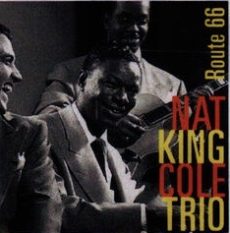
Soon after he worked in a band called Three Strikes and a Miss, again at the Royal Theater. While working there Nat King Cole heard him and asked him to join his trio. During his tenure with the vocalist, Charlie performed on some of Cole’s best-known tunes, such as Unforgettable, Route 66, It’s Only A Paper Moon, Sweet Lorraine and Mona Lisa. During the 1956-57 season he performed on Nat’s tv show on NBC.
After leaving the band he returned to Baltimore and remained there, playing, teaching, and working as a furniture salesman. Double bassist Charlie Harris died from cancer on September 9, 2003 at Bon Secours Hospital.
More Posts: bass,history,instrumental,jazz,music

Daily Dose Of Jazz…
Bobby Battle was born on January 8, 1944 and grew up in Detroit, Michigan. He moved to New York City in 1968, playing with Roland Kirk and Pharoah Sanders shortly after his arrival.
He studied at New York University from 1972 to 1975. He played with Don Pullen and Sam Rivers through the late 1970s, and worked often with Arthur Blythe in the 1980s and 1990s. He also worked with Kenny Dorham, Sonny Stitt, and Sonny Fortune. He worked as a duo with Jimmy Ponder in 1987.
Battle’s only release as a leader is The Offering, issued in 1990 on Mapleshade, on which Battle leads a quartet with David Murray, Larry Willis, and Santi Debriano. As a sideman he recorded four albums with Arthur Blythe and four with Don Pullen.
Drummer Bobby Battle, who occasionally played saxophone, died on December 6, 2019 in his hometown.
More Posts: bandleader,drums,history,instrumental,jazz,music
Daily Dose Of Jazz…
William “Keg” Purnell was born on January 7, 1915 in Charleston, West Virginia. He studied at West Virginia State College from 1932 to 1934, and played with the Campus Revellers while there. He toured for a year with King Oliver in 1934, then freelanced with his own trio in the late 1930s. In 1939, he worked with Thelonious Monk.
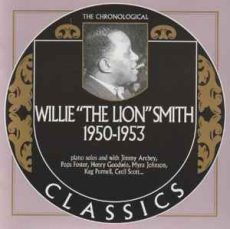
By the end of the decade and into the 1940s Keg was playing in the bands of Benny Carter, Claude Hopkins, and Eddie Heywood. He also recorded with Rex Stewart, Teddy Wilson, and Willie “The Lion” Smith. Late in his career he played with Snub Mosley in 1957 and subsequently on.
Drummer Keg Purnell, whose influences included Chick Webb and Big Sid Catlett died on June 25, 1965 at the age of 50.
More Posts: drums,history,instrumental,jazz,music
Daily Dose Of Jazz…
Vernon Brown was born on January 6, 1907 in Venice, Illinois. He began his career as a jazz trombonist playing in St. Louis, Missouri with Frankie Trumbauer in 1925, and then moved through a variety of groups at the end of the 1920s and into the 1930s, including those of Jean Goldkette, Benny Meroff, and Mezz Mezzrow.
In 1937 Brown joined Benny Goodman’s orchestra, remaining there until 1940. While only soloing occasionally with Goodman, this association got him well known. The Forties saw him performing with Artie Shaw, Jan Savitt, Muggsy Spanier, and the Casa Loma Orchestra. In the 1940s, Brown switched focus from swing to Dixieland, playing often in studio recordings and working with Sidney Bechet.
Brown performed with Louis Armstrong and his All Stars for the ninth Cavalcade of Jazz concert in 1953 at Wrigley Field in Los Angeles, California. The concert also featured that day were Roy Brown and his Orchestra, Don Tosti and His Mexican Jazzmen, Earl Bostic, Nat “King” Cole, and Shorty Rogers and his Orchestra.
He led his own band in the Pacific Northwest in 1950 and did reunion tours with Goodman in that decade. He worked with Tony Parenti in 1963, and remained a studio musician into the early-1970s
Trombonist Vernon Brown, who later in his life lived in Roslyn Heights, New York, died in Los Angeles on May 18, 1979.
More Posts: bandleader,history,instrumental,jazz,music,trombone