


Daily Dose Of Jazz…
Robert Edward McCracken was born on November 23, 1904 in Dallas, Texas. Early in his career he played with local Dallas musicians like Jack Teagarden, Eddie Whitley, the Southern Trumpeters, and Doc Ross’s Jazz Bandits.
From 1926 to 1928 he lived in New York City where McCracken worked with Johnnie Johnston and Willard Robison’s Levee Loungers. After returning to Dallas, he worked with Ligon Smith, Joe Gill, and Ross again. He went on to tour with Joe Venuti and Frankie Trumbauer, before moving to Chicago, Illinois in 1939.
While in Chicago he played with Bud Freeman, and in the Forties he worked with Jimmy McPartland, Wingy Manone, Benny Goodman, Russ Morgan, and Wayne King. He substituted for Barney Bigard in the Louis Armstrong All-Stars international tour in 1952–53. Bob then toured internationally with Kid Ory and Red Allen throughout the 1950s.
During his later years in Los Angeles, California he played in several Dixieland revival groups, working with Ben Pollack, Pete Daily, Wild Bill Davison, and again with Teagarden, Ory, and Allen.
Clarinetist Bob McCracken, who is on many recordings including Kid Ory’s album, This Kid’s the Greatest, transitioned on July 4, 1972.

More Posts: clarinet,history,instrumental,jazz,music
Daily Dose Of Jazz…
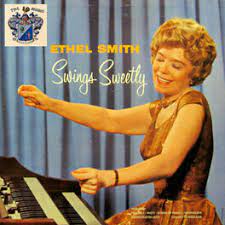
Ethel Smith was born Ethel Goldsmith on November 22, 1902 in Pittsburgh, Pennsylvania and began performing from a fairly young age. Traveling widely, after studying both music and several languages at Carnegie Institute of Technology, she became proficient in Latin music while staying in South America.
Smith performed in several Hollywood films such as George White’s Scandals and Melody Time. Her appearance in these films brought notoriety to her colorful, elaborate costumes, especially her hats.
Her rendition of Tico Tico became her best-known hit. She performed it in the MGM film Bathing Beauty in 1944, after which her recording reached the U.S. pop charts that November, peaking at #14 and selling nearly two million copies worldwide. Her other well known hits were Down Yonder and Monkey on a String.
Smith was a guitarist as well as an organist, and in her later years occasionally played the guitar live for audiences, but all her recordings were on the organ. She recorded dozens of albums, mostly for Decca Records.
Organist Ethel Smith, who became widely known as associated with Latin music, transitioned on May 10, 1996, at age 93 in Palm Beach, Florida.
More Posts: bandleader,history,instrumental,jazz,music,organ
Daily Dose Of Jazz…
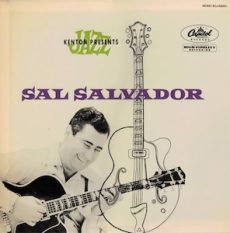
Sal Salvador was born Silvio Smiraglia on November 21, 1925 in Monson, Massachusetts and began his professional career in New York City, New York. He eventually moved to Stamford, Connecticut.
In addition to recordings with Stan Kenton and with his own groups, Salvador can be heard in the film Blackboard Jungle, during a scene in a bar where a recording on which he is featured is played on the jukebox. He is also featured playing with Sonny Stitt in the film, Jazz on a Summer’s Day, at the Newport Jazz Festival.
He taught guitar at the University of Bridgeport in Bridgeport, Connecticut as well as at Western Connecticut State University in Danbury, Connecticut. He wrote several instruction books for beginning to advanced guitarists.
Guitarist and educator Sal Salvador transitioned on September 22, 1999 following a fight with cancer at the age of 73.
More Posts: bandleader,guitar,history,instrumental,jazz,music
Daily Dose Of Jazz…
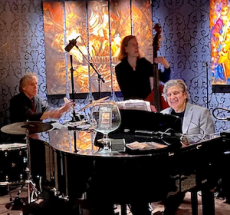
John Bianculli was born on November 20, 1956 in New York City, New York and grew up in Greenwich Village across from the Village Vanguard. A self taught pianist, he received much of his training playing the jazz circuit from New York to Washington D.C.
A versatile musician and composer, his original music is a unique blend of jazz, Latin, Brazilian, rhythm and blues, and world music. John’s song Bittersweet made the Contemporary Jazz Charts top-ten list. He composed the score for the film Lit’l Boy Grown.
Bianculli has held the piano seat in the rhythm section for both Steve Nelson and Jeanie Bryson for over 10 years. He has enjoyed residencies at the Hyatt Regency for 19 years, the New York Hilton for 2 years, as well as numerous clubs, concerts, festivals, television and radio performances.
As a sideman he has worked with Cassandra Wilson, Terence Blanchard, Regina Belle, Christy Baron, Charlie Rouse, Bobby Watson, James Spaulding, Jimmy Ponder, Bill Hardman and Earl May.
Pianist and composer John Bianculli continues to pursue his musical endeavors.
More Posts: bandleader,composer,history,instrumental,jazz,music,piano
Daily Dose Of Jazz…
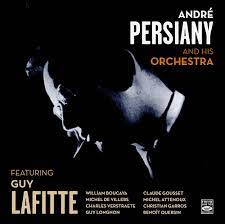
André Persiany was born on November 19, 1927 in Paris, France. His father taught him violin and piano as a child, and by 1945, he had formed his own ensemble. He was a member of the Be Bop Minstrels with Hubert and Raymond Fol in 1947, then played with Michel Attenoux, Eddie Bernard, Bill Coleman, Buck Clayton, Raymond Fonsèque, Lionel Hampton, Guy Lafitte, Mezz Mezzrow, and Tony Proteau.
Relocating to New York City in the mid-1950s, saw him playing at Birdland and working extensively with Jonah Jones. In 1969 he returned to Paris and held a residency as the pianist at Le Furstenberg from 1970 to 1988. His associations in the 1970s included Cat Anderson, Milt Buckner, Eddie Chamblee, Arnett Cobb, Al Grey, Budd Johnson, and Charlie Shavers.
Pianist André Persiany, whose son Stéphane became a double-bassist, transitioned on January 2, 2004 in Paris.
More Posts: bandleader,history,instrumental,jazz,music,piano