

Daily Dose Of Jazz…
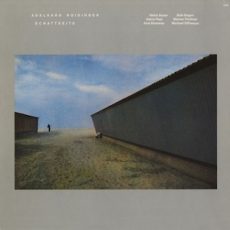
Adelhard Roidinger was born on November 28, 1941 in Windischgarsten, Austria into a musician familyand first learned piano, violin and guitar. When he was 16 he started to play double bass. From 1960 to 1967, he studied architecture at the Graz University of Technology, simultaneously studying double bass and jazz composing at the University of Music and Performing Arts.
Since 1969, Roidinger has played double bass with Joachim Kühn, Eje Thelin, and Karl Berger. From 1971 to 1975 he played in Hans Kollers Free Sound, then founded the European Jazz Consensus with Alan Skidmore, Gerd Dudek and Branislav Lala Kovačev. They recorded two albums. A new band, the International Jazz Consensus was formed by him along with Kovačev, Allan Praskin and John D. Thomas. He went on to perform with Harry Pepl and Werner Pirchner, Herbert Joos, Albert Mangelsdorff, Yosuke Yamashita, George Russell, Maria João, Anthony Braxton, Tone Janša and Melanie Bong.
Roidinger started to teach at Anton Bruckner Private University for Music, Drama, and Dance in Linz in Upper Austria. He was the director of its jazz department and the director of the Music and Media Technology department. He wrote lessons for double bass and bass guitar as well as a detailed publication about jazz improvisation and pentatonic scale.
Bassist, composer and computer graphic designer Adelhard Roidinger, who was awarded Ernst Koref Composition Prize for his computer composition Siamesic Sinfonia, transitioned on April 22, 2022 in Vienna, Austria at 88 years old.

More Posts: bandleader,bass,composer,history,instrumental,jazz,music
Daily Dose Of Jazz…
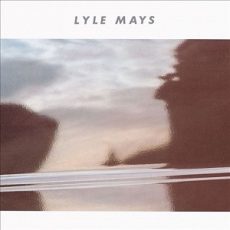
Lyle David Mays was born November 27, 1953 in Wausaukee, Wisconsin. While growing up he had four main interests: chess, mathematics, architecture, and music. His mother played piano and organ, and his father taught himself to play guitar by ear. His teacher allowed him to practice improvisation after the structured elements of each lesson were completed. At the age of nine, he played the organ at a family member’s wedding, and fourteen he began to play in church. During his senior year of high school he was introduced to jazz pianist Marian McPartland.
He attended the University of North Texas where he composed and arranged for the One O’Clock Lab Band and was the composer and arranger for the Grammy Award-nominated album Lab 75. After leaving the University of North Texas, Mays toured the US and Europe with Woody Herman’s Thundering Herd.
In 1975 he met Pat Metheny at the Wichita Jazz Festival, with whom he soon co-founded the Pat Metheny Group. Mays had an extraordinary career as a core musical architect and sound designer of the group for more than three decades. The group had 23 Grammy nominations, winning the award 11 times.
In 2010 Lyle decided to retire from public music performance and became a software development manager because of changes in the music industry. He composed and recorded children’s audiobooks, composed several contemporary classical pieces and formed his own band.
As an amateur architect, he was influenced by fellow Wisconsinian, Frank Lloyd Wright and designed his own house, home studio, and his sister’s house. Mays brought intellectual and organic architectural concepts in his music and sound design based on the innovative integration of many different sources to create a completely new soundscape.
He recorded seven as a leader, two as member of the One O’Clock Lab Band and 14 with the Pat Metheny Band, and as a sideman, seventeen. Mays won eleven Grammys as a member of the Pat Metheny Group and whose important influences were the 1968 recordings of Bill Evans at the Montreux Jazz Festival and Filles de Kilimanjaro by Miles Davis
Pianist and composer Lyle Mays, who was posthumously awarded the Grammy Award for Best Instrumental Composition in 2022 for his composition Eberhard, transitioned in Los Angeles, California on February 10, 2020 at age 66.
More Posts: bandleader,composer,history,instrumental,jazz,music,piano
Daily Dose Of Jazz…
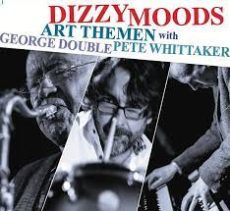
Arthur Edward George Themen was born November 26, 1939 in Manchester, England, where he was involved with the traditional jazz scene in the late 1950s as a self-taught musician, having started playing clarinet as a schoolboy at Manchester Grammar School.
In 1958 he began his medical studies at the University of Cambridge. While there he started playing jazz with the Cambridge University Jazz Band bandmates including Lionel Grigson, Dave Gelly, Jonathan Lynn, and John Hart. Under pianist Grigson’s leadership they achieved near professional standard with a swinging hard-bop style that swept the board in the fiercely contested Inter-University Jazz Band Competitions.
By 1964 he was an orthopaedic consultant playing blues with Jack Bruce and Alexis Korner and was a member of Alexis Korner’s Blues Incorporated. In 1965, Themen played with the Peter Stuyvesant Jazz Orchestra in Zürich, Switzerland going on to play with Michael Garrick, Ian Carr, and Graham Collier’s Music.
The Seventies saw him playing with Stan Tracey, touring with him all over the world as well as around the UK. Art has played and toured with visiting US musicians Charlie Rouse, Nat Adderley, Red Rodney, George Coleman, and Al Haig.
In 1995 he formed a quartet with pianist John Critchinson. Themen’s style originally owed much to the influence of Dexter Gordon and Sonny Rollins, but later influences included such disparate saxophonists as Coleman Hawkins, Evan Parker and John Coltrane. He was inspired to play saxophone after he attended a gig by the Dankworth Seven, at the local Palais, at the age of 16, with a female cousin and his future was set.
Following his retirement as a consultant orthopaedic surgery consultant, saxophonist Art Themen has focused on his jazz career.
More Posts: bandleader,history,instrumental,jazz,music,saxophone
Daily Dose Of Jazz…
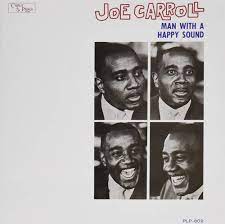
Joe “Bebop” Carroll was born Joseph Paul Taylor in Philadelphia, Pennsylvania on November 25, 1919. In 1949 he became a member of the Dizzy Gillespie big band. After the band broke up a year later, Carroll continued in a small group formed by Gillespie. In 1953, he left Gillespie to pursue a solo career and recorded albums for Epic Records in the 1950s.
Vocalist Joe Carroll, whose collaborations with Gillespie included the humorous songs Swing Low, Sweet Cadillac and Oo Bla Dee, transitioned on February 1, 1981.
More Posts: bandleader,history,instrumental,jazz,music,vocal
Daily Dose Of Jazz…
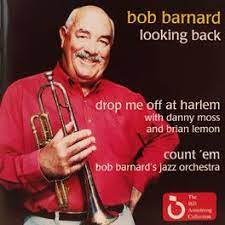
Robert Graeme Barnard was born on November 24, 1933 in Melbourne, Australia and his parents had formed a dance band in the 1920s, his mother was the bandleader and pianist, his father on saxophone, drums and banjo. His older brother Len joined them on drums at age 11. He took trumpet lessons from age 11 and played clarinet in a local brass band before he joined the family band at 14 in 1947.
When his brother Len formed his own group, Len’s South City Stompers the next year he joined on trumpet and they made their first recording in 1949 on his 16th birthday. The following year they began a weekly radio broadcast as Len Barnard’s Dixieland Jazz Band. He played with the group until 1955 after being cheated of their takings and stranded in Tumut, Australia. Relocating to Sydney he performed with Ray Price Trio before returning to Melbourne.
In 1958 Barnard joined the Graeme Bell band for an Australian tour. He worked for Brashs from 1958 to 1962, while performing after business hours. He went back to Sydney in 1962 and as a member of Graeme Bell and His All-Stars appeared on Trad Pad, a TV special program.
He was nominated in 1996 at the ARIA Music Awards of 1996 for Best Jazz Album for Live at the Sydney Opera House, which was recorded with the Australian Jazz Allstars.
Trumpeter and cornetist Bob Barnard, who was made a Member of the Order of Australia (AM) for service to music, particularly jazz, transitioned on May 7, 2022.
More Posts: bandleader,cornet,history,instrumental,jazz,music,trumpet