

Daily Dose Of Jazz…
Lawrence William “Beau” Dixon was born on September 5, 1894 in Chillicothe, Ohio, the second of five children. His father was a farm laborer and part-time musician, from whom he learned to play music from an early age.
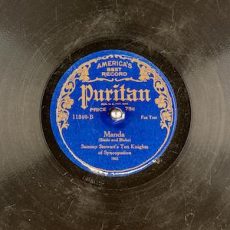
From 1923 to 1928 he played in Chicago, Illinois and Columbus, Ohio with Sammy Stewart’s Ten Knights of Syncopation, which recorded for Paramount Records. During the Twenties Beau also worked with Vance Dixon’s Jazz Maniacs, Fess Williams, Dave Peyton, Paul Jordan, Clarence Moore, and Grant Williams.
In 1931 he joined Earl Hines’s band and remained with him until 1937 as rhythm guitarist and arranger. Dixon worked with Franz Jackson’s Original Jass All Stars in the Chicago area in the 1950s and 1960s.
Banjoist and guitarist Beau Dixon, who suffered for years with pulmonary emphysema and tuberculosis, transitioned on January 16, 1970 in Chicago.

Daily Dose Of Jazz…
Jan Savitt was born Jacob Savetnick on September 4, 1907 in Shumsk, Russian Empire and reared in Philadelphia, Pennsylvania. He showed musical ability at an early age and began winning conservatory scholarships in the study of the violin. He was offered the position of concertmaster in Leopold Stokowski’s Philadelphia Symphony Orchestra, but turned it down, preferring to continue his studies at Curtis Institute. About a year later, believing himself ready, he joined Stokowski and the association continued for seven years, during which time he gained further laurels as a concert soloist and leader of a string quartet.
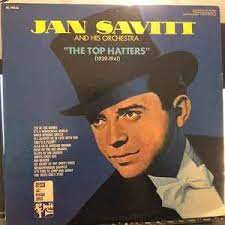
By 1938, Jan Savitt & His Top Hatters broadcasted as the KYW staff orchestra at KYW/NBC in Philadelphia coast-to-coast. The group also played at the Earl Theatre and performed with The Andrews Sisters and The Three Stooges.
Getting his start in popular music some time later as music director of KYW, he evolved the unique “shuffle rhythm” which remained his trademark. Numerous sustaining programs created such a demand for the “shuffle rhythm” that Jan left KYW to form his own dance crew.
His band was notable for including George “Bon Bon” Tunnell, one of the first Black singers to perform with a white band. Tunnell’s recording with Savitt included Vol Vistu Gaily Star co-composed by Slim Gaillard and Rose of the Rio Grande. Helen Englert Blaum, known at the time as Helen Warren, also sang with Savitt during the war years. His orchestra had a bit role in the 1946 film High School Hero.
Shortly before arriving in Sacramento, California with his orchestra in 1948 he was stricken with a cerebral hemorrhage and taken to Sacramento County Hospital. Bandleader, arranger, and violinist Jan Savitt, known as The Stokowski of Swing, transitioned on October 4, 1948 with his wife at his bedside.
More Posts: arranger,bandleader,history,instrumental,jazz,music,violin

Daily Dose Of Jazz…
Clyde Lanham Hurley, Jr. was born on September 3, 1916 in Fort Worth, Texas. Self-taught, he learned to play the trumpet by playing along with Louis Armstrong records. He studied music at the Texas Christian University in Fort Worth from 1932 to 1936 where he participated in the school’s jazz band. He began his career working with territory bands.
In 1937, while drummer/band-leader Ben Pollack was touring through Texas he heard Hurley and invited him to join his orchestra where he soloed on So Unexpectedly. While on a touring stop with the band in Los Angeles, California he left to become a studio musician. He played with Paul Whiteman then with Glenn Miller. While with Miller he was one of the key soloists appearing on the band’s studio recordings and live performances throughout America.
Hurley played the trumpet solo on Miller’s In The Mood, Slip Horn Jive and Tuxedo Junction. Leaving Miller in 1940 he went on to work with Tommy Dorsey before joining Artie Shaw in 1941.After his stint with Shaw, he freelanced for the movie studios. In 1941, he played the trumpet track for the classic Walter Lantz cartoon Boogie Woogie Bugle Boy of Company B.
He worked for MGM from the mid-Forties to the end of the decade and for NBC from 1950 to 1955. During the late 1950s, Hurley played in Dixieland groups, recording with Matty Matlock’s Rampart Street Paraders. In 1954, he recorded live with Ralph Sutton and Edmond Hall at the Club Hangover. His studio work in the 1950s included sessions with Paul Weston. He soloed on Memories of You on Weston’s Solo Flight album.
Trumpeter Clyde Hurley, who was prominent during the big band era, transitioned on August 14, 1963 from coronary occlusion in Fort Worth.
More Posts: history,instrumental,jazz,music,trumpet
Daily Dose Of Jazz…
Steve Masakowski was born on September 2, 1954 in New Orleans, Louisiana and The Beatles influenced his desire to play guitar. When he was fourteen, he played bass guitar and co-founded the band Truth, which was based on the rock band Cream. During his high school years he became interested in composing, and started taking guitar lessons to learn about harmony. His teacher introduced him to the music of jazz guitarists Joe Pass, Wes Montgomery, Pat Martino, and Lenny Breau.
He went to Berklee College of Music in 1974, studied music theory, arranging, and composition. Returning home with his girlfriend Emily Remler after getting his degree, Steve founded the group Fourplay, not to be confused with the later jazz group of the same name. From 1976 to 1978, he studied classical composition and orchestration at the New Orleans Center for Creative Arts with Bert Braud.
The early Eighties he played regularly with local New Orleans musicians such as Willie Tee, Earl Turbinton, Jr. and Alvin Tyler, as well as accompanying visiting musicians Randy Brecker, Tom Harrell, Art Baron, and Dave Liebman. His next band Mars played a mix of jazz and electronic music. He then went on to found the Composers Recording Studio with harpist Patrice Fisher, guitarist Jimmy Robinson, and violinist Denise Villere. After a ten year stretch the studio closed and he started working in duet with Ellis Marsalis Jr., then joined Astral Project, toured with Dianne Reeves. He leads the band Nova NOLA.
As an educator in 1991, he became a full-time faculty member at the University of New Orleans and became Chair of Jazz Studies and director of the jazz program in 2004 . He invented the key-tar, a guitar-like instrument with seven rows of keys instead of strings, one key at each fret. This pre-MIDI controller was hardwired to a Moog synthesizer.
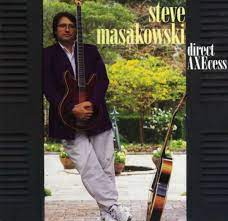
Inspired by a visit to New Orleans by seven-string guitarist Bucky Pizzarelli, he began to explore the seven-string guitar, first finding an early Gretsch, then designing his own models which have the expanded range of a normal guitar and bass guitar combined. Guitarist and educator Steve Masakowski continues to perform, record and educate.
More Posts: bandleader,guitar,history,instrumental,jazz,music
Daily Dose Of Jazz…
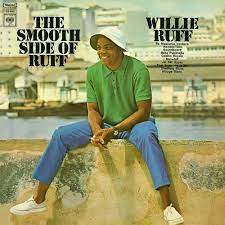
Willie Henry Ruff Jr. was born September 1, 1931 in Sheffield, Alabama. He attended the Yale School of Music earning his Bachelor and Masters of Music by 1954.
He first met Dwike Mitchell in 1947 when they were teenaged servicemen stationed at the former Lockbourne Air Force Base in Ohio. Mitchell recruited Ruff to play bass with his unit band for an Air Force radio program. The two of them went on to later play in Lionel Hampton’s band but left in 1955 to form their own group, the Mitchell-Ruff Duo. They played as a second act to artists such as Louis Armstrong, Count Basie, Duke Ellington, and Dizzy Gillespie.
From 1955 to 2011 the duo regularly performed and lectured throughout the United States, Asia, Africa, and Europe. The Mitchell-Ruff Duo was the first jazz band to play in the Soviet Union in 1959 and in China in 1981. Chosen by John Hammond to be the bass player for the recording sessions of Songs of Leonard Cohen, an album first released in 1967. During those sessions, he and Cohen laid down the bed tracks for most of the songs on the album.
He is one of the founders of the W. C. Handy Music Festival in Florence, Alabama, was a faculty member at the Yale School of Music from 1971 until his retirement in 2017, teaching music history, ethnomusicology, and arranging. Willie was a founding Director of the Duke Ellington Fellowship Program at Yale, held a visiting appointment at Duke University, where he oversaw the jazz program and directed the Duke Jazz Ensemble and was on the faculty at UCLA and Dartmouth.
Over the course of his career he recorded as a soloist, in a duo and as a sideman with Quincy Jones, Bobby Hutcherson, Gil Evans, Benny Golson, Milt Jackson, Lalo Schifrin, Sonny Stitt, Clifford Coulter, Miles Davis and Jimmy Smith.
French horn and double bassist Willie Ruff, who played in the Mitchell-Ruff Duo with pianist for over 50 years, was inducted into the Alabama Jazz Hall of Fame, and has published his memoir A Call to Assembly: The Autobiography of a Musical Storyteller, is retired at 91.
More Posts: bandleader,bass,french horn,history,instrumental,jazz,music