

Daily Dose Of Jazz…
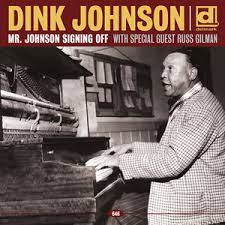
Ollie “Dink” Johnson was born in Biloxi, Mississippi on October 28, 1892. He was the younger brother of double bassist William Manuel “Bill” Johnson. He worked around Mississippi and New Orleans before moving to the western United States in the early 1910s. He played around Nevada and California, often with his older brother. He played with the Original Creole Orchestra, mostly on drums.
He made his first recordings in 1922 on clarinet with Kid Ory’s Band. He made more recordings in the 1940s and 1950s, mostly on piano, although Johnson recorded some one-man band sessions, playing all three of his instruments by over-dubbing.
His piano style was influenced by his brother-in-law Jelly Roll Morton, and his clarinet playing by Larry Shields. The tunes he wrote included The Krooked Blues, recorded by King Oliver and So Different Blues.
Pianist, clarinetist, and drummer Dink Johnson, who played in the Dixieland genre, transitioned in Portland, Oregon on November 29, 1954.

More Posts: bandleader,clarinet,drums,history,instrumental,jazz,music,piano
Daily Dose Of Jazz…
Barre Phillips was born October 27, 1934, in San Francisco, California. He studied briefly in 1959 with S. Charles Siani, Assistant Principal Bassist with the San Francisco Symphony. In 1962 he moved to New York City in 1962 and during the Sixties he recorded with, among others, Eric Dolphy, Jimmy Giuffre, Archie Shepp, Peter Nero, Attila Zoller, Lee Konitz and Marion Brown.
Moving to Europe in 1967, Phillips’ 1968 recording of solo bass improvisations was issued under three different titles as Journal Violone in the US, Unaccompanied Barre in England, and Basse Barre in France on Futura Records, is generally credited as the first solo bass record.
A 1971 record with Dave Holland, Music from Two Basses, was probably the first record of improvised double bass duets. Since 1972 he has been based in southern France and in the 1970s, he was a member of the well-regarded and influential group The Trio, with saxophonist John Surman and drummer Stu Martin.
The 1980s and 1990s saw Barre playing regularly with the London Jazz Composers Orchestra, led by fellow bassist Barry Guy. He worked on soundtracks of the motion pictures Merry-Go-Round, Naked Lunch together with Ornette Coleman, and Alles was baumelt, bringt Glück!. He has also worked with numerous bassists, guitarists, clarinetists, saxophonists, and pianists.
At 87, double bassist Barre Phillips continues to be active on the jazz scene.
More Posts: bass,history,instrumental,jazz,music
Daily Dose Of Jazz…
Hank Duncan was born Henry James Duncan on October 26, 1894 in Bowling Green, Kentucky. Little is written about his childhood, however he is better known for his work with Fess Williams, King Oliver, Tommy Ladnier, Sidney Bechet, Charles “Fat Man” Turner, and many others.
He toured extensively with Fats Waller. Duncan was sometimes referred to as The Little Man From Memory Lane.
Pianist Hank Duncan transitioned on June 7,1968 in Long Island, New York.
More Posts: history,instrumental,jazz,music,piano
Daily Dose Of Jazz…
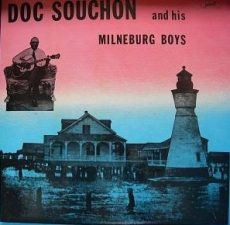
Edmond “Doc” Souchon was born October 25, 1897 in New Orleans, Louisiana and received schooling to become a physician in Chicago, Illinois. During this period he was playing regularly in groups such as the Six and Seven Eighths Band in the 1910s.
Souchon was involved early on in the management of the New Orleans Jazz Club, and served as president of the organization early in its existence. He helped oversee a reconstitution of the Six and Seven Eighths Band in 1945 as a four-piece, and made many recordings of early string band tunes through the early 1960s. Alongside this, Souchon recorded with many noted New Orleans jazz mainstays, such as Johnny Wiggs, Sherwood Mangiapane, Papa Jack Laine, Raymond Burke, and Paul Barbarin.
He had his own radio program on WWL, and edited the journal Second Line from 1951 until his death in 1968. Aside from his contributions to jazz journals such as Jazz and Jazz Report, Souchon compiled a photo book with Al Rose entitled New Orleans Jazz: A Family Album, first published in 1967 and subsequently revised in 1978 and 1984.
He helped establish the National Jazz Foundation in 1942, as well as the New Orleans Jazz Museum about a decade later. His record collection, which included some 2,000 recordings of New Orleans jazz, was bequeathed to the New Orleans Public Library, and many other music-related materials he collected are now in the possession of the William Ransom Hogan Jazz Archive at Tulane University.
Guitarist and writer Doc Souchon, who was a pivotal figure in the historical preservation of New Orleans jazz in the middle of the 20th century, transitioned on August 24, 1968.
More Posts: bandleader,deejay,guitar,history,instrumental,jazz,music,writer
Daily Dose Of Jazz…
Lawrence Henry Marrero was born on October 24, 1900 in New Orleans, Louisiana, on October 24, 1900. He grew up in a musical family with three brothers who became musicians, bassist Eddie, banjoist John and Simon who played tuba and bass, and their bassist father Billy. He was taught music by his father, and by 1918 he became a professional player.
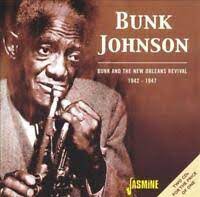
In 1919 he got his first regular job on banjo with Wooden Joe Nicholas’s Camelia Brass Band and from 1920 he joined on bass drum the Young Tuxedo Brass Band. Marrero was one of the musicians who took part in the first recordings made by Bunk Johnson In 1942, and continued playing and recording in the New Orleans jazz revival. He was featured on many recordings and was a regular member of the George Lewis band from the late 1930s until ill health caused him to quit full-time performance in 1954. He occasionally played with his own band after that.
Marrero was considered to be a steady player with a good tone, however, he never recorded as a leader and rarely did he take solos. Banjoist Lawrence Marrero, who altered the spelling of his name to Laurence, transitioned on June 6, 1959.
More Posts: banjo,history,instrumental,jazz,music