

Daily Dose Of Jazz…
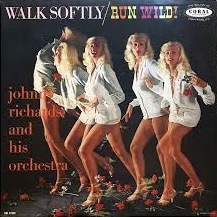
Johnny Richards was born Juan Manuel Cascales on November 2, 1911 in Toluca, Mexico to a Spanish father and a Mexican mother. He came to the United States in 1919 through Laredo, Texas along with his mother, three brothers and a sister. The family first lived in Los Angeles, California and then in San Fernando, California, where he and two brothers attended and graduated from San Fernando High School.
1930 saw Richards living in Fullerton, California where he attended Fullerton College. Working in Los Angeles from the late 1930s to 1952, before moving to New York City. He had been arranging for Stan Kenton since 1950 and continued to do so through the mid-1960s. He also arranged for Charlie Barnet and Harry James.
He led his own bands throughout his career and composed the music for the popular song Young at Heart in 1953. The song was made famous by Frank Sinatra and was covered by numerous others.
Arranger and composer Johnny Richards transitioned on October 7, 1968 in New York City of a brain tumor.

More Posts: arranger,bandleader,composer,history,instrumental,jazz,music
Daily Dose Of Jazz…
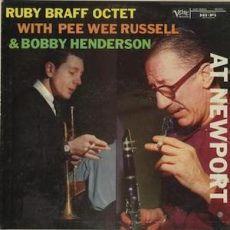
Samuel D. Margolis was born on November 1, 1923 in Boston, Massachusetts. Early in his career he played locally with Shad Collins, Vic Dickenson, Bobby Hackett, Nat Pierce, and Rex Stewart.
Between 1954 and 1958 Sam worked extensively with Ruby Braff and as sidemen for other musicians, including Pee Wee Russell. He would continue working intermittently with Braff for several decades.
In 1970 Margolis appeared briefly in the parade scene in the Dick Van Dyke movie Some Kind of a Nut. Throughout the 1970s and 1980s, he played often in the New York area, with Ed Polcer, Buzzy Drootin, Max Kaminsky, Roy Eldridge, Tony Bennet, Claude Hopkins, Dill Jones, Vic Dickenson, and Red Balaban.
Clarinetist and saxophonist Sam Margolis, who near the end of his life moved to Deerfield Beach, Florida, transitioned from prostate cancer on March 27, 1996.
More Posts: clarinet,history,instrumental,jazz,music,saxophone
Daily Dose Of Jazz…
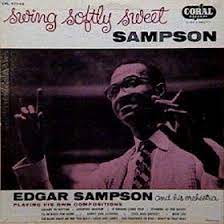
Edgar Melvin Sampson was born on October 31, 1907 in New York City, New York. He began playing violin aged six and picked up the saxophone in high school, then started his professional career in 1924 in a violin piano duo with Joe Colman. Through the rest of the 1920s and early 1930s, he played with many big bands, including those of Charlie “Fess” Johnson, Duke Ellington, Rex Stewart and Fletcher Henderson.
In 1934, Sampson joined the Chick Webb outfit and during his period he created his most enduring work as a composer, writing Stompin’ at the Savoy and Don’t Be That Way. Leaving Webb in 1936, his reputation as a composer and arranger led to freelance work with Benny Goodman, Artie Shaw, Red Norvo, Teddy Hill, Teddy Wilson and Webb.
Becoming a student of the Schillinger System in the early 1940s, Edgar continued to play saxophone through the late 1940s and started his own band at the end of the decade. He worked with Latin performers such as Marcelino Guerra, Tito Rodríguez and Tito Puente as an arranger.
He recorded one album under his own name, Swing Softly Sweet Sampson, in 1956. Due to illness, he stopped working in the late Sixties. Composer, arranger, saxophonist, and violinist Edgar Sampson, nicknamed The Lamb, transitioned on January 16, 1973.

More Posts: arranger,bandleader,composer,history,instrumental,jazz,music,saxophone,violin
Daily Dose Of Jazz…
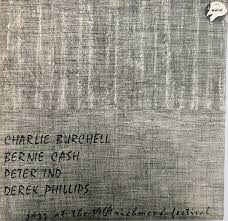
Charles Burchell was born in London, England on October 30, 1925 and began learning the ukulele, then guitar. Then he heard an Artie Shaw record that inspired him to take up the clarinet and play jazz. Switching to alto saxophone, he started his own quintet in 1943, then tried tenor saxophone before he was drafted into the Royal Air Force. Transferred to the army in 1944, he played in Greece with the British Divisional Band.
Following his discharge in 1947 Charles worked in London with the Toni Antone Big Band. By 1949 he had given up full-time musicianship for work in a factory in order to not perform music he did not like in order to make a living.
A disciple of Lennie Tristano and a devoted admirer of Warne Marsh, he continued to play part-time, leading his own quintet for more than 20 years. Burchell has guested with Clark Terry, Emily Remler and Nathan Davis, and recording for Peter Ind’s Wave label. He played with Ind in the group that supported Tristano on his only UK concert, at Harrogate in 1968.
Saxophonist Charles Burchell, who went by Chas and has been touted as one of the great unsung heroes of British jazz, transitioned from a heart attack on June 3, 1986.
More Posts: bandleader,history,instrumental,jazz,music,saxophone
Daily Dose Of Jazz…
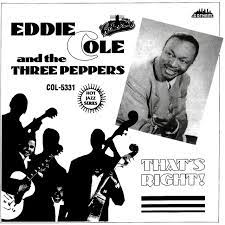
Edward Bennett Coles was born October 29, 1910 in Montgomery, Alabama and was the second oldest of ten children and the oldest son. He studied both piano and bass from a young age and formed his first band at age 17. Three years later at age 20, he joined Noble Sissle’s band the Sizzling Syncopators, stayed there six years and performed with greats such as Sidney Bechet and Clarence Brereton.
After a tour of Europe in 1936, Cole left Sissle’s band to join his brother Nat’s group, the Rogues of Rhythm. He appeared in the TV show Bourbon Street Beat in 1959 and later appeared on The Law and Mr. Jones and The Jack Benny Program.
Retiring in the 1960s, bassist, pianist and vocalist Eddie Cole, who was a member of the Cole dynasty of Nat, Freddy and Ike, transitioned on June 18, 1970 at the age of 59 in Los Angeles, California.
More Posts: bandleader,bass,history,instrumental,jazz,music,piano,vocal