

Daily Dose Of Jazz…
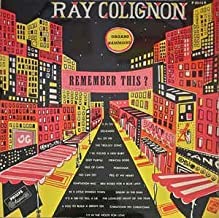
Raymond Colignon was born on February 7, 1907 in Liège, Belgium. He initially was active as an accompanist for silent films, then went on to tour Switzerland, France and Algeria. In the early 1930s, he joined the Lucien Hirsch and His Orchestra who made the first recordings for Columbia Records. Between 1931 and 1934 he worked in a nightclub in his native town. From 1935 to 1940 he played and wrote big band arrangements with Fud Candrix.
As a soloist, he recorded under his own name for the Brussels Jazz Club record label. In 1939 he recorded Honeysuckle Rose for Telefunken and Swinging Through the Style, accompanied by bassist Camille Marchand and drummer Armand Dralandts. The early Forties saw him playing in Brussels, Belgium with Jack Lowens and His Swing Quartet, in Berlin, Germany with Kurt Widmann and his dance orchestra, and in Adolf Steimel ‘s Organum dance orchestra.
In 1941/42 further recordings were made in Brussels under his own name, with trumpeter and singer Billy West recording I Hear A Rhapsody and with Tony Jongenelen Gute Nacht, Mutter (Good NIght , Mother) sung in German. In the post World War II period he worked mainly as an organist in the genre of dance and entertainment music, recording Surprise Party – Calling All Dancers or Come Dance with Me for Philips.
Pianist, organist and arranger Coco Colignon, who was involved in 53 jazz recording sessions between 1931 and 1961, transitioned on February 10, 1987 in Wavre, Belgium.

More Posts: arranger,bandleader,history,instrumental,jazz,music,organ,piano

Daily Dose Of Jazz…
Haven Gillespie was born James Lamont Gillespie on February 6, 1888 in Covington, Kentucky, one of nine children of Anna (Reilley and William F. Gillespie. The family was poor and he dropped out of school in grade four to unsuccessfully find a job. His older sister, Lillian, who had married a printer in Chicago, Illinois offered him a job and in 1902 left home for the bustling city life.
A few years later, corresponding with a childhood sweetheart back in Covington, a forthcoming proposal led to marriage in 1909. With sixteen dollarsbetween the two of them, Gillespie soon landed a job as a typesetter for the Cincinnati Times-Star, ultimately maintaining his membership in the International Typographic Union until his death. He found work as a “plug” man, entertaining audiences at local vaudeville shows by playing and singing songs he had written.
His first break came in 1911 when he met Roy Steventon, performing with Mildred Lovejoy in a dancing act and teaming up they composed three songs for the act, You’re Just The Girl I’ve Met In My Dreams, When I Am Gone, and Winter Time Is Coming Around Too Soon. Though Haven was paid one and a half cents for each piece of sheet music sold, royalties only amounted to a few dollars over the next several years.
While touring to promote his songwriting, Gillespie began drinking heavily and would struggle with alcohol addiction most of his life. At age 23 and after a long night of drinking, he met Joe Ford, a printer with the Cincinnati Tribune. Ford took Haven home to sober up and the two men eventually developed a lifelong friendship.
Gillespie’s first major hit came in early 1925 with Drifting and Dreaming. He left for New York and became a journalist and composer of songs for vaudeville shows. He first gained notice in 1925 with collaborators Egbert Van Alstyne, Ervin R. Schmidt, and Loyal Curtis on Breezin Along With The Breeze, which was recorded by Josephine Baker, among numerous others.
He successfully collaborated with J. Fred Coots, Mitchell Parish, Henry Marshall, Henry and Charles Tobias, Neil Moret, Peter DeRose, Victor Young, Jack Little, Richard Whiting, Rudy Vallée, and Beasley Smith, to name a few. His Louisiana Fairy Tale, recorded by Fats Waller, was used as the first theme song in the PBS Production of This Old House.
Tin Pan Alley composer and lyricist Haven Gillespie, whose songs You Go To My Head, Beautiful Love and Santa Claus Is Comin’ To Town have become jazz standards, transitioned on March 14, 1975 in Las Vegas, Nevada.
More Posts: composer,history,instrumental,jazz,lyricist,music
Daily Dose Of Jazz…
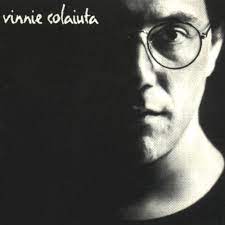
Vincent Peter Colaiuta was born on February 5, 1956 in Brownsville, Pennsylvania and was given his first drum kit when he was seven. He took to it naturally, with little instruction. By fourteen, the school band teacher gave him a book that taught him some of the basics and Buddy Rich was his favorite drummer until he heard the album Ego by Tony Williams, an event that changed his life. He started listening to organ groups, notably Jack McDuff, Jimmy McGriff and Don Patterson.
While matriculating through Berklee College of Music in Boston , Massachusetts at the time jazz fusion was on the rise, he listened to and admired Alphonse Mouzon and Billy Cobham. After leaving school, he played local gigs in Boston, joined a brief tour organized by Al Kooper, then worked in California on an album by Christopher Morris.
Returning to Boston, Colaiuta was drawn back to California by friends and took the bus from Boston to Los Angeles during the blizzard of 1978. After performing in jazz clubs, he won the audition to play drums for Frank Zappa, with whom he toured and appeared on the albums Joe’s Garage, Tinsel Town Rebellion, and Shut Up ‘n Play Yer Guitar.
In 1981, he left Zappa for the gig as a studio musician and recorded for the band Pages, Gino Vannelli, saxophonist Tom Scott, bassist Larry Klein, Joni Mitchell, touring with the latter. The late Eighties saw him as the house drummer for The Late Show Starring Joan Rivers. The band was led by Mark Hudson and was called the Party Boys and the Tramp.
By the end of the 1980s back as a studio musician he was recording albums, doing TV and film work during the day, and playing clubs at night. He worked with jazz musicians Herbie Hancock, Chick Corea, Buell Neidlinger, and the Buddy Rich Big Band. The 1990s he was with Sting, and released his debut solo album as well as two more as a leader.
He has won over fifteen Drummer of the Year awards from Modern Drummer magazine’s annual reader polls. These include ten awards in the “Best Overall” category. He was inducted into the Modern Drummer Hall of Fame in 1996 and the Classic Drummer Hall of Fame in 2014. Colaiuta has won one Grammy Award and has been nominated twice. Drummer Vinnie Colaiuta continues to perform, tour and record.
More Posts: bandleader,drums,history,instrumental,jazz,music
Daily Dose Of Jazz…
Arthur “Artie” Bernstein, born February 4, 1909 in Brooklyn, New York, started his musical career playing cello on board cruise ships to South America. He studied law at New York University, however, by 1929 he had started playing bass, and began performing in clubs around New York City. He performed with trumpeter Red Nichols, Red Norvo and others, and recorded with Ben Pollack, Jimmy and Tommy Dorsey, and many others in the 1930s.
In 1939 he performed with Benny Goodman at the second From Spirituals to Swing concert. He fell out with Goodman in 1941 after the bandleader fiddled with Bernstein’s music-stand light so that he would have problems reading the music to appear incompetent, giving the pretext to fire him.
He went on to win the Down Beat readers’ poll in 1943 and later moved to Los Angeles, California. Artie worked in the film industry for Universal Studios and Warner Bros., continuing to work for the latter organization until 1963.
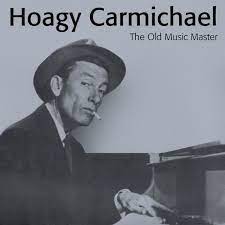
Over the course of his career he worked with Arnold Ross Quintet, Charlie Christian Jammers, Hoagy Carmichael Trio, Ralph Burns Quintet, as well as the orchestras of Adrian Rollini, Billie Holiday, Cloverdale Country Club, Clyde Hurley, Cootie Williams, Eddie Condon, Frankie Trumbauer, Harry James, Jack Teagarden, Larry Clinton, Lionel Hampton, Metronome All Stars, Mildred Bailey And Her Swing Band, Putney Dandridge, Teddy Wilson, and Ziggy Elman.
Double bassist and cellist Artie Bernstein transitioned on January 4, 1964 in Los Angeles, one month to the day shy of his 55th birthday.
The Quarantined Jazz Voyager
The variants are still plaguing society and yet most are taking a casual attitude in dealing with health. Understand it takes a village for all of us to get past this, to coin a phrase. Those of us who have had friends and family pass due to Covid~19 know the loss of loved ones. Stay vigilant people.
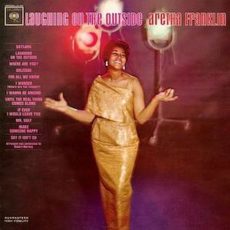
So, for those of you who are not familiar with the jazz side of the Queen Of Soul, allow this to be your introduction to the other side of her interpretive talent. This week I am pulling from the shelves one of her classic albums, Laughing On The Outside. It is the fourth studio album by Aretha Franklin, recorded at Columbia Recording Studios, in New York City on April 17, 1963 and on June 12–14, 1963 in Hollywood, California. It was released on August 12, 1963, by Columbia Records.
These sessions found a 21-year-old Aretha stepping away from her gospel roots and recording jazz and popular music standards, from Johnny Mercer to Betty Comden to Duke Ellington. She is backed by the arrangements of Columbia producer Robert Mersey. One of the most popular songs from the album is her interpretation of the classic Skylark. This was also one of the first times she recorded one of her written compositions, I Wonder (Where Are You Tonight), on an album.
Track Listing | 41:00
Side One
- Skylark (Johnny Mercer, Hoagy Carmichael) ~ 2:49
- For All We Know (Sam M. Lewis, J. Fred Coots) ~ 3:25
- Make Someone Happy (Betty Comden, Adolph Green, Jule Styne) ~ 3:48
- I Wonder (Where Are You Tonight)” (Aretha Franklin, Ted White) ~ 3:16
- Solitude (Duke Ellington, Eddie DeLange, Irving Mills) ~ 3:50
- Laughing on the Outside (Bernie Wayne, Ben Raleigh) ~ 3:14
Side Two
- Say It Isn’t So (Irving Berlin) ~ 3:05
- Until The Real Thing Comes Along (Sammy Cahn, Saul Chaplin, L. E. Freeman) ~ 3:04
- If Ever I Would Leave You” (Alan Jay Lerner, Frederick Loewe) ~ 4:04
- Where Are You? (Harold Adamson, Jimmy McHugh) ~ 3:50
- Mr. Ugly (Norman Mapp) ~ 3:22
- I Wanna Be Around (Johnny Mercer, Sadie Vimmerstedt) ~ 2:25
- Aretha Franklin ~ vocals
- Robert Mersey ~ producer, arranger, conductor
- Earl Van Dyke, Dave Grusin, Andrew Acker, Leon Russell ~ piano
- C. Bosler, Ray Pohlman, Melvin Pollan ~ bass guitar
- Hindel Butts, Hal Blaine ~ drums
- Don Arnome, Tommy Tedesco, Billy Strange ~ guitar
- Jimmy Nottingham ~ trumpet
- Robert Ascher ~ trombone
- Plas Johnson ~ saxophone
- Bernard Eichenbaum, Julius Schacter, Leo Kahn, Berl Senofsky, Felix Gigol, Max Pollikoff, George Ockner, John Rublowsky, Sid Sharp, Tibor Zelig, George Poole, Irving Lipschultz, Irving Weinper, Darrel Terwilliger ~ violin
- R. Dickler, Theodore Israel, Jacob Glick ~ viola
- Jesse Erlich, Anthony Twardowsky, Joseph Tekula ~ cello

More Posts: adventure,album,club,genius,jazz,museum,music,preserving,restaurant,travel,vocal