

Daily Dose Of Jazz…
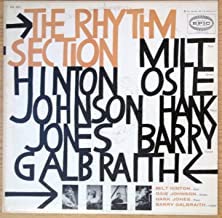
Joseph Barry Galbraith, born on December 18, 1919 in Pittsburgh, Pennsylvania.
Moving to New York City in the early 1940s he found work playing with Babe Russin, Art Tatum, Red Norvo, Hal McIntyre, and Teddy Powell. He played with Claude Thornhill in 1941–1942 and again from 1946–1949 after serving in the Army. In ‘53 he did a tour with Stan Kenton.
Having extensive work as a studio musician for NBC and CBS in the 1950s and 1960s, presented him with the opportunity to work with among others Miles Davis, Michel Legrand, Tal Farlow, Coleman Hawkins, George Barnes, John Lewis, Hal McKusick, Oscar Peterson, Max Roach, George Russell, John Carisi, and Tony Scott.
He accompanied on the recording of singers Anita O’Day, Chris Connor, Billie Holiday, Helen Merrill, Sarah Vaughan and Dinah Washington. He was a mentor to Ralph Patt.
In 1961, he appeared in the film After Hours. In 1963-1964 he played on Gil Evans’s album The Individualism of Gil Evans, and in 1965 he appeared on Stan Getz and Eddie Sauter’s soundtrack to the 1965 film Mickey One.
As an educator he taught for five years from 1970 to 1975 at CUNY (City University of New York) and published a guitar method book in 1982. From 1976–77 Galbraith taught guitar at New England Conservatory in Boston, Massachusetts.
Guitarist and bandleader Barry Galbraith passed away from cancer at the age of 63 on January 13, 1983 in Bennington, Vermont.

More Posts: bandleader,guitar,history,instrumental,jazz,music
Daily Dose Of Jazz…
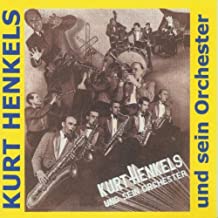
Kurt Henkels was born in Solingen, Germany on December 17, 1910. He led jazz and light music ensembles. He conducted radio and television dance bands from the 1930s well into the 1970s.
Unfortunately, little is known or written about his early childhood or his formal education years. Bandleader Kurt Henkels, who made over 250 recordings, passed away on July 12, 1986 in Hamburg, Germany.
More Posts: bandleader,history,instrumental,jazz,music
Daily Dose Of Jazz…
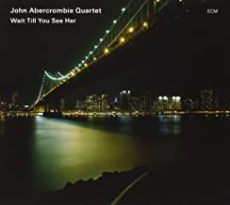
John Laird Abercrombie was born in Port Chester, New York on December 16, 1944. Growing up in the 1950s in Greenwich, Connecticut he was attracted to the rock and roll of Chuck Berry, Elvis Presley, Fats Domino, and Bill Haley and the Comets. He also liked the sound of jazz guitarist Mickey Baker of the vocal duo Mickey and Silvia. He had two friends who were musicians with a large jazz collection and they listened to albums by Dave Brubeck and Miles Davis.
The first jazz guitar album he heard was by Barney Kessel, and taking guitar lessons at the age of ten, asked his teacher to show him what Kessel was playing. After high school, John went to Berklee College of Music and while there he was drawn to the music of Jim Hall, Sonny Rollins, and Wes Montgomery. He cites George Benson and Pat Martino as inspirations. His playing around Boston, Massachusetts led to his meeting the Brecker Brothers and organist Johnny Hammond Smith, who invited him to go on tour.
From Berklee in 1967 to North Texas State University to a move to New York City in 1969 where he became a popular session musician. He joined the Brecker Brothers in the jazz-rock fusion band Dreams, followed by recordings with Gato Barbieri, Barry Miles, and Gil Evans. He continued to play fusion in Billy Cobham’s band until an invitation from drummer Jack DeJohnette led to the fulfillment of Abercrombie’s desire to play in a jazz-oriented ensemble.
Around the same time, record producer Manfred Eicher, founder and president of ECM Records, invited him to record an album. He recorded his first solo album, Timeless, with DeJohnette and keyboardist Jan Hammer. who had been his roommate in the 1960s. In 1975 he formed the band Gateway with DeJohnette and bassist Dave Holland.
Between 1984 and 1990, Abercrombie experimented with a guitar synthesizer. Free jaz became a mainstay for him in the 1990s and 2000s as he formed many new associations. Drummer Adam Nussbaum, and Hammond organist Jeff Palmer became his trio and made a free-jazz album, then replaced Palmer with organist Dan Wall and released three albums between 1992 and 1997. Adding trumpeter Kenny Wheeler, violinist Mark Feldman and saxophonist Joe Lovano to the trio he recorded Open Land in 1999.).
He continued to tour and record until the end of his life. who recorded 59 as a leader, 4 with Gateway, 6 with Andy LaVerne and 93 as a sideman for the who’s who in jazz. Guitarist John Abercrombie, whose work explored jazz fusion, free jazz, and avant-garde jazz, passed away of heart failure in Cortlandt Manor, New York, at the age of 72 on August 22, 2017.
More Posts: bandleader,composer,guitar,history,instrumental,jazz,music
Daily Dose Of Jazz…
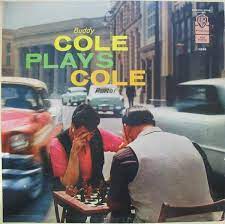
Buddy Cole was born Edwin LeMar Cole on December 15, 1916 in Irving, Illinois. He started his musical career in the theater, playing between movies and by age 19 he was recruited to be part of the Gil Evans band.
Moving to Hollywood, California in the second half of the 1930s, Buddy played in dance bands, including those led by Alvino Rey and Frankie Trumbauer. From the 1940s, his main work was as a studio musician, utilizing piano, electric organ, celeste, harpsichord and Novachord.
Cole worked with Henry Mancini, who used his Hammond organ for the soundtrack to the TV series Mr. Lucky. He also played most of the piano parts in the 1951 film Young Man with a Horn, subbing for Hoagy Carmichael, who appeared on screen. He also wrote the music for the television game show Truth or Consequences.
He performed on Bing Crosby’s hits In a Little Spanish Town and Ol’ Man River, and on the albums Some Fine Old Chestnuts and New Tricks. Buddy also played on Rosemary Clooney’s radio program and some recordings from the show were released on the album Swing Around Rosie.
Pianist, organist, orchestra leader, and composer Buddy Cole, who recorded several organ albums as a leader for Warner Brothers, Columbia, Alshi and Doric, passed away on November 5, 1964 in Hollywood, California.
More Posts: bandleader,composer,history,instrumental,jazz,music,organ,piano
Daily Dose Of Jazz…
John Lurie was born on December 14, 1952 in Minneapolis, Minnesota and was raised with his brother and sister in New Orleans, Louisiana and Worcester, Massachusetts.
In high school, he played basketball and harmonica and jammed with Mississippi Fred McDowell and Canned Heat in 1968. He briefly played the harmonica in a band from Boston, Massachusetts but soon switched to the guitar and eventually the saxophone.
After high school, he hitchhiked across the country to Berkeley, California. Moving to New York City in 1974, he briefly visited London, England where he performed his first saxophone solo at the Acme Gallery.
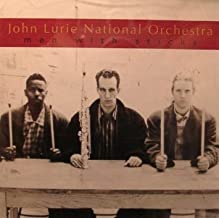
In 1978 John formed the Lounge Lizards with his brother Evan Lurie on piano. The two of them were the only constant members in the band through numerous lineup changes. In the early 1990s he formed a smaller group, the John Lurie National Orchestra and their work was heavily improvised.
By the early Nineties he was composing the theme to Late Night with Conan O’Brien with Howard Shore, which was also used when O’Brien hosted on The Tonight Show. He has written scores for over 20 movies, including Get Shorty, for which he received a Grammy Award nomination. As an actor he has starred, acted or made cameos in nineteen films and numerous television shows.
Saxophonist, painter, actor, director, and producer John Lurie has suffered debilitating ill health since 2000 with initially baffling neurological symptoms, and from symptoms attributed to chronic Lyme disease. The illness prevents him from acting or performing music, so he spends his time painting. His art has been shown in galleries and museums around the world. His 1980s NYC memoir, The History of Bones, was published by Penguin Random House in 2021.
More Posts: bandleader,history,instrumental,jazz,music,saxophone