


From Broadway To 52nd Street
Ridin’ High is a 1936 popular song, composed and written by Cole Porter, for the stage in his musical Red, Hot and Blue, with book by Howard Lindsay and Russel Crouse. It premiered on Broadway in 1936 and the song was introduced by Ethel Merman.
The musical also introduced the popular song It’s De-Lovely as a romance duet sung by Ethel Merman and Bob Hope, in which they trace their romance from first kiss to marriage to a baby.
The StoryNails O’Reilly Duquesne is a newly wealthy young widow. Loud and brassy, Nails is a former manicurist. She organizes a benefit for her favorite cause, the rehabilitation of ex-convicts. Together with her sidekick (an “ex-con” himself), Policy Pinkle, and her “square” boyfriend, lawyer Bob Hale, she embarks on a nationwide search for Bob’s old girlfriend, which is really the reason for the enterprise. The girlfriend, 18 years earlier, had sat upon a hot waffle iron and so had a unique “imprint”. However, the national lottery that Nails starts gets the attention of the Finance Committee, and they wind up in Washington DC in an even more complicated situation. The Supreme Court declares the lottery unconstitutional, because it would benefit the people.
History
During the out-of-town tryouts, the book was too long and did not blend with the music. The producer Vinton Freedley made numerous suggestions for overhauling the show, which were accepted by all except Porter, until he finally relented. Additional conflicts arose when Freedley assembled the cast and creative team behind the musical Anything Goes, hoping to repeat that show’s success. William Gaxton was part of that cast, however, he withdrew because Ethel Merman’s part was so large, so Bob Hope was cast. The next conflict came over billing for Jimmy Durante and Merman, which was resolved by having their names crisscrossed above the title.
The musical was first titled But Millions!, then Wait for Baby!, before settling on Red, Hot And Blue. The Broadway musical has no connection to the 1949 film musical of the same name with songs by Frank Loesser.
Notable RecordingsBenny Goodman, Chris Connor, Ella Fitzgerald, Michel Legrand, Kate Smith, Mark Murphy, Jeri Southern, Peggy Lee, Teresa Brewer, Carol Lawrence, Doris Day, Johnny Mathis, Cleo Laine, Sue Raney, Hod O’Brien, Robert Palmer, Rebecca Martin, Fay Claassen, and Stevie Holland.

Daily Dose Of Jazz…
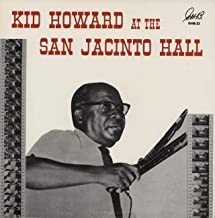
John Baptiste “Bat” Mosley was born on December 22, 1893 in Algiers, Louisiana, and was the brother of drummer Edgar Mosley. His father played guitar but began the youngster playing drums at age nine when he gave him a snare drum. He and his father would make money playing around town together.
Bat, however, did not work professionally until about 1923, and started with Tom Albert, then Joe Harris’ Royal Jazz Band, and later with Kid Howard. Throughout his career he also performed regularly with brass bands, including Kid Rena’s, Henry Allen’s, and the Eureka.
Drummer Bat Mosley passed away on July 28, 1965 in Algiers.

More Posts: drums,history,instrumental,jazz,music
Daily Dose Of Jazz…
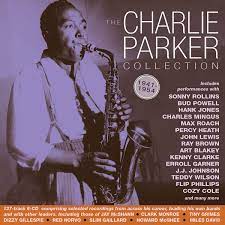
Jerome Darr was born on December 21, 1910 in Baltimore, Maryland. His first major professional affiliation was in a jug band, the Washboard Serenaders. The guitarist was a member of this group from 1933 through 1936, a tenure that included a well-received European tour.
He had an incredibly versatile and prolific career. He showed up on sessions from blues to bebop and even strummed a few arpeggios behind Frankie Lymon & the Teenagers.
Though Jerome was not hiding in a closet during the ’40s, the guitarist simply focused on work as a studio musician during an era when the efforts of such players went largely uncredited. He was a player in the classic jazz context of Buddy Johnson’s band in the early ’50s, or was working with the much more modernistic Charlie Parker during roughly the same period.
He played on some 20 recording sessions between 1935 and 1973, though to his credit or noncredit, his playing included many other styles besides jazz. In his final years, Darr was mostly swinging in the busy band of trumpeter Jonah Jones, in a sense coming full circle with the type of playing he had started out with.
Guitarist Jerome Darr passed away on October 29, 1986 in Brooklyn, New York.
More Posts: guitar,history,instrumental,jazz,music
Daily Dose Of Jazz…
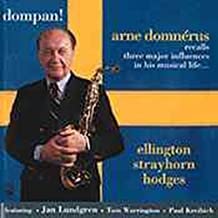
Sven Arne Domnérus was born on December 20, 1924 in Stockholm, Sweden and began to play the clarinet at the age of 11. By the time he left school he had taken up the saxophone and turned professional. In 1949 he performed at the Paris Jazz Festival and with Charlie Parker when he was on tour in Sweden in 1950.
A few years later Arne recorded with Clifford Brown, Art Farmer, and James Moody. From the middle 1950s to the middle 1960s he was a featured soloist in the Swedish Radio Big Band. With Bengt-Arne Wallin, Rolf Ericson, and Åke Persson (the latter two were former members of Duke Ellington’s Orchestra), he participated in the Jazz Workshops organised for the Ruhrfest in Recklinghausen by Hans Gertberg from the Hamburg radio station.
He recorded several times with Quincy Jones in Sweden and is featured throughout The Midnight Sun Never Sets, composed and arranged by Jones and recorded under Jones’ direction by Harry Arnold’s orchestra in 1958. Domnérus’ playing in his early career was typical of the cool, sophisticated, technically accomplished and lyrical style of Swedish modern jazz during the 1950s.
As a leader Domnerus recorded forty~four albums and another 104 as a sideman with Alice Babs, Lars Gullin, Bengt Hallberg, Dizzy Gillespie, Thad Jones, George Russell, Toots Thielemans, Red Rodney, James Moody, Leonard Feather and Monica Zetterlund, among others too numerous to mention.
Saxophonist, clarinetist and composer Arne Domnerus, who wrote for film and television, and retired from playing due to his declining health, passed away on September 2, 2008 in his hometown.
More Posts: bandleader,clarinet,composer,history,instrumental,jazz,music,saxophone
Daily Dose Of Jazz…
Lucius Carl Watters was born on December 19, 1911 in Santa Cruz, California and raised in Rio Vista, California. At St. Joseph’s military academy he belonged to the drum and bugle corps. In 1925, he moved with his family to San Francisco, California where he started a jazz band. Teaching himself how to arrange music, he found work playing trumpet on a cruise ship. He studied music at the University of San Francisco with help from a scholarship, but he dropped out of school to pursue a career.
During the Thirties, he went on tour across America with the Carol Lofner Big Band. While in New Orleans, Louisiana he became interested in traditional jazz. Back in California, he assembled jam sessions with Bill Dart, Clancy Hayes, Bob Helm, Dick Lammi, Turk Murphy, and Wally Rose. In 1938, he formed a band that included Hayes, Helm, Squire Gersh, Bob Scobey, and Russell Bennett. The band found steady work at Sweet’s Ballroom in Oakland, California and slipped in pieces of traditional New Orleans jazz into the repertoire until Watters was fired.
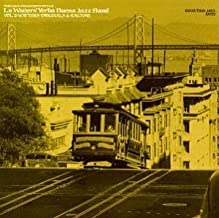
1939 saw Lu established the Yerba Buena Jazz Band to revive the New Orleans jazz style of King Oliver. He brought in pianist Forrest Browne, who taught the band music by Jelly Roll Morton. He wrote music and arrangements to add to the traditional repertoire. World War II interrupted their performing and he joined the Navy. After the war they reunited and started playing at different clubs and backing visiting musicians Kid Ory, James P. Johnson, and Mutt Carey.
In 1950 the band broke up and Watters left music. He became a carpenter, cook, and a student of geology. Coming out of retirement in 1963 he performed with Murphy at an anti-nuclear protest in California to prevent a nuclear plant from being constructed at Bodega Bay. He recorded an album for Fantasy with Rose, Helm, Bob Mielke, and Barbara Dane. It included the title track and another song named for the San Andreas Fault, which was consistent with his interest in geology.
Trumpeter and bandleader Lu Watters, who had a mineral from California named wattersite in his honor, passed away on November 5, 1989 in Santa Rosa, California at age 77.
More Posts: bandleader,history,instrumental,jazz,music,trumpet