

Daily Dose Of Jazz…
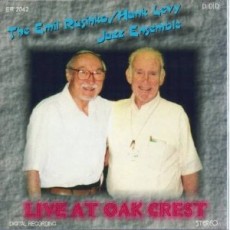
Hank Levy was born Henry Jacob Levy on September 27, 1927 in Baltimore, Maryland. He learned to play the saxophone and matriculated through Catholic University studying composition with George Thaddeus Jones. It was here that he became interested in odd meters through their use by such composers as Paul Hindemith, Maurice Ravel, and Igor Stravinsky. An adept composer of counterpoint, his talent can be heard in such compositions as Passacaglia and Fugue and Quintessence among others for both the Don Ellis Orchestra and Stan Kenton.
Levy was also prolific as an arranger of jazz standards, though few of them were published during his lifetime. He was especially fond of the music of the stage as it came through bebop: Cole Porter, George Gershwin, Jerome Kern. In his last years, he more frequently turned to bebop originals by Charlie Parker, Dizzy Gillespie, Tadd Dameron.
As an educator Hank was a full-time professor at Towson State University in 1967. He founded and directed for nearly a quarter of a century the Jazz Program and created the “Towson State Jazz Ensemble”. By 1970 he had brought the band to national prominence winning the outstanding band honors at the prestigious Notre Dame Jazz Festival, with and additional honor of “Best Lead Trumpet”.
Levy recorded an album in 1975 with the ensemble titled “2 + 2 = 5” comprised of six of his compositions. The “Hank Levy Legacy Band” currently performs his music, they have recorded two live CDs to date, and several of his works are still in print through various distributors. Saxophonist, composer and arranger Hank Levy passed away on September 18, 2001 in Parkville, Maryland.
Daily Dose Of Jazz…
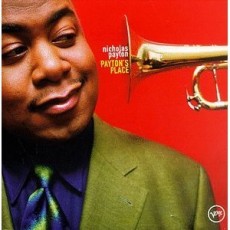
Nicholas Payton was born on September 26, 1973 in New Orleans, Louisiana, the son of bassist and sousaphonist Walter Payton. He took up the trumpet at age four and by nine was playing in the Young Tuxedo Brass Band. Upon leaving school, he enrolled first at the New Orleans Center for Creative Arts and then at the University of New Orleans under the tutelage of Ellis Marsalis.
Payton toured with Marcus Roberts and Elvin Jones in the early 90s, signed a recording contract with Verve Records, and released his first album, From This Moment in 1994. In 1996 he performed on the soundtrack of the movie Kansas City.
After seven albums on Verve, Nicholas signed with Warner Bros. and would perform and record with Wynton Marsalis, Dr. Michael White, Nancy Wilson, Christian McBride, Joshua Redman, Roy Hargrove Clark Terry, Allen Toussaint, and Joe Henderson among others. He is a founding member of the SFJAZZ Collective and in 2008, he joined The Blue Note 7 in 2008, releasing an album the following year that produced a U.S. promotional tour.
Trumpeter Nicholas Payton also plays piano and is a prolific blogger and has written a notable blog titled “On the Difference Between Prejudice and Racism…” in which Payton theorizes that blacks cannot be racist because a prerequisite to racism is power.
He has recorded more than a dozen albums as a leader and sideman, received a Grammy Award for Best Instrumental Solo for his playing on the album Doc Cheatham & Nicholas Payton and continues to compose, record and perform.
Daily Dose Of Jazz…
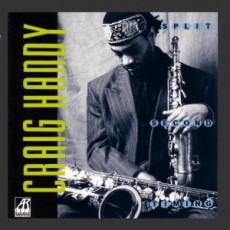
Craig Handy was born Craig Mitchell Handy on September 25, 1962 in Oakland, California and played guitar, trombone and piano before falling in love with the tenor saxophone. He was a part of the Berkeley High School Jazz Program, earned a Charlie Parker Scholarship award and attended North Texas State University from 1981 to 1984, where he was a member of their prestigious One O’Clock Lab Band.
By 1986 at age 23 he moved to New York City and once there he built up a cache of credits performing and recording with Herbie Hancock, Head Hunters, Art Blakey, Wynton Marsalis, Roy Haynes, Abdullah Ibrahim, Elvin Jones, Joe Henderson, Betty Carter, John Hicks, George Adams, Ray Drummond, Conrad Herwig, Dee Dee Bridgewater, Charles Tolliver, The Cookers, and David Weiss among many others.
He was a member and Musical Director of the Mingus Big Band, Mingus Dynasty, and Mingus Orchestra, post-bop tenor saxophonist Craig Handy has recorded as a leader, as a member of the group Chartbusters, portrayed the role of Coleman Hawkins in the 1996 film Kansas City and is credited for performing the Season Six theme of the Cosby Show. He continues to compose, perform, record and tour.
More Posts: saxophone
Daily Dose Of Jazz…
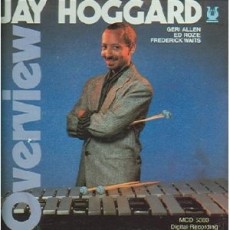
Jay Hoggard was born September 24, 1954 in Washington, D.C. but grew up in Mount Vernon, New York. His mother taught him how to play piano at a young age and picked up the saxophone long before age 15 when he started playing the vibraphone. He played with Anthony Davis and Leo Smith in the early 1970s around New England.
After moving to New York City in 1988 Jay worked again with Davis and with Chico Freeman, Sam Rivers, Cecil Taylor, James Newton, and Kenny Burrell. He would go on to collaborate and perform over the next few decades with Lionel Hampton, Milt Jackson, Tito Puente, Bobby Hutcherson, Billy Taylor, James Newton, Hilton Ruiz and Oliver Lake.
An international performer Hoggard has played on stages and jazz festivals in Africa, South America, Europe, Asia and the Caribbean and throughout the United States as well as appearing on television. Since 1978 he has recorded more than a dozen and a half sessions as a leader and many dates as a sideman. Vibraphonist Jay Hoggard currently teaches at his alma mater Wesleyan University.
More Posts: vibraphone
Daily Dose Of Jazz…
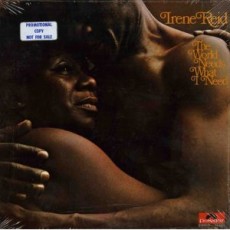
Irene Reid was born on September 23, 1930 in Savannah, Georgia, singing in church and in high school in Georgia. In 1947 after her mother passed, she moved to New York City. Toward the end of the year she tried out for an amateur contest at the Apollo Theater in Harlem, and won the competition for five straight weeks. Soon after she was offered a slot as the featured vocalist with Dick Vance at the Savoy Ballroom, which she held from 1948 to 1950.
In 1961–62, Reid sang with Count Basie‘s orchestra, and recorded for Verve Records. She would later perform in a Broadway production of the musical The Wiz She sang with Carmen McRae, Sarah Vaughan, Aretha Franklin, and B.B. King.
Irene receded from fame in the 1970s and 1980s, but launched a comeback near the end of that decade. She appeared at the Savannah Jazz Festival in 1991, 1994, and 1996, and continued releasing albums on Savant Records in the 1990s and 2000s.
In 2002, British DJ duo Beginerz sampled Reid’s vocals to make the club hit “Reckless Girl” and in 2003 Lil’ Kim sampled Reid’s vocals to make the hit “I Came Back For You”.
On January 4, 2008 jazz singer Irene Reid passed away, leaving for posterity more than a dozen albums.
More Posts: vocal