

Daily Dose Of Jazz…
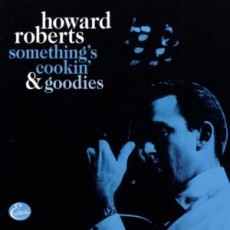
Howard Roberts was born on October 2, 1929 in Phoenix, Arizona and began playing guitar at age 8. By age15 he was playing professionally locally. 1950 saw him moving to Los Angeles, California where he began jamming with Sonny Stitt, Dexter Gordon and Buddy DeFranco and working with musicians, arrangers and songwriters including Neal Hefti, Henry Mancini, Bobby Troup, Chico Hamilton, George Van Eps and Barney Kessel. 1952 was the year Roberts played on his first record date, Jam Session No. 10 with Gerry Mulligan and Jimmy Rowles. Around 1956, Bobby Troup signed him to Verve Records and he decided to concentrate on recording, both as a solo artist and session musician.
Roberts played rhythm guitar, lead guitar, bass and mandolin in the studio, for television and movie projects on such projects as The Twilight Zone, The Munsters, I Dream of Jeannie. He would work on Julie London’s Blue Moon recording, with Peggy Lee, George Auld, Shelley Fabares, Chet Atkins, Dean Martin, The Monkees, Roy Clark and many others. As a member of The Wrecking Crew,and part of Phil Spector‘s Wall of Sound, in 2007 he was inducted into the Musicians Hall of Fame and Museum in Nashville, Tennessee.
In 1961, Howard designed a signature guitar with a round sound hole and single pickup that was originally produced by Gibson’s Epiphone division. Two years later he recorded his first two albums of nine with Capitol, before signing with ABC/Impulse Records. From the late 1960s, Roberts began to focus on teaching, traveling around the country giving guitar seminars, and writing several instructional books.
For some years he also wrote an acclaimed column “Jazz Improvisation” for Guitar Player magazine and founded the Guitar Institute of Technology and Playback Publishing. Guitarist Howard Roberts died of prostate cancer in Seattle, Washington on June 28, 1992, leaving a jazz catalogue of more than two-dozen albums as a leader and sideman.
More Posts: guitar
Daily Dose Of Jazz…
Dave Holland was born on October 1, 1946 in Wolverhampton, England and taught himself how to play stringed instruments, beginning at four on the ukulele, graduating to guitar and later bass guitar. Quitting school at age 15 to pursue a profession in a top 40 band, but gravitated to jazz buying albums of Ray Brown, Leroy Vinnegar, Charles Mingus and Jimmy Garrison and trading his electric bass in for an acoustic.
After moving to London in 1964, Holland began playing acoustic bass in small venues and studied with James Edward Merrett, learning to sight read, and enrolling in a three-year scholarship program at the Guildhall School of Music and Drama.
At 20, Holland was keeping a busy schedule in school, studios and Ronnie Scott’s Jazz Club playing behind American musicians like Coleman Hawkins, Ben Webster and Joe Henderson and British musicians such as John McLaughlin, Evan Parker and began a working collaboration with Kenny Wheeler that has continued to today.
In 1968 he joined Miles Davis’ group, recorded on Files de Kilimanjaro, In A Silent Way and Bitches Brew and Live at the Fillmore East, March 7, 1970: It’s About Time. Leaving Miles he joined the group Circle with Chick Corea that started a 34-year association with ECM record label. During the Seventies and 80s he worked as a leader and a sideman with Anthony Braxton, Stan Getz, John Abercrombie, Jack DeJohnette, Bonnie Raitt, Steve Coleman, Kevin Eubanks, Billy Higgins, Roy Haynes, Hank Jones, Billy Higgins, Pat Metheny and Marvin “Smitty” Smith.
Dave would go on to tour with Herbie Hancock, renew his affiliation with Joe Henderson and Betty Carter, formed his third quartet introducing Steve Nelson to the world, record dozens of albums as a leader and sideman, form his current quintet, win his first Grammy for big band album “What Goes Around”, win numerous other recognitions and he continues to compose, record, perform and tour.
More Posts: bass
Daily Dose Of Jazz…
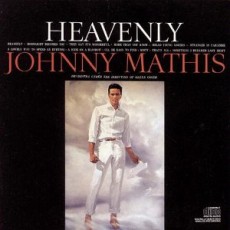
Johnny Mathis was born John Royce Mathis in Gilmer, Texas on September 30, 1935. The family moved to San Francisco, California, where he grew up on 32nd Avenue in the Richmond District. His father a vaudevillian, saw his son’s talent, bought a piano and encouraged him by teaching him songs and routines that he performed at home, school and church functions.
At thirteen, Johnny began study with voice teacher Connie Cox, and for six years he learned vocal scales and exercises, voice production, classical and operatic skills. A star athlete in high school he earned four athletic letters, and then enrolled at San Francisco State University on scholarship to become a teacher. However, spotted by Helen Noga, co-owner of The Black Hawk Club at a jam session, she became his manager, got jazz producer George Avakian to hear him and he subsequently sent a telegram to Columbia Records noting: Have found phenomenal 19-year-old boy who could go all the way. Send blank contracts.
The rest, as they say is history. His first album Johnny Mathis: A New Sound In Popular Song was a slow-selling jazz album. Staying in New York to play the clubs, his second album, produced by Mitch Miller,, defined his sound – soft, romantic ballads. Miller paired him with arranger/conductor Ray Conniff, then with Ray Ellis, Glenn Osser, and Robert Mersey By 1956 Johnny recorded two of his most popular songs – “Wonderful, Wonderful” and “It’s Not For Me To Say”. He would appear in films by MGM and 20th Century Fox, the Ed Sullivan Show and The Pat Boone Chevy Showroom.
After splitting from Noga, Mathis established Jon Mat Records to produce his recordings, Rojon Productions to handle all of his concert, theater, showroom and television appearances, and all promotional and charitable activities, hired a new manager and business partner, signed with Mercury, then Columbia Records, the latter being his permanent label. His recordings have been used in Close Encounters of the Third Kind, The X-Files and Mad Men; and his discography crosses all genres including jazz, pop, Brazilian, Spanish, Soul, R&B, rock, Broadway, Tin Pan Alley and disco.
He has the distinction of having the longest stay of any recording artist on the Columbia Record label, having been with the label from 1956 to 1963 and from 1968 to the present and makes him the third biggest selling recording artist of the 20th century, only after Elvis Presley and Frank Sinatra.
Johnny Mathis has received three Grammy awards including a Lifetime Achievement Award, has been inducted into the Grammy Hall of Fame, nominated for an Oscar, has taped twelve of his own television specials, made over 300 television guest appearances with 33 of them being on The Tonight Show and his songs have been heard in 100 plus television shows and films around the globe. He continues to perform but from 2000 onwards has limited his concert engagements to fifty to sixty appearances per year.
More Posts: vocal
Daily Dose Of Jazz…
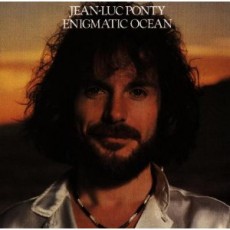
Jean-Luc Ponty was born September 29, 1942 in Avranches, France to parents who taught and played violin, piano and clarinet. At sixteen, he was admitted to the Conservatoire National Supérieur de Musique de Paris, graduating two years later with the institution’s highest award, Premier Prix. He was immediately hired by one of the major symphony orchestras, Concerts Lamoureux, where he played for three years.
While still a member of the orchestra in Paris, Ponty picked up a side gig playing clarinet for a college jazz band that regularly performed at local parties. This life-changing jumping-off point sparked an interest in the jazz sounds of Miles Davis and John Coltrane, compelling him to take up the tenor saxophone. After a night in a local club with his violin it only took four years to be widely accepted as the leading figure in jazz fiddle.
Adopting the electric violin was at first proved to be a handicap as few at the time viewed the instrument as having no legitimate place in the modern jazz vocabulary. With a powerful sound that eschewed vibrato, Jean-Luc distinguished himself with be-bop era phrasings and a punchy style, that by 1964, at age 22, he released his debut solo album for Philips, Jazz Long Playing. He would go on to record with violin greats like Stuff Smith, Stéphane Grappelli, and Svend Asmussen, perform at Monterey in 1967 with John Lewis, snag a recording contract and work with Gerald Wilson Big Band, the George Duke Trio and Niels-Henning Orsted Pederson.
In 1969, Frank Zappa composed the music for Jean-Luc’s solo album King Kong; in 1972 Elton John collaborated with Ponty on Honky Chateau, and within a year emigrated to America, making his home in Los Angeles, California. He worked with John McLaughlin Mahavishnu Orchestra, and in 1975 signed with Atlantic Records. For the next decade, Jean-Luc toured the world repeatedly and recorded 12 consecutive albums which all reached the top 5 on the Billboard Jazz charts.
Over the course of his prolific career, violinist Jena-Luc Ponty has performed with the Pittsburgh New Music Ensemble, Radio City Orchestra, with symphonies around the world, Stanley Clarke and Al Di Meola, a host of American and African musicians, collaborated with his pianist daughter Clara on several project, joined the 4th incarnation of Return To Forever in 2011 and continues perform, tour and record, adding to his more than four dozen album catalogue.
More Posts: violin
Daily Dose Of Jazz…
John Gilmore was born on September 28, 1931 and grew up in Chicago, Illinois but didn’t start playing the clarinet until age 14. While in the Air Force in the late Forties he took up the saxophone, then pursued a musical career, playing briefly with pianist Earl Hines before encountering Sun Ra in 1953.
For the next four decades, Gilmore recorded and performed almost exclusively with Sun Ra. Thought to have the makings of stardom like John Coltrane or Sonny Rollins, the latter taking informal lessons from Gilmore in the late 50s and partially inspired by his sound on “Chasin’ The Trane”.
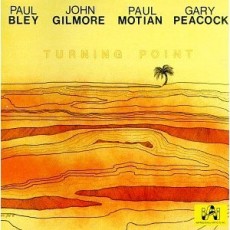
By 1957 he was co-leading a Blue Note date with Clifford Jordan titled Blowing In From Chicago, that is regarded as a hard bop classic with Horace Silver, Curly Russell, and Art Blakey. In the mid-1960s John toured with the Jazz Messengers, participated in recording sessions with Paul Bley, Andrew Hill, Pete La Roca, McCoy Tyner, Melba Liston, and a handful of others. In 1970 he co-led a recording with Jamaican trumpeter Dizzy Reece, however his main focus throughout remained with the Sun Ra Arkestra.
Gilmore was devoted to Sun Ra’s use of harmony, which he considered both unique and a logical extension of bebop. He was the Arkestra’s leading sideman and soloist, performing with fluency and tone on straight-ahead post bop sessions and abstractly capable of long passages based exclusively on high-register squeals. Though his fame was shrouded in the relative anonymity as a member of Sun Ra’s Arkestra, he led the band after Ra’s death up until his own passing of emphysema in 1995.