

Daily Dose Of Jazz…
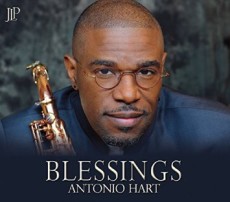
Antonio Hart was born on September 30, 1968 in Baltimore, Maryland. He attended the Baltimore School for the Arts initially trained as a classical musician. After graduating he attended and studied with Andy McGhee at Berklee College of Music and his interest turned to jazz. This was followed by a master’s degree from Queens College, city University of New York.
He gained recognition for his work with Roy Hargrove and has performed an recorded with Robin Eubanks, Dave Holland, McCoy Tyner, and Dee Dee Bridgewater. He has recorded nine albums as a leader
Alto saxophonist Antonio Hart is a member of the Alpha Phi Alpha fraternity and currently continues to perform, record and tour in conjunction with his serving as a. full-time professor of jazz studies in Aaron Copland School of Music at Queens College City University of New York.

Inspire A Young Mind
More Posts: saxophone
Daily Dose Of Jazz…
John Gilmore was born on September 28, 1931. Growing up in Chicago, Illinois he played clarinet from the age of 14 and took up the tenor saxophone while serving in the United States Air Force from 1948 to 1952. He then pursued a musical career, playing briefly with pianist Earl Hines before encountering Sun Ra in 1953.
For the next four decades, he recorded and performed almost exclusively with Sun Ra. This was puzzling to some, who noted Gilmore’s talent, and thought he could be a major star like John Coltrane or Sonny Rollins. Despite being five years older than Gilmore, Coltrane was impressed with his playing, and took informal lessons from him in the late 1950s. His epochal, proto-free jazz “Chasin’ the Trane” was inspired partly by Gilmore’s sound.
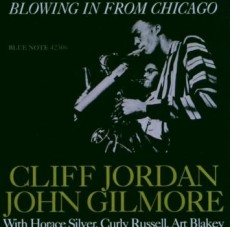
In 1957 he co-led with Clifford Jordan a hard bop Blue Note date Blowing In from Chicago with Horace Silver, Curly Russell and Art Blakey providing the rhythm section. In the mid-1960s John toured with the Jazz Messengers and participated in recording sessions with Paul Bley, Andrew Hill, Pete La Roca, McCoy Tyner, Freddie Hubbard, Elmo Hope, Phil Upchurch and others. By 1970 he was co-leading a recording with Jamaican trumpeter Dizzy Reece. Throughout his years of playing he mainly focused on the avant-garde with the Sun Ra Arkestra.
Gilmore’s devotion to Sun Ra was due, in part, to the latter’s use of harmony which he considered both unique and a logical extension of bebop. He occasionally doubled on drums and also played bass clarinet until Sun Ra hired Robert Cummings as a clarinet specialist in the mid-1950s. However, the tenor saxophonist made a huge contribution to Sun Ra’s recordings and was the Arkestra’s leading sideman, being given solos on almost every track on which he appeared.
John is known for his straight ahead post-bop running changes and fluency with a rhythmic and motive approach in addition to his long passages based exclusively on high-register squeals in the more abstract. His fame shrouded in the relative anonymity of Sun Ra’s Arkestra membership, his straight ahead post-bop talents are exemplified in his solo on the Arkestra’s rendition of “Blue Lou,” as seen on Mystery, Mr. Ra. Avant-garde tenor saxophonist John Gilmore led the Arkestra for a few years after SunRa’s death and up until his own of August 19, 1995.
Take A Dose On The Road
More Posts: saxophone
Daily Dose Of Jazz…
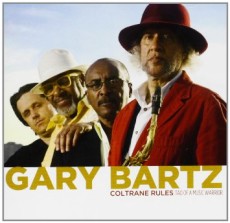
Gary Bartz was born on September 26, 1940 in Baltimore, Maryland. E graduated from the Baltimore City College High School and Juilliard School and got his break playing saxophone into the music industry in his father’s club with Art Blakey, making his debut recording on Blakey’s 1965 Soul Finger album.
Bartz joined the Charles Mingus Jazz Workshop from 1962-1964 where he worked with Eric Dolphy and McCoy Tyner. This was followed with stints with Abbey Lincoln and Max Roach in the mid-Sixties. By ’68 he was a part of McCoy’s Expression band.
Gary has played with Jackie McLean, and with Miles Davis on his Live-Evil project. He formed the group Ntu Troop, and has combined soul, funk, African music, hard bop and avant-garde jazz. He has recorded more than 40 solo albums and over 200 as a guest artist with the likes of the Rance Allen Group, Gene Ammons, Kenny Burrell, Donald Byrd, Norman Connors, Antonio Hart, Phyllis Hyman, Barney McAll, Alphonse Mouzon, Grachan Moncur III, Rare Silk, Pharoah Sanders and Woody Shaw amongst others.
Post-bop alto saxophonist Gary Bartz who also plays soprano saxophone and clarinet has won a Grammy Award in 2005 for his playing on McCoy Tyner’s Illuminations and currently teaches at the Oberlin Conservatory of Music in Ohio when not touring and recording.
Put A Dose In Your Pocket
Daily Dose Of Jazz…
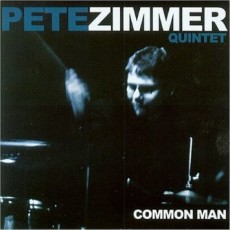
Pete Zimmer was born on September 18, 1977 and raised in Waukesha, Wisconsin. He studied at Northern Illinois University and the New England Conservatory of Music in Boston, Massachusetts. At the Conservatory while earning his bachelor degree he apprenticed under Danilo Perez, Cecil McBee, George Garzone, Bob Moses, Jerry Bergonzi and Bob Brookmeyer.
By 2004, Pete launched his record label, Tippin’ Records, and released his first leader album, Common Man, and has since produced and released three more as a bandleader and composer, Burnin’ Live at the Jazz Standard, Judgment, Chillin’ Live @ Jazz Factory and Prime of Life.
Pete has performed and recorded with George Garzone, Joel Frahm, Jeremy Pelt, Peter Bernstein, Michael Rodriguez, Rodney Jones, Jerry Weldon, Dennis Irwin, David Wong, Akiko Tsuruga, Rick Germanson, Anthony Wonsey, Randy Napoleon, Michael Karn, Julius Tolentino, Gene Perla, Tom Kennedy, Wayne Escoffery, Jaleel Shaw, Dan Nimmer, and many others.
Since 2005 Zimmer has led his group at many of the famous venues in New York City as well as touring much of the U.S.A. and also the United Kingdom. A highly regarded educator he conducts clinics at many collegiate jazz study programs and has been a faculty member at the New York Jazz Academy since 2009. Drummer, bandleader, sideman, composer, educator, and record label entrepreneur Pete Zimmer continues to pursue his jazz career.
Jazz Is Global – Share
More Posts: drums
Daily Dose Of Jazz…
Graham Haynes was born September 16, 1960 in Brooklyn, New York the son of drummer Roy Haynes. With aspirations to push jazz beyond its traditional boundaries, his first foray into electronic music came in 1979 with meeting alto saxophonist Steve Coleman. Together, they formed a band called Five Elements, which launched the influential group of improvisers called M-Base Collective.
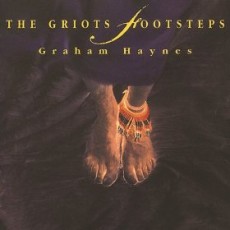
With the formation of his own ensemble, Graham Haynes and No Image and subsequent release of What Time It Be?, he spent much of the Eighties studying a wide range of African, Arabic and South Asian Music. Then in 1990 a move to France incorporated these far-off influences into his next two releases, Nocturne Parisian and The Griot’s Footsteps.
Haynes returned to New York City in 1993, took advantage of the flourishing Hip-Hop scene and released the sample heavy album Transition. He recorded another hybridized album in 1996, Tones For The 21st Century, then discovered drum ‘n’ bass and began working with some of the genres finest DJs and producers in London and the U.S. This manifested in the 2000 release of BPM, a fusion of drum n’ bass beats with the classical music of Richard Wagner.
Over the years, Haynes has kept busy with several critically acclaimed multimedia projects, composing scores for films Flag Wars and The Promise, and as a lecturer at New York University. He received two nominations for the Alpert Award For The Arts.
He has collaborated with his father, Cassandra Wilson, Jaki Byard, Uri Caine, Vernon Reid, Me’Shell Ndegeocello, The Roots, David Murray, George Adams, Ed Blackwell, Bill Laswell, Steve Williamson and Bill Dixon to name a few. With ten albums under his belt, cornetist, trumpeter and composer Graham Haynes continues to push the envelope in his performance, recording and composing.
Inspire A Young Mind