

Daily Dose Of Jazz…
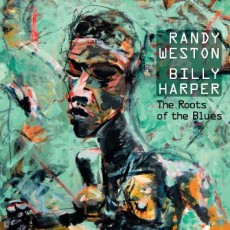
Randy Weston was born April 6, 1926 in Brooklyn, New York of Jamaican heritage and studied classical piano and dance as a child. He attended and graduated from Boys High School in Bedford-Stuyvesant taking piano lessons from Professor Atwell who allowed him to play outside the classical music paradigm. Among his piano heroes are Count Basie, Nat King Cole, Art Tatum, Duke Ellington and his cousin Wynton Kelly but it was Thelonious Monk who had the greatest impact.
After serving in the Army during World War II he ran a restaurant that was frequented by many of the leading bebop musicians. In the late 1940s Weston began gigging with bands including Bullmoose Jackson, Frank Culley and Eddie “Cleanhead” Vinson. He worked with Kenny Dorham in 1953 and Cecil Payne in ’54 before forming his own trio and quartet. That same year he recorded and released his debut as a leader, Cole Porter In A Modern Mood.
In 1955 Randy was voted “New Star Pianist” in Down Beat magazine’s International Critics’ Poll. Several fine albums followed, with the best being Little Niles near the end of that decade for which trombonist Melba Liston provided arrangements for a sextet playing his compositions.
By the 1960s, Weston’s music prominently incorporated African elements, and again teamed up with arranger Melba Liston on two albums, a large-scale suite Uhuru Afrika and Highlife. During these years his band often featured the tenor saxophonist Booker Ervin, traveled throughout Africa, settled in Morocco, running the African Rhythm Club in Tangier from 1967 to 1972 and produced a best-selling record for CTI titled Blue Moses on which he plays electric keyboard.
For a long stretch Weston recorded infrequently on smaller record labels but in 1992 he released a two-CD recording The Spirits of Our Ancestors featuring once again arrangements by his long-time collaborator Melba Liston as well as Dizzy Gillespie and Pharoah Sanders guest playing. He would go on to produced a series of albums in a variety of formats: solo, trio, mid-sized groups, and collaborations with the Gnawa musicians of Morocco.
Among his many honors and awards he has received the French Order of Arts and Letters, Japan’s Swing Journal Award, the Black Star Award, the NEA Jazz Master. Randy has been given honorary degrees from Brooklyn College, City University of New York and Colby College, was the recipient of a Guggenheim Fellowship, has been honored by King Mohammed VI of Morocco, and he has been celebrated in a “Giant of Jazz” concert with all-star musicians Monty Alexander, Geri Allen, Cyrus Chestnut,, Barry Harris, Mulgrew Miller, and Billy Taylor.
After more than five decades devoted to music, pianist and composer Randy Weston continues to perform throughout the Americas, Africa, Asia, the Caribbean, and Europe and uses Ghananian master drummer Kofi Ghanaba’s composition “Love, the Mystery Of…” as his theme song for some 40 years.

Jazz Is Global – Share
More Posts: piano
Daily Dose Of Jazz…
Antoine Roney was born on April 1, 1963 in Philadelphia, Pennsylvania and started out musically learning to play the clarinet but soon turned his attention to the saxophone after his older brother Wallace turned him on to John Coltrane’s Live at Birdland album.
Roney graduated from the Duke Ellington School of the Arts in Washington, DC and then went on to attend college at the Hartt School of Music of the University of Hartford, where he studied with alto saxophonist, Jackie McLean.
Throughout the 80s and 90s Antoine worked as a sideman with McLean, Donald Byrd, Clifford Jordan, Ted Curson, John Patton, Rashied Ali, Arthur Taylor, Jesse Davis, Ravi Coltrane, Michael Carvin, Geri Allen, Chick Corea and Elvin Jones.
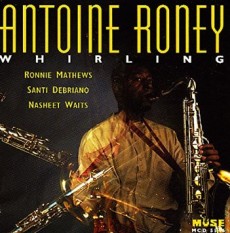
Roney released his first album The Traveler” in 1992 followed with his sophomore project “Whirling” in 1996. To date he has released five albums as a leader, and participated in Miles Davis tribute project Bitches Brew Revisited, with drummer Cindy Blackman. The tenor and soprano saxophonist continues to perform and tour extensively with his trio.
Inspire A Young Mind
More Posts: saxophone

Daily Dose Of Jazz…
Ximo Tebar born Maximum Tébar in Valencia, Spain on March 30, 1963 and began playing the guitar at age seven. By seventeen he decided to pursue music professionally. Since then, he has toured and recorded throughout Spain, Europe and the Americas leading his own group or with Johnny Griffin, Benny Golson, Joe Lovano, Tom Harrell, Tete Montoliu, Anthony Jackson, Lou Bennett, Lou Donaldson, Louie Bellson, Joey DeFrancesco, Jan Ackerman and too many to mention.
He has played all the major festivals, won awards for best soloist two consecutive years of 1989-90, moved to New York City in 2003 and entered the jazz scene playing with the likes of Anthony Jackson, Arturo O’Farrill, Dave Samuels, in Clubs like Smoke, Dizzy’s and Birdland. Signing with Sunnyside Records he played on numerous sessions and produced recordings.
Considered by international critics specialized as the creator of the Son Mediterranean, his 14 discs consists of traditional jazz “The Jazz Guitar Trios” comprising 4 volumes recorded with the best organists including Joey DeFrancesco, Dr. Lonnie Smith, Lou Bennett, Idris Muhammad, Billy Brooks and many others.
Guitarist Ximo Tebar currently resides between Valencia and New York, tours, records, produces and holds master classes and seminars, is the director of his label Omix Records and artistic director of one of the most innovative projects in Spain, “Ivam Jazz Ensemble”, an initiative of the IVAM (Museum of Modern Art in Valencia) that promotes creation and experimentation programs about modern music and jazz continuously as an integrated part of the museum’s activities.
Jazz Is Global – Share
More Posts: guitar

Daily Dose Of Jazz…
Michael Leonard Brecker was born on March 29, 1949 in Philadelphia, Pennsylvania and raised in the suburb of Cheltenham Township. Exposed to jazz at an early age by his father, an amateur jazz pianist, he grew up as part of the generation of jazz musicians who saw rock music not as the enemy but as a viable musical option. He began studying clarinet then moved to alto saxophone in school, and eventually settling on the tenor as his instrument of choice.
Graduating high school he entered Indiana University for a year before moving to New York City in 1969. He carved out a niche for himself as a dynamic and exciting jazz soloist and first made his mark at age 21 as a member of the jazz-rock band Dreams that included his older brother, trumpeter Randy Brecker and drummer Billy Cobham. Though the band was short-lived it attracted Miles Davis to attend some of their gigs.
Brecker went on to work with Horace Silver and Billy Cobham before teaming with his brother to form the Brecker Brothers. Following the jazz-rock trends of the time, but with more attention to structured arrangements, a heavier backbeat, and a stronger rock influence, the band stayed together from 1975 to 1982, with consistent success and musicality.
Michael was in great demand as a soloist and sideman from mainstream jazz to mainstream rock and played on over 700 albums with James Taylor, Paul Simon, Steely Dan, Lou Reed, Donald Fagen, Dire Straits, Bruce Springsteen, Frank Zappa, Parliament Funkadelic and Joni Mitchell as well as Frank Sinatra, Herbie hancock, Chick Corea, Chet Baker, George Benson, Quincy Jones, Charles Mingus, Jaco Pastorious, McCoy Tyner and Elvin Jones. And that is the short list.
During the early 1980s, he was a member of NBC’s Saturday Night Live Band, co-led the group Steps Ahead, he recorded a solo album ning him back towards more traditional jazz. As a leader throughout the 1990s and 2000s, Michael won multiple Grammy Awards of which one was for Directions In Music: Live At Massey Hall with Herbie Hancock and Roy Hargrove. He consistently sold out his solo and group tours in major cities worldwide.
While performing at the Mount Fuji Jazz Festival in 2004, Brecker experienced a sharp pain in his back. Shortly thereafter in 2005, he was diagnosed with the blood disorder myelodysplastic syndrome or MDS. Unable to find a matching stem cell donor, and an experimental partial match that proved unsuccessful, he played his final public appearance with Herbie Hancock at Carnegie Hall in 2006.
On January 13, 2007, tenor saxophonist Michael Brecker passed away from complications of leukemia in New York City. He was awarded two posthumous Grammy awards for his involvement on his brother Randy’s 2005 album Some Skunk Funk, his final recording, Pilgrimage that same year, and again posthumously awarded two additional Grammy Awards for this album in the categories of Best Jazz Instrumental Solo and Best Jazz Instrumental Album, bringing his Grammy total to 15. He was awarded an Honorary Doctorate from Berklee College of Music and inducted into the Down Beat Jazz Hall of Fame.
Put A Dose In Your Pocket
More Posts: saxophone
Daily Dose Of Jazz…
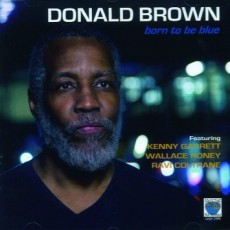
Donald Ray Brown was born on March 28, 1954 in Hernando, Mississippi but was raised in Memphis, Tennessee where he learned to play trumpet and drums in his youth. From 1972 to 1975 he studied at Memphis State University by which time he had made piano his primary instrument.
Donald was inducted into Art Blakey’s Jazz Messengers from 1981 to 1982, then took teaching positions at Berklee College of Music from 1983 to 1985. He went on to accept a position at the University of Tennessee in 1988.
Brown has recorded extensively as a leader amassing eighteen albums for Evidence, Muse, Sunnyside Records and since 1996 for the Space Time record label. As a sideman he was a part of the recording sessions for three Art Blakey albums – Killer Joe, Keystone 3 and Feeling Good. Jazz pianist Donald Brown continues to perform, record and tour.
Give The Gift Of Knowledge
More Posts: piano