

Daily Dose Of Jazz…
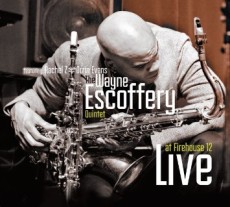
Wayne Escoffery was born on February 23, 1975 in London, England. He and his mother emigrated to the U.S. in 1986 and settled in New Haven, Connecticut. At age eleven he joined The New Haven Trinity Boys Choir and began taking saxophone lessons from Malcolm Dickinson. By sixteen, he had left the choir and engaged in a more intensive study of the saxophone in New York City at the Jazzmobile, the Neighborhood Music School and the ACES Educational Center for the Arts, both in New Haven.
During his senior year in high School, he attended the Artists Collective, Inc. in Hartford, Connecticut. While there he met Jackie McLean who founded the jazz program at The Hartt School, that Escoffery would ultimately attend under scholarship. He went on to matriculate through the Thelonious Monk Institute of Jazz Performance at the New England Conservatory in Boston. During this time, he toured with Herbie Hancock and performed and studied with several jazz greats. In 1999, he graduated with a Masters degree and moved to New York to begin his professional career.
Since 2000, Wayne has been working in New York City with Carl Allen, Eric Reed, Mingus Big Band, Ralph Peterson, Ben riley, Ron Carter, Rufus Reid, Bill Charlap, Bruce Barth, Jimmy Cobb, Eddie Henderson, Mary Stallings, Cynthia Scott, Nancie Banks, Laverne Butler and his wife, Carolyn Leonhart.
Tenor saxophonist Wayne Escoffery has released nine albums to date and in addition, he collaborates with his wife, continues to perform with his own quartet and quintet, the Tom Harrell Quintet, Abdullah Ibrahim’s Akaya and Jazz At Lincoln Center and others.

Jazz Is Global – Share
More Posts: saxophone

Daily Dose Of Jazz…
Christian Howes was born on February 21, 1972 in Rocky River, Ohio but grew up in Columbus. From the age of five he studied classical violin and by 16 was performing with the Columbus Symphony Orchestra. He would go on to matriculate through Ohio State University with a degree in philosophy.
When Christian turned twenty he began playing at regular gospel church services and his interest turned to becoming a jazz voice. Over the next few years he became one of the world’s most respected jazz violinists. He worked with Les Paul for eleven years. Since 2001 he has become an in-demand violinist on the New York jazz scene collaborating with Greg Osby, D.D. Jackson, Frank Vignola, Joel Harrison, Dafnis Prieto, Dave Samuels, Spyro Gyra and a 4-year chair in Bill Evans “Soulgrass” band.
Howes has been recognized by Jazz Times as one of three top violinists, Down Beat Critics Poll’s #2 Rising Star and the Minneapolis-St. Paul Star Tribune called him the fiercest violinist since Billy Bang.
As an educator he has taught as an Associate Professor at Beklee College of Music and established the Creative String Workshop and Festival. Teacher, composer, producer and violinist Christian Howes also plays the viola, guitar and bass guitar and continues to perform and record.
Give The Gift Of Knowledge
Daily Dose Of Jazz…
Darek “Oles” Oleszkiewicz was born on February 20, 1963 in Breslau, Poland. He had five years of piano lessons at the State Conservatory in his hometown, later learning guitar, electric bass and upright bass. As a teenager, he played pop styles of rock music, blues and jazz-rock and jazz. In the early 1980s he performed at numerous jazz festivals and national competitions. In 1983 in Krakow and was awarded the first place for jazz composition and a second for ensemble playing at the Youth Jazz Competition.
Subsequently, he joined saxophonist Ptaszyn Wroblewski’s quartet and in the following years worked with several bands. In 1988, he moved to Los Angeles where he received a fellowship at the California Institute of the Arts and studied with Charlie Haden. After his graduation in 1992, he taught at the Institute and has performed in Los Angeles Jazz Quartet with Chuck Manning and managed various jazz ensembles. He has been a lecturer at the University of California since 2002.
In addition to teaching, he worked with a number of American jazz musicians such as Brad Mehldau, Billy Higgins, Pat Metheny, Joe Lovano, Charles Lloyd, John Abercrombie, Bennie Maupin and Lee Konitz.
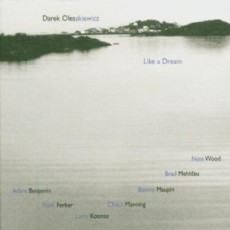
In 2004 he released his debut album Like A Dream, which he recorded with Mehldau and Bennie Maupin for Cryptogramophone. He was selected Best Acoustic Bass in the 2005 Reader Poll the European Jazz Forum. He recorded a duo album Raindance with Adam Czerwinski, and a trio album with Peter Erskine and Alan Pasqua titled The Interlochen Concert in 2010. Bassist, composer and educator Darek Oles continues to perform and record.
Take A Dose On The Road
More Posts: bass
Daily Dose Of Jazz…
Jeff Clayton was born February 16, 1954 in Venice, California and studied oboe at California State University and undertook a tour with Stevie Wonder. Following this he recorded with Gladys Knight, Kenny Rogers, Michael Jackson, Patti Labelle, Madonna B. B. King, Joe Cocker and Ray Charles.
No stranger to jazz, joining his brother, bassist John Clayton, they founded the Clayton Brothers in 1977 and later formed the Clayton-Hamilton Orchestra with drummer Jeff Hamilton. Clayton has performed and recorded with Frank Sinatra, Sammy Davis Jr, Ella Fitzgerald, Woody Herman, Lionel Hampton, Ethan Smith, Lena Horne, Kurt Elling, Diana Krall, and the Count Basie Orchestra under the leadership of Thad Jones. From 1989 to 1991 he was a member of the Phillip Morris Superband, and has toured with Gene Harris and Dianne Reeves.
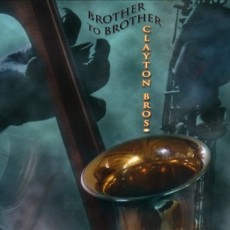
In 2009 Brother To Brother by The Clayton Brothers received a Grammy nomination for Best Jazz Instrumental Album, Individual or Group. Alto saxophonist and flautist Jeff Clayton continues to perform, record and tour.
Jazz Is Global – Share
Daily Dose Of Jazz…
Brent Jensen was born on February 12, 1960 in Boise, Idaho. By 1986 on a grant from the Idaho Commission on the Arts he was studying in New York City with Lee Konitz.
Throughout his career Brent has performed with jazz artists including Gene Harris, Bobby Shew, Gary Foster, Dave Peck, Joe LaBarbera, John Clayton, Wycliffe Gordon, Warren Vache, Curtis Stigers, John Stowell, Kristin Korb, Jamie Findlay, Duck Baker, Dianne Schuur and many others.
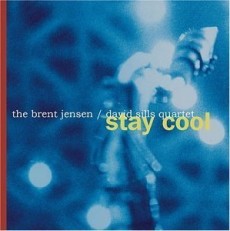
Jensen has charted to #1 with his debut recording, The Sound of a Dry Martini: Remembering Paul Desmond, and Stay Cool, his sophomore release both on Origin Records. By his fifth CD for Origin, One More Mile he teamed up with Seattle musicians, pianist Bill Anschell, bassist Jeff Johnson and drummer John Bishop. This he followed in 2009 with the release of We Couldn’t Agree More is a collection of duets with Seattle pianist Bill Anschell.
He would go on to be a featured winner of the Woodwinds on Fire international talent search conducted by Jazziz magazine in 1996. Soprano saxophonist Brent Jensen is an Assistant Professor of Music at the College of Southern Idaho in Twin Falls, is the Artistic Director for the CSI Jazz Summit and the Jazz Saturdays workshop series.
Take A Dose On The Road
More Posts: saxophone