Daily Dose Of Jazz…
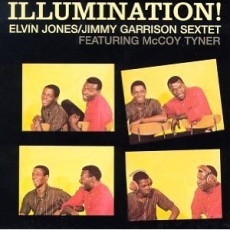
Jimmy Garrison was born on March 3, 1933 in Miami, Florida but grew up in Philadelphia where he learned to play the bass, coming of age during that city’s thriving jazz scene that including McCoy Tyner, Reggie Workman, Henry Grimes and Lee Morgan. He played around Philadelphia with local groups until 1958 when Philly Joe Jones brought him to New York City.
During the time he would freelance with Lennie Tristano, Benny Golson, Bill Evans and Kenny Dorham but got seriously noticed when he joined Ornette Coleman at the Five Spot. Garrison’s long association with Ornette Coleman produced his first recording with him on “Ornette on Tenor” and “Art of the Improvisers”.
Jimmy would go on to play and record with Archie Shepp and Pharoah Sanders but his greatest collaboration was his six-year collaboration with the John Coltrane Quartet when he replaced Reggie Workman. In concert with Trane he would play unaccompanied solos, sometimes as a prelude to a song before the other musicians joined in.
He and drummer Elvin Jones have been credited with eliciting more forceful playing than usual from Coleman on the albums “New York Is Now” and “Love Call”. Before his passing he would play with Kenny Dorham, Curtis Fuller, Jackie McLean, Lee Konitz, Hampton Hawes, Benny Golson and Tony Scott. Bassist Jimmy Garrison passed away on April 7, 1976.
More Posts: bass
Daily Dose Of Jazz…
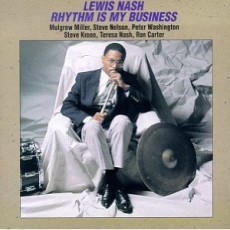
Lewis Nash was born December 30, 1958.Growing up in Phoenix, Arizona he was encouraged into jazz by his high school band teacher. By the age of 18, the drummer was a first call sideman for visiting musicians to Phoenix, and received the call to move to New York and join Betty Carter’s band at the age of 22.
he became a highly in-demand sideman during this period, and since his tenure with Carter, has gone on to record and tour with some of the most important and highly regarded jazz musicians of all time. Among them were Tommy Flanagan, Dizzy Gillespie, Sonny Stitt, Oscar Peterson, Sonny Rollins, Ron Carter, Hank Jones, Nancy Wilson, McCoy Tyner, Wynton Marsalis, Joe Williams and the list goes on and on.
A renowned master stylist, particularly in be-bop and post-bop styles, Nash is at home in a wide range of stylistic territory, including funk, free, and Latin based jazz styles. He is known for his seemingly endless depth of melodic vocabulary, drawing from all eras of jazz percussion, while adding his own unmistakably identifiable approach to the construction of his comping figures and soloing. His versatility has made him one of the foremost brush stylists of his generation.
Nash is also passionate and dedicated to jazz education, and has fostered the careers of a long list of younger players. He is in high demand as a clinician and educator at schools, workshops and major educational jazz festivals worldwide. He formed his own group in the late 1990s and currently leads several groups of varying instrumentation, from duo to septet, as well as a member of Blue Note 7.
More Posts: drums
Daily Dose Of Jazz…
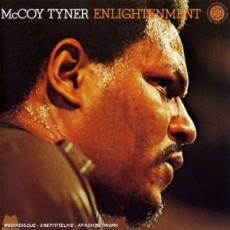
McCoy Tyner was born Alfred McCoy Tyner on December 11, 1938 in Philadelphia, Pennsylvania, the oldest of three children. He was encouraged to study piano by his mother. He began studying the piano at age 13 and within two years, music had become the focal point in his life. His early influences included Bud Powell, a Philadelphia neighbor.
Tyner’s first main exposure came with Benny Golson in 1960, being the first pianist in the Golson/Art Farmer legendary Jazztet. After departing the Jazztet, Tyner replaced Steve Kuhn in John Coltrane’s group the same year during its extended run at the Jazz Gallery. Coltrane had featured one of the McCoy’s compositions, “The Believer”, as early as 1958. He appeared on the saxophonist’s popular recording of “My Favorite Things” for Atlantic Records followed by Live at the Village Vanguard, Ballads, Live at Birdland, Crescent, A Love Supreme and The John Coltrane Quartet Plays on Impulse.
As a leader, Tyner recorded a number of highly influential albums in his own right during and post Coltrane tenure and as a sideman for many of the projects of Impulse and Blue Note. But by 1966, Tyner was rehearsing with a new trio and would now fully embark on his career as a leader. At Blue Note a string of albums were released such as The Real McCoy, Tender Moments, Sahara, Fly With The Wind and Time For Tyner, incorporating different configurations and instruments were utilized like flute, koto, string orchestra, percussion, and harpsichord along with African and Asian elements.
He currently records and has enlisted the talents of Avery Sharpe, Charnett Moffett, Eric Harland, Gerald Cannon, Gary Bartz, Eric Kamau Gravatt. Tyner still records and tours regularly though his schedule has been pared down due to his age.
More Posts: piano
Daily Dose Of Jazz…
David Murray was born on February 19, 1955 in Oakland, California to musical parents, his mother played piano and his father, guitar. He was introduced to jazz while in the Berkeley school system playing alto in the school band. By thirteen he was in a local group called the Notations of Soul, but it was hearing Sonny Rollins that gave him the inspiration to switch from alto to tenor.
Influenced by Stanly Crouch while attending Pomona College, he moved to New York at 20 during the jazz loft era in lower Manhattan. Joining up with Crouch they opened their own loft space called Studio Infinity and Crouch occasionally played drums in Murray’s trio with Mark Dressler.
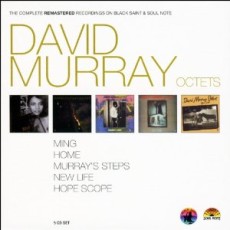
Murray’s early work was raw filed with multiphonics, extreme volume and upper register forays. By 1976 he recorded his first album “Flowers For Albert” and along with Julius Hemphill, Oliver Lake and Hamiet Bluiett became a founding member of the World Saxophone Quartet. Around the same time Joseph Papp commissioned David for a big band assemblage that enjoyed a modicum of critical success.
Through the 80’s he continued to play with the WSQ, his octet and various small bands, recording mostly for Italy’s Black Saint label, showcasing his rough and unformed talent as a composer. His recording dates became a flurry for the next two decades, leading more sessions than any other contemporary jazz musician. His playing matured and he began relying on the standard jazz repertoire when playing in small combo configurations. Yet by the time he was 40, his relative predictability was offset by his attention to the craft of playing and his inimitable style while his increased skill as a composer. In addition to winning a Grammy for Best Jazz Instrumental Group Performance for Blues for Coltrane: A Tribute to John Coltrane, over the course of his career he has been awarded a Guggenheim Fellowship, received a Bird Award, the Jazzpar Prize and has been named Musician of the Year by Newsday and Musician of the Decade by the Village Voice.
Murray mainly plays tenor saxophone and bass clarinet influenced in the free jazz genre of Albert Ayler and Archie Shepp. He has played with a host of world-renowned musicians, of which he is a member and continues to perform, record and tour.

Daily Dose Of Jazz…
Buddy DeFranco was born Boniface Ferdinand Leonard DeFranco in Camden, New Jersey on February 17, 1923. By the age 14 he had won an amateur swing contest sponsored by Tommy Dorsey. Just four short years later he was working with the big bands of Gene Krupa in 1941 and Charlie Barnet in 1943. Those stints were followed with him playing off and on with Tommy Dorsey over the next few years.
Outside of a short-lived association with the Count Basie Septet in 1950, Buddy mainly lead his own bands from then on, playing and recording with Tal Farlow, Art Blakey, Kenny Drew and Sonny Clark, Art Tatum and Oscar Peterson as his sidemen, among others too numerous to name. He also played in some of Norman Granz’s Verve jam sessions and during the late 60’s DeFranco became the bandleader of the Glenn Miller Orchestra, an association that lasted until 1974. He has found more artistic success co-leading a quintet with Terry Gibbs off and on since the early 80’s and has recorded numerous albums.
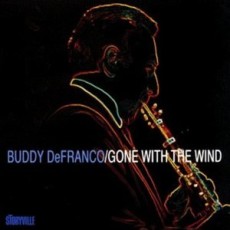
Buddy DeFranco is considered one of the great clarinetists of all time and, until the rise of Eddie Daniels, he was indisputably the top clarinetist to emerge since 1940. It was DeFranco’s misfortune to be the best on an instrument that after the swing era dropped drastically in popularity and, unlike Benny Goodman and Artie Shaw, he has never been a household name for the general public and while most jazz clarinet players were unable to adapt to fading popularity, Buddy Defranco was one of the few bebop musicians who successfully continued to play clarinet exclusively until he passed away on December 24, 2014 in Panama City, Florida at age 91.
More Posts: clarinet