

Daily Dose Of Jazz…
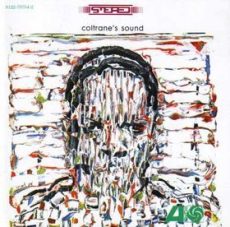
Steve Davis was born March 14, 1929 in Philadelphia, Pennsylvania. The youngest of 10 children, he became interested in music as a young teenager and was inspired by his older brother who also played the bass. He was part of a group of young Philadelphia jazz musicians that included saxophonists Benny Golson and John Coltrane. At age 16 he began playing with local big bands and dropped out of high school a year later to pursue a music career.
During the 1940s and 1950s he worked frequently playing with Philly Joe Jones and Jimmy Oliver among others. In 1960, he was briefly a part of the John Coltrane Quartet, before being replaced temporarily by Reggie Workman and permanently by Jimmy Garrison. He was the double bassist on the recordings of My Favorite Things, Coltrane Plays The Blues and Coltrane’s Sound.
He also recorded as a sideman with Chuck and Gap Mangione on Hey Baby! In 1961 and with quartet fellow and brother-in-law McCoy Tyner on the 1963 album Nights of Ballads & Blues. Davis went on to play on several of James Moody’s groups. He worked throughout the 1960s as a freelancer in New York and as a side man appearing on albums by Kenny Dorham and others.
Moving to Rochester, New York in 1970 Steve played bass with the Gap Mangione Trio, Spider Martin Group and other local bands. He was a mentor to younger jazz musicians in Rochester and enjoyed passing on his knowledge. 1980 saw him beginning to suffer from emphysema and returned to Philadelphia.
Bassist Steve Davis, who was also known by his Muslim name Luquman Abdul Syeed, died on August 21, 1987 at the age of 58.

More Posts: bass,history,instrumental,jazz,music
Daily Dose Of Jazz…
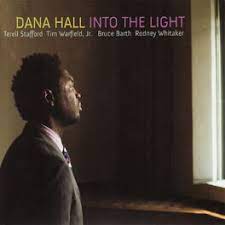
Dana Hall was born on March 13, 1969 in Brooklyn, New York where he spent the first few years of his life, then relocated with his family to his mother’s hometown of Philadelphia, Pennsylvania. There he was exposed to jazz and soul music at an early age through the family’s record collection. The family interest in creative music, and their open door policy toward Philly jazz musicians of the era sparked his curiosity, passion and ultimately career in music.
At the age of 12, Dana’s family moved from Philadelphia to Voorhees Township, New Jersey and began studying drums under renowned drum instructor Vincent “Jim” Hurley at Voorhees Middle School. Following study was with award-winning educator and bassoonist Dennis MacMullin at Eastern Regional High School where he also began playing the oboe and throughout college.
He attended Iowa State University with a double major in aerospace engineering and percussion. At ISU, Hall cultivated his interest in music, studying marimba, vibes, timpani, hand percussion, and drum set. After completing his education in aerospace engineering at Iowa State University, he received his Bachelor of Music degree from William Paterson College and a master’s degree in Composition and Arranging from DePaul University. He is presently a distinguished Special Trustees Fellow pursuing his Doctorate in Ethnomusicology at the University of Chicago.
As a jazz drummer, he is primarily influenced by the work of Art Blakey, Elvin Jones, Philly Joe Jones, Max Roach, and Roy Haynes, Jeff ‘Tain’ Watts, Ralph Peterson, Jr., and Kenny Washington, among many others. The list of artists that Hall has performed, toured, and/or recorded with is too long to mention here but it reflects the diverse, varied approaches of his music-making in the fields of jazz and popular music.
He’s both a member of the Terell Stafford Quintet and the Music Director of the Chicago Jazz Ensemble. He has been a member of the Carnegie Hall Jazz Band, and the Des Moines and the Cedar Rapids Symphonies.
As an educator he has been on the faculty of several colleges and universities including DePaul, Jazz at Lincoln Center Band Director’s Academy, Essentially Ellington faculties. Thelonious Monk Institute of Jazzand the Jazz Institute of Chicago’s Artists Residency Program.
Drummer, percussionist, composer, bandleader, and ethnomusicologist Dana Hall has released one album as a leader and continues to teach, perform, and record.
More Posts: composer,drums,educator,ethnomusicologist,history,instrumental,jazz,music,percussion
Daily Dose Of Jazz…
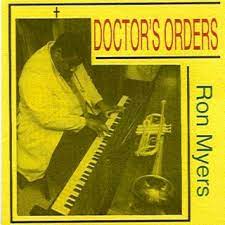
Ronald V. Myers, Sr. was born February 29, 1956 in Chicago, Illinois but moved with the family to Milwaukee, Wisconsin when his parents became employed as teachers in the Milwaukee Public Schools. He attended Rufus King High School in Milwaukee and was a soloist in the high school jazz ensemble on trumpet and piano.
Attending the University of Wisconsin–Madison he majored in Black Studies and was a member of the Experimental Improvisational Black Music Ensemble, under the mentorship of trombonist and professor Jimmy Cheatham. He graduated from the University of Wisconsin Medical School in 1985 and completed his residency in Family Medicine at LSU Medical Center’s Washington St. Tammany Parish Charity Hospital in Bogalusa, Louisiana in 1988.
He took part-time courses at Reformed Theological Seminary at Mississippi Valley State University in 1989 and 1990 and was ordained by Pilgrim Rest Missionary Baptist Church in Milwaukee, and commissioned by the Wisconsin Baptist Pastors Conference as a medical missionary to the Mississippi Delta.
Pianist and trumpeter Ron Myers, who was instrumental in solidifying Juneteenth as a national holiday and chairman of the National Association of Juneteenth Jazz Presenters, died on September 7, 2018.

More Posts: bandleader,history,instrumental,jazz,music,piano,trumpet
Daily Dose Of Jazz…
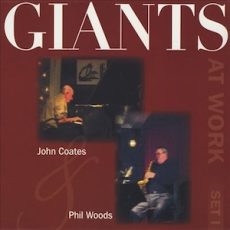
John Francis Coates Jr. was born February 17, 1938 in Trenton, New Jersey to a full-time performing musician and bandleader father, and his mother a dancer and actress. He attended Ewing High School and began his formal study in New York City at age eight with Urana Clarke at the Mannes College of Music on full scholarship. His earliest influences were credited to listening to Symphony Sid on his AM radio.
From age 11 to 14 he played clarinet with his father at the Trenton YMCA dance hall night, where he learned to improvise. His father began teaching him jazz piano at twelve and influenced by Jack Weig he joined the Trenton musicians union the same year. By 14 he was playing gigs two nights a week, as well as weekends and at sixteen he was gigging six nights a week during the summer at the Deer Head Inn where Savoy Records discovered him.
He recorded his debut Savoy album, Portrait, with bassist Wendell Marshall and drummer Kenny Clarke during his senior year of high school. He performed on the Steve Allen, Mike Douglas, and Merv Griffin tv shows in support of that album. From 1956 to 1958 he toured with Charlie Ventura, then while in college John played with Barry Miles, Eddie Gomez, Ron Carter, Woody Shaw, Harry Leahey, Al Cohn, Zoot Sims, Kai Winding, Urbie Green, and Pepper Adams.
Attending Rutgers University he graduated with a degree in romance languages in 1962. After graduating Coates returned to Deer Head where he again played six nights a week, four alone and two as bandleader. He took a position with Shawnee Press as an arranger and editor. He began performing at Henderson’s Club 50, where he had a six night per week gig and played with Coleman Hawkins, Clark Terry, Doc Severinsen, Phil Woods, Marvin Stamm and Bill Watrous among others.
Moving to Mountain Lake, New Jersey in 1966 and began working as an editor at Shawnee Press, arranged on his own time on a royalty basis, and playing at the Deer Head year round where he became an early inspiration for Keith Jarrett, who would listen and sit in occasionally. His arrangement for Amazing Grace has sold more than 750,000 copies and remains one of the publishing company’s best sellers.
John recorded nine albums for the record label Omnisound, toured briefly with bassist Paul Langosch, then began recording for Pacific St Records, including two albums with Phil Woods. In the 1990s, he became homeless and attempted suicide, then moved to Coney Island and began playing again around the year 2000.
Pianist, composer and arranger John C. Coates Jr., who occasionally played vibraphone and clarinet, died on November 22, 2017.
More Posts: arranger,composer,history,instrumental,jazz,music,piano,vibraphone
Daily Dose Of Jazz…
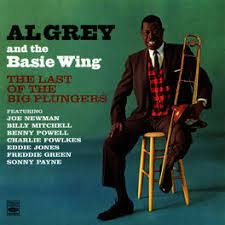
Charles Baker Fowlkes was born on February 16, 1916 in New York City and studied alto and tenor saxophone, clarinet, and violin before settling on the baritone saxophone. He spent most of his early career in the city playing with Tiny Bradshaw, Lionel Hampton, and Arnett Cobb.
He joined Basie’s orchestra in 1953 and remained with the orchestra until his death. The main interruptions during Charlie’s time with Basie were absences due to managing the career of his wife, vocalist Wini Brown.
Fowlkes recorded sixty-eight albums with Basie, and another fourteen with Frank Wess, Kenny Clarke, Buck Clayton, Stanley Cowell, Al Grey, Coleman Hawkins, Milt Jackson, Yusef Lateef, Billy Taylor, and Eddie “Cleanhead” Vinson.
Baritone saxophonist Charlie Fowlkes, who occasionally played flute, electric guitar, bass clarinet and vocals, died in Dallas, Texas on February 9, 1980.
More Posts: bass clarinet,flute,guitar,history,instrumental,jazz,music,saxophone,vocal