

Daily Dose Of Jazz…
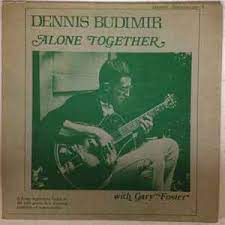
Dennis Matthew Budimir was born on June 20, 1938 in Los Angeles, California. He learned to play piano and guitar in his youth and first played professionally when he was fourteen years old. In mid Fifties Los Angeles he played in a quartet with La Monte Young, Billy Higgins, and Don Cherry and by the late 1950s he was working in the bands of Ken Hanna, Keith Williams, Harry James, and Chico Hamilton.
From 1960–1961 he worked with Bud Shank and accompanied Peggy Lee prior to entering military service. After his discharge in 1963 he toured Japan with Bobby Troup and returned to the Los Angeles area, where he came off the road and became a studio musician for the next several decades. He recorded in this capacity with Lalo Schifrin, Marty Paich, Don Ellis, Gil Melle, Ella Fitzgerald, Milt Jackson, Stan Getz, Julie London, Jimmy Smith, Ray Brown, Johnny Mandel and the Capp-Pierce Juggernaut.
This opportunity also led him to record with Joni Mitchell, The Carpenters, Brian Wilson, Barbra Streisand, Ravi Shankar, Frank Zappa, Linda Ronstadt, Dusty Springfield, Dave Grusin, Quincy Jones, David Axelrod, Tom Waits, Harry Nilsson, George Harrison, Ringo Starr, Johnny Mathis, Cher, and Doris Day. He recorded more than 900 movie soundtracks from the early 1960s until the 2000s.
Guitarist Dennis Budimir, considered to be a member of The Wrecking Crew, transitioned on January 10, 2023 at the age of 84.

More Posts: guitar,history,instrumental,jazz,music
Daily Dose Of Jazz…
Ronnie Bedford was born in Bridgeport, Connecticut on June 2, 1931. He started early on the drums, taking lessons from Fred Albright of the NBC Orchestra when he was ten. Later he started listening to radio airchecks of the great big bands on the radio which, among other things, resulted in Gene Krupa becoming his idol. Although he was already in jazz, the defining moment when he fully committed to the jazz life came in 1970 while he was with the Morris Nanton Trio.
He went on to perform with Broadway shows, big bands, small groups, TV, and the recording studio. A very short list of those he has sat in at drums are Hank Jones, Sylvia Sims, Arnett Cobb, Benny Carter, Walter Norris, and Bill Watrous. The drummer has also performed at key jazz festivals and major concert halls including the Newport Jazz Festival, Royal Albert Hall in London and New York’s Avery Fisher Hall, both with Benny Goodman, and the Smithsonian Museum with Benny Carter.
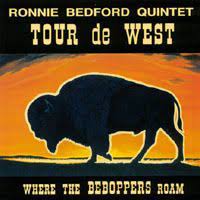
In 1993 he released a self-published album titled Tour de West. He later produced three more albums before the turn of the century on the Progressive Records label. As a sideman he recorded with Carter, Cobb, Jones, Chris Connor, Buddy DeFranco, Don Friedman, Rod Levitt, Pee Wee Russell, Derek Smith and Chuck Wayne.
He was one of the founders of the Yellowstone Jazz Festival held annually in Cody, Wyoming, and was the recipient of the 1993 Wyoming Governor’s Award for the Arts. Living in Powell, Wyoming he taught percussion at Northwest College. Drummer and professor Ronnie Bedford transitioned on December 20, 2014.
More Posts: bandleader,drums,educator,history,instrumental,jazz,music
Daily Dose Of Jazz…
Joseph Samuel Thomas was born on May 31, 1933 in Newark, New Jersey. As a child, he learned to play alto and soprano saxophone, trombone, flute and piano, and also taught himself how to write music. Encouraged by his older brother, he began performing in clubs from the age of fifteen and was ultimately noticed by James Moody.
After enlisting in the United States Army he received a Purple Heart during combat in the Korean War. Returning to the States, Joe performed with Specks Williams and joined Rhoda Scott’s Trio in the early 1960s.
Thomas recorded with organist Jimmy McGriff and released a dozen albums under his own name in the late 1970s and early 1980s. As a sideman he also recorded five albums with Scott, and one each with Ambersunshower, Beck, Buddy Terry and Joe Tex.
Flutist, tenor saxophonist and bandleader Joe Thomas passed away in Orange, New Jersey at the age of 84 on July 26, 2017.

More Posts: flute,history,instrumental,jazz,music,piano,saxophone,trombone
Daily Dose Of Jazz…
John Bernard Gordon was born May 30, 1939 in New York City, New York. He studied at Juilliard School and played with Buddy Johnson and Ray Draper in the 1950s.
Gordon worked with Lionel Hampton in 1961 and 1962 and with Lloyd Price and Sam Rivers later in the 1960s. By the 1970s, he was playing with Charles Tolliver, Clark Terry, Count Basie, Howard McGhee, and Frank Foster.
John led his own ensembles in the late 1970s, and his sidemen included Tolliver, Roland Alexander, Lisle Atkinson, Stanley Cowell, and Andrew Cyrille. During this decade he rejoined Hampton again, with whom he continued working until 1989.
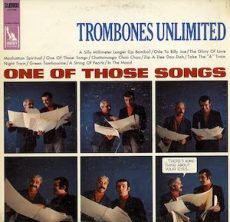
After his Hampton residency Gordon played in Al Grey’s ensemble, Trombone Summit, and founded a group called Trombones Incorporated with Fred Joiner. When Joiner left the group in the early 1990s, he became its leader and changed its name to Trombones Unlimited. The late 1990s had him playing with Slide Hampton, Josh Roseman, Lafayette Harris, Martin Winder, Curtis Fuller, and Thilo Berg.
Gordon worked for several decades as a session musician for recordings and has also performed in pit orchestras for Broadway musicals. At 83, trombonist JOhn Gordon continues to play.
More Posts: bandleader,history,instrumental,jazz,music,trombone
Daily Dose Of Jazz…
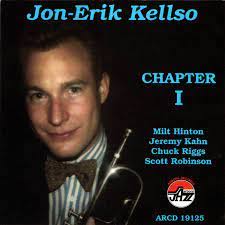
Jon-Erik Kellso was born on May 8, 1964 in Dearborn, Michigan and began playing jazz music very young in life, while receiving some formal training in classical idioms.
He moved from Detroit, Michigan to New York City in 1989 to join Vince Giordano and the Nighthawks. He has recorded many movie and TV soundtracks with the group, including the Grammy Award-winning soundtrack for Boardwalk Empire, The Aviator, Bessie, Ghost World, and Revolutionary Road.
He has performed and/or recorded with J.C. Heard, Catherine Russell, Cecile McLorin Salvant, Kat Edmonson, Milt Hinton, Ruby Braff, Marty Grosz, Bob Haggart, Dick Hyman, Wynton Marsalis, Ken Peplowski, Bucky Pizzarelli, Bob Wilber, Howard Alden, Wycliffe Gordon, and Kenny Davern among other jazz musicians.
Not limited to the genre he has also played and recorded with Linda Ronstadt, Leon Redbone, Maria Muldaur, Elvis Costello, Dave Van Ronk, and many others, appearing on over one hundred records. Since 2007 Kellso has led The EarRegulars at the historic Ear Inn in Manhattan on Sunday nights, and has recorded two acclaimed albums. Trumpeter Jon~Erik Kellso, who is a prolific session player, continues to perform and record.
More Posts: bandleader,history,instrumental,jazz,music,trumpet