

Daily Dose Of Jazz…
Melissa Aldana was born on December 3, 1988 in Santiago, Chile and began playing the saxophone when she was six under the influence and tuition of her father Marcos Aldana, also a professional saxophonist. She began with alto, influenced by Charlie Parker, Cannonball Adderley and Michael Brecker. However, upon first hearing the music of Sonny Rollins, she switched to tenor, picking up her grandfather’s Selmer Mark VI.
Performing around hometown jazz clubs while in her early teens, in 2005 she was invited by pianist Danilo Pérez to play at the Panama Jazz Festival as well as auditions at music schools in the USA. This resulted in Melissa attending the Berklee College of Music in Boston, Massachusetts studying under Joe Lovano, George Garzone, Frank Tiberi, Greg Osby, Hal Crook, Bill Pierce, and Ralph Peterson. After graduating she relocated to New York City to study with George Coleman.
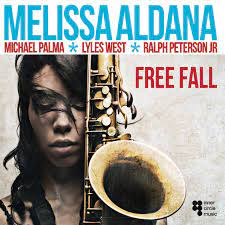
Aldana recorded her debut album, Free Fall, released in 2010 on Greg Osby’s Inner Circle Music label. Two years later she released her sophomore project, Second Cycle, and by age 24, she was the first female and South American musician to win the Thelonious Monk International Jazz Saxophone Competition, in which her father had been a semi-finalist in 1991. The prize was a $25,000 scholarship, and a recording contract with Concord Jazz.
Aldana has been awarded the Altazor National Arts Award of Chile, and the Lincoln Center’s Martin E. Segal Award. She has played concerts alongside artists such as Peter Bernstein, Kevin Hays, Christian McBride, Jeff “Tain” Watts, Jimmy Heath and Wynton Marsalis.
She has formed the group, Melissa Aldana & Crash Trio, with Cuban drummer Francisco Mela and Chilean bassist Pablo Menares, and in addition her most recent configuration in 2017, the Melissa Aldana Quartet includes Aldana on tenor saxophone, pianist Sam Harris or guitarist Lage Lund, bassist Pablo Menares and drummer Kush Abadey.
Tenor saxophonist Melissa Aldana continues to explore and expand her vocabulary as she performs and records.

More Posts: bandleader,history,instrumental,jazz,music,saxophone

Daily Dose Of Jazz…
Norman Dewey Keenan was born on November 23, 1916 in Union, South Carolina. He began playing piano before learning bass at age 15.
In the mid~1930s he worked with Tiny Bradshaw, Lucky Millinder, Henry Wells, Earl Bostic, and Cootie Williams into the Forties, and jammed at Minton’s Playhouse around the same time.
Following World War II he worked with Williams again and with Eddie Cleanhead Vinson in 1947-49. Then he became the bassist in the house trio at the Village Vanguard until 1957. After backing and recording three albums with Harry Belafonte from 1957 to 1962, Keenan worked on the TV show Hootenanny.
He began playing jazz again in the 1960s, recording with Miriam Makeba, Chad Mitchell, Count Basie from 1965-74, recording twenty-one albums with the orchestra, and Roy Eldridge in 1966. Double bassist Norman Keenan transitioned on February 12, 1980 in New York City.

More Posts: bass,history,instrumental,jazz,music
Daily Dose Of Jazz…
Nick Travis was born on November 16, 1925 in Philadelphia, Pennsylvania and started playing professionally at age 15. In the early Forties he played with Johnny McGhee, Vido Musso, Mitchell Ayres, and Woody Herman.
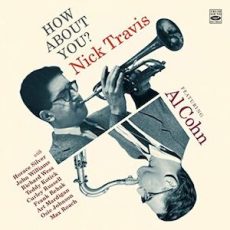
In 1944 he enlisted, however, after his service he played with Ray McKinley, Benny Goodman, Gene Krupa, Ina Ray Hutton, Tommy Dorsey, and Tex Beneke. By the 1950s he was playing with Herman once more for a short stint, Jerry Gray, Bob Chester, Elliot Lawrence, and Jimmy Dorsey. From 1953-56 he played with Gerry Mulligan, Zoot Sims, Al Cohn, with whom he featured on the one session he led for Victor Records, and was a soloist in the Sauter-Finegan Orchestra.
After this he became a session musician for NBC, Most of his work was in big bands, but he also played in small ensembles. Trumpeter Nick Travis transitioned at age 38 as a result of complications from ulcers on Oct. 7, 1964 in New York City.
More Posts: bandleader,history,instrumental,jazz,music,trumpet
Daily Dose Of Jazz…
Fritz Pauer was born on October 14, 1943 in Vienna, Austria and began his professional playing career as a teenager, performing with Hans Koller for two years beginning in 1960 before leading his own ensembles in Berlin, Germany. In the 1960s he played with Don Byas, Booker Ervin, Dexter Gordon, Friedrich Gulda, Annie Ross and Art Farmer, recording three albums with the latter as a sideman.
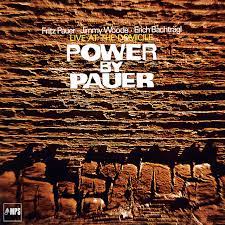
As an educator he taught at the Vienna Municipal Conservatory from 1968-1970, after which he became a member of the ORF-Big Band. The 1970s saw Fritz recording as a leader as well as with Klaus Weiss and Peter Herbolzheimer.
By the mid-1980s Pauer was living in Peru for a brief period, then moved to Switzerland in 1986. Later in life education once again entered his life and he became a university professor. An early 2000s collaboration with Jay Clayton and Ed Neumeister was released as the album 3 for the Road.
Pianist, composer and bandleader Fritz Pauer transitioned on July 1, 2012.

More Posts: bandleader,composer,history,instrumental,jazz,music,piano
Daily Dose Of Jazz…
Buddy Featherstonhaugh was born Rupert Edward Lee Featherstonhaugh on October 4, 1909 in Paris, France. After the family moved to England he studied in Sussex, and had his first professional gig with Pat O’Malley in 1927. He went on to play with Spike Hughes from 1930 to 1932, and toured England in Billy Mason’s band behind Louis Armstrong that same year and in 1933 recorded with a group called The Cosmopolitans. which included Fletcher Allen. In 1935 he recorded with Valaida Snow and two years later with Benny Carter.
During World War II, he led a Royal Air Force band which included in its ranks Vic Lewis, Don McAffer, and Jack Parnell. They went on to record as The BBC Radio Rhythm Club Sextet during 1943-45. After the war Buddy toured Iceland in 1946, and then left the jazz scene, taking up work as a car salesman.
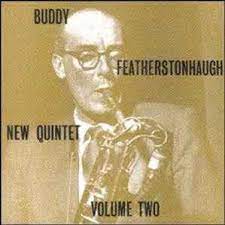
1956 saw his return to playing and recording in a quintet with trumpeter Leon Calvert, Roy Sidewell, Kenny Wheeler, and Bobby Wellins. He also appeared with the band at Butlin’s Holiday Camps in the mid-1950s. He toured the Middle East in 1957, after which he retired.
Saxophonist and clarinetist Buddy Featherstonhaugh, who was an occasional racing car driver who won the 1934 Albi Grand Prix, transitioned on July 12, 1976.
More Posts: bandleader,clarinet,history,instrumental,jazz,music,saxophone