

Daily Dose Of Jazz…
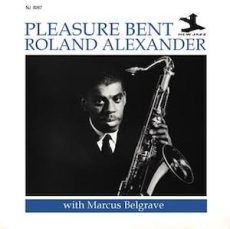
Roland Alexander was born in Boston, Massachusetts on September 25, 1935 and grew up with his parents and sister, Gloria, in Cambridge, Massachusetts. He earned a bachelor’s degree in music composition from the Boston Conservatory in 1958.
A prolific composer and arranger, Alexander wrote and played for many of the better known bands in Boston during the 1950s, associating himself with Sabby Lewis, Preston ‘Sandy’ Sandiford, Richie Lowery, Jaki Byard and many more. He co-led a group called the Boston All Stars that featured trumpeter Joe Gordon, and after Joe Gordon left to play with Dizzy Gillespie’s band, he was replaced by Wajid Lateef (Crazy Wilbur Lucaw), and Gordon Wooly.
In 1956 he recorded High Step as a sideman with bassist Paul Chambers before moving to New York City the year he graduated from the conservatory. In addition to a 1961 and 1978 release as a leader, he played and recorded with John Coltrane, Howard McGhee, Max Roach, Sonny Rollins, Roy Haynes, Philly Joe Jones, Blue Mitchell, Sam Rivers, Archie Shepp, and Mal Waldron.
Post bop saxophonist Roland Alexander, who in addition to playing tenor and soprano saxophone was also a pianist, transitioned on June 14, 2006.

More Posts: bandleader,history,instrumental,jazz,music,piano,saxophone

Daily Dose Of Jazz…
Joki Freund was born Walter Jakob Freund on September 5, 1926 in Höchst, Frankfurt am Main, Germany. He began playing the accordion as a child, switching to tenor saxophone after World War II ended.
Early in the postwar era, he played with Joe Quitter, Carlo Bohlander, Gerry Weinkopf, Joe Klimm, and Jutta Hipp, before forming his own ensemble. He began performing with American musicians, including Donald Byrd, Art Taylor, and Doug Watkins during their European festival appearances.
He went on to play with and arranged for Albert Mangelsdorff in the jazz orchestra of Hessischer Rundfunk, and Erwin Lehn in the Süddeutscher Rundfunk orchestra. He played with the Frankfurt Jazz Ensemble on soprano saxophone in the 1970s, also performing as a leader around this time.
Saxophonist Joki Freund, who predominantly played in a quintet setting but also in orchestras or big bands, transitioned on February 15, 2012 in Schwalbach am Taunus, Germany.
More Posts: arranger,bandleader,history,instrumental,jazz,music,saxophone
Daily Dose Of Jazz…
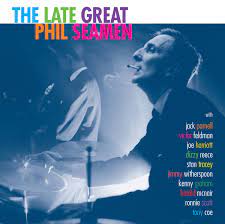
Philip William Seamen was born on August 28, 1926 in Burton upon Trent, Staffordshire, England. He began playing drums at the age of six, turning professional at the age of 18 by joining Nat Gonella and his Georgians in 1944. At 20 he spent a year with Gordon Homer Big Band at the Coronation Ballroom in Ramsgate. He joined the Tommy Sampson Orchestra in 1948 and by 1949, Seamen and tenor saxophonist Danny Moss formed a bebop quintet from within the ranks and was featured on a radio broadcast by the orchestra.
He then went on to play in the Joe Loss Orchestra for about 14 months before taking the top job with Jack Parnell from 1951 until midway 1954. Seamen, being much sought after during the 1950 played in Kenny Graham’s Afro-Cubists projects from 1952 to 1958, from 1954 onwards with the Joe Harriott Quartet, the Ronnie Scott Orchestra and Sextet. He was recruited opn countless sessions as well to perform with Dizzy Reece, Victor Feldman, Jimmy Deuchar, Kenny Baker, Vic Ash, Don Rendell, Stan Tracey, Laurie Johnson, Big Bill Broonzy and Josh White, to name a few.
In 1957 Phil was on his way to America with the Ronnie Scott Sextet as part of a Musicians’ Union exchange tour deal. Unfortunately the Southhampton custom officers found him in possession of drugs, killing his lifelong dream of visiting the States. In 1958, the West End production of West Side Story opened with him after Leonard Bernstein reputedly specifically asked for him, so the producers hired him.
During the first half of the 1960s, he worked often with Tubby Hayes, Joe Harriott, played a couple of nights with Dexter Gordon at Ronnie Scott’s, and recorded with Carmen McRae. In 1964 he played R&B with Alexis Korner and Georgie Fame.
He started teaching in 1962, one of his pupils being Ginger Baker, who went on to influence a whole generation of rock drummers. However, his addiction to alcohol, heroin and other drugs hampered his health and career as many bandleaders refused to hire him with the exception of Freddie Hubbard in 1964 and Roland Kirk in 1967 with a UK tour. On October 13, 1972 drummer Phil Seaman transitioned in his sleep at his home in Old Paradise Street Lambeth, South London, at the age of 46.
Bestow upon an inquiring mind a dose of a Burton upon Trent drummer to motivate the perusal of the genius of jazz musicians worldwide whose gifts contribute to the canon…

Daily Dose Of Jazz…
Meredith Irwin Flory, was born on August 27, 1926 in Logansport, Indiana and was encouraged by his organist mother to learn clarinet as a child. During World War II he was an Army Air Force pilot and after his discharge went on to matriculate through Indiana University, graduating with a degree in philosophy.
Known professionally as Med Flory, in the early 1950s he played in the bands of Claude Thornhill and Woody Herman, before forming his own ensemble in New York City. 1955 saw him relocating to California and starting a new group, which played at the 1958 Monterey Jazz Festival. In the late 1950s, he played with Terry Gibbs, Art Pepper, and Herman again, playing both tenor and baritone saxophone. He was cast in twenty-nine episodes from 1956 to 1957 of the ABC variety show, The Ray Anthony Show.
In the 1960s Med turned his attention away from music and concentrated on acting and screenwriting in television and film. His long list of credits include mostly westerns and crime dramas, which were popular at the time.
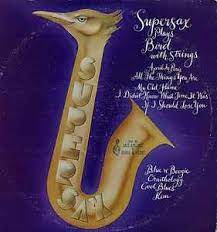
By the mid Sixties Flory returned to music and worked with Art Pepper and Joe Maini on transcriptions and arrangements of Charlie Parker recordings. In 1972, he co-founded Supersax, an ensemble devoted to Parker’s work. Supersax’s debut album, Supersax Plays Bird, won a Grammy Award.
Tenor and baritone saxophonist, bandleader, and actor Med Flory transitioned on March 12, 2014 in North Hollywood, Los Angeles, California.
Bestow upon an inquiring mind a dose of a Logansport saxophonist to motivate the perusal of the genius of jazz musicians worldwide whose gifts contribute to the canon…
More Posts: history,instrumental,jazz,music,saxophone
Daily Dose Of Jazz…
Claude Barthélemy was born on August 22, 1956 in St. Denis, France and started playing guitar when he was fourteen years old. He began playing professionally with Michel Portal’s Ensemble Unit in 1978 and worked with Aldo Romano, Stu Martin, and Gérard Marais.
In the early 1980s he assembled a trio with Jacques Mahieux and Jean-Luc Ponthieux. Additionally he worked with Jean-Marc Padovani and Nouvel Orchestre Philharmonique. By the mid-1980s he concentrated on composition, writing for mixed ensembles. Several of his pieces incorporated video and dance.
Barthélemy co-founded the group Zhivaro in 1987 and from 1989 to 1991 was the director of Orchestre National de Jazz. The 1990s saw him leading the octet La Nouvelle-Orleans, the quartet Monsieur Claude, and accompanying Elise Caron and Sylvie Cobo.
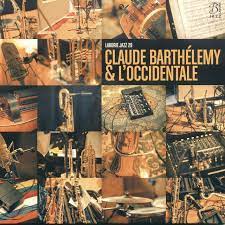
Guitarist Claude Barthélemy continues to perform as a director and leader of various ensemble configurations
More Posts: bandleader,composer,guitar,history,instrumental,jazz,music