

Daily Dose Of Jazz…
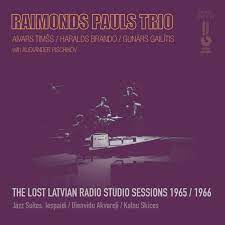
Ojārs Raimonds Pauls was born January 12, 1936 in Iļģuciems, Riga, Latvia and is the second child of a glass blowing factory worker and a seamstress. His father played drums and his grandfather played the violin, and following in his grandfather’s footsteps he is enrolled into Riga’s institute of Music kindergarten branch. Being too young and his fingers unfit for playing violin, he started on the piano.
By 1943 he was studying at Riga’s 7th Elementary school while continuing piano lessons with professor Valerijs Zosts and teachers Emma Eglīte and Juta Daugule. 1946 saw Raimonds admitted to the Secondary Musical School of Emīls Dārziņš, combining his studies at the elementary school for three years.
When he turns 14, Pauls was playing piano at restaurants and clubs with a violin and saxophone virtuoso Gunārs Kušķis. Five years later he completed his studies at the Riga’s 7th Elementary school, however, during this time, he independently developed a liking for playing jazz by studying and imitating various jazz records.
He would go on to compose for musicals, ballets, theater performances, puppet shows, films, choirs, and instrumentals, He has received several honors from his home country, the USSR, Sweden, Japan and Armenia.
Composer, arranger and pianist Raimonds Pauls, who was the Minister of Culture of Latvia from 1988 to 1993, continues to record and perform.

More Posts: arranger,bandleader,composer,instrumental,jazz,music,piano

Daily Dose Of Jazz…
Cees See was born on January 5, 1934 in Amsterdam, Netherlands. He worked in the 1950s with Freddy Logan and Jack Sels, however by the early Sixties he was performing with Rolf Kühn, Pim Jacobs, and Herman Schoonderwalt. He also played with an ensemble formed for Sender Freies Berlin, whose members included Herb Geller and Jerry van Rooyen.
In the second half of the 1960s he played with Teddy Wilson, Klaus Doldinger, Volker Kriegel, Dusko Goykovich, Nathan Davis, and Jan Hammer. He was a member of the New Jazz Trio with Manfred Schoof and Peter Trunk from 1970 to 1972. In the early 1970s he continued to work with Kriegel and Goykovich, as well as with Wolfgang Dauner and Chris Hinze.
Drummer Cees See transitioned on December 9, 1985 in The Hague, Netherlands.
More Posts: drums,history,instrumental,jazz,music

Daily Dose Of Jazz…
John McLaughlin was born on January 4, 1942 into a family of musicians in Doncaster, West Riding of Yorkshire, England. As a child he took up the guitar at the age of 11, exploring styles from flamenco to the jazz of Tal Farlow, Django Reinhardt and Stéphane Grappelli. Moving to London, England from Yorkshire in the early Sixties, hestarted playing with Alexis Korner and the Marzipan Twisters before moving on to Georgie Fame and the Blue Flames, the Graham Bond Organisation, and Brian Auger.
During this period he often supported himself with session work, which he often found unsatisfying but which enhanced his playing and sight-reading. Also, he gave guitar lessons to Jimmy Page. In 1963, Jack Bruce formed the Graham Bond Quartet with Bond, Ginger Baker and John McLaughlin. They played an eclectic range of music genres, including bebop, blues and rhythm and blues.
By the end of the decade McLaughlin recorded his debut album Extrapolation in London. The album’s post-bop style is quite different from McLaughlin’s later fusion works. He moved to the U.S. in 1969 to join Tony Williams’ group Lifetime. He went on to play on Miles Davis’ albums In a Silent Way, Bitches Brew, Live-Evil, On the Corner, Big Fun and A Tribute to Jack Johnson.
As his reputation as a “first-call” session player grew, he was tapped to record as a sideman with Miroslav Vitous, Larry Coryell, Joe Farrell, Wayne Shorter, Carla Bley, the Rolling Stones, DExter Godon, Santana, Paco de Lucia and others.
The Seventies saw him put together the Mahavisnu Orchestra, delved into Indian classical music, and recorded with Stanley Clarke on his School Days album. Throughout the rest of the century he continued to perform with Mahavisnu, no longer the orchestra, as well as sideman duties on a variety of albums, performances and genres well into the new century.
He has recorded nineteen albums as a leader, six collaborative albums, twelve live albums, and 45 as a sideman. Guitarist John McLaughlin continues to perform and record.
More Posts: bandleader,guitar,history,instrumental,jazz,music
Daily Dose Of Jazz…
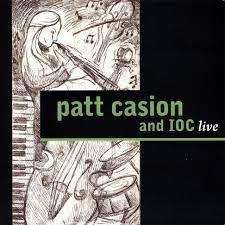
Patt Casion was born on December 31, 1963. She graduated from Berklee College of Music in Boston, Massachusetts and pursued a career that led her around the world, working in multiple genres. Along with playing with her own band, IOC with its rotating membership, she performed regularly in every kind of venue. Her versatility also made her an in-demand musical instructor.
Casion returned to the sound of the 50s and 60s, and introduced African based music into the post bop era music. Her music is also rooted in the Black church gospel idiom as she weaved improvisation into all her music.
Soprano saxophonist Patt Casion, who performed in both gospel and jazz genres, transitioned from cancer in Monterey, California on December 31, 2017. She was 55.

More Posts: bandleader,history,instrumental,jazz,music,saxophone

Daily Dose Of Jazz…
Ben Williams was born on December 28, 1984 in Washington, D.C. and began playing bass at age 10. He graduated from Duke Ellington School of the Arts. He received a Bachelor of Arts in Music Education from Michigan State University and a Master of Music in Jazz Studies at the Juilliard School.
In 2009, he won the prestigious Thelonious Monk International Jazz Bass Competition as judged by Ron Carter, Charlie Haden, Dave Holland, Robert Hurst, Christian McBride, and John Patitucci. The honor included a recording contract with Concord Records through which Ben released his debut album, State of Art, in 2011. The album featured saxophonist Marcus Strickland, guitarist Matthew Stevens, pianist Gerald Clayton, drummer Jamire Williams, and percussionist Etienne Charles.
Williams’ 2015 album Coming of Age brought together sidemen Marcus Strickland on tenor and soprano saxophones, Matthew Stevens on electric guitar, Christian Sands on piano, and John Davis on drums.
By 2020, Ben contributed to the live streamed recording of the singer Bilal’s EP Voyage-19, created remotely during the COVID-19 lockdowns. It was released the following month with proceeds from its sales going to participating musicians in financial hardship from the pandemic.
He was a member of guitarist Pat Metheny’s Unity Band, which won a Grammy Award for Best Jazz Instrumental Album for Unity Band at the 2013 award show. He was introduced as one of the “25 for the Future” by DownBeat magazine in 2016. Double bassist Ben Williams continues to compose, perform and record.
More Posts: bandleader,bass,history,instrumental,jazz,music