

Daily Dose Of Jazz…
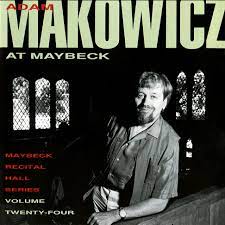
Adam Makowicz was born Adam Matyszkowic on August 18, 1940 into a family of ethnic Poles in Hnojník, Poland now the Czech Republic. After World War II he was raised in Poland and went on to study classical music at the Chopin Conservatory of Music in Kraków, Poland. Overcoming cultural restrictions under the communist government he developed a passion for modern jazz. At the time, political freedom and improvisation were disapproved of by the pro-Soviet authorities.
He embarked on a new professional life as a touring jazz pianist and after years of hardship, Makowicz gained a regular gig at a small jazz club in a cellar of a house in Kraków. He was named the Best Jazz Pianist by the readers of Poland’s Jazz Forum magazine, and was awarded a gold medal for his contribution to the arts.
1977 saw Adam on a 10-week concert tour of the United States, produced by John Hammond. At that time he settled in New York City and recorded a solo album titled Adam on the CBS record label, having been banned from Poland during the 1980s after the Polish regime imposed martial law to crush the Solidarity movement.
Moving to Toronto, Canada in the 2000s he continued his career as a concert pianist and recording artist. In the course of his career, Makowicz has performed with major symphony orchestras and major concert halls in the Americas and in Europe. He has recorded over 30 albums of jazz, popular, and classical music, with his own arrangements and recorded his own compositions for piano. Pianist Adam Makowicz continues to compose, arrange, record and perform.

More Posts: bandleader,composer,history,instrumental,jazz,music,piano
Daily Dose Of Jazz…
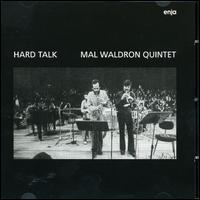
Allen Blairman was born on August 13, 1940 in Pittsburgh, Pennsylvania. Moving from Pittsburgh to New York City he worked with Charles Mingus, Chet Baker and Archie Shepp.In 1970 he played with Albert Ayler at the Fondation Maeght in France. Two years later he toured throughout Europe with Karl Berger, recorded with Mal Waldron for Enja, and with Albert Mangelsdorff. In 1976 Allen played with a German jazz rock group called Embryo and in France he collaborated with Bireli Lagrene.
By 1991 he recorded Life at the Montreux Music Festival in trio-formation with Günter Lenz and Uli Lenz. For over twenty years he played with saxophonist Olaf Schönborn and bassist Mario Fadani in Trio Variety. Since 2009 with tap dancer Kurt Albert and Olaf Schönborn in Melody Rhythm & Tap.
Drummer Allen Blairman was diagnosed with cancer in January and transitioned on April 29, 2022 in Heidelberg, Germany at 81 years of age.
More Posts: drums,history,instrumental,jazz,music
Daily Dose Of Jazz…
Mamadouh Bahri was born July 31, 1957 in Sfax, Tunisia and grew up there until the age of 25 when he moved to Montpellier, France where he later taught music at Jazz Action Montpellier (JAM) until 1991.
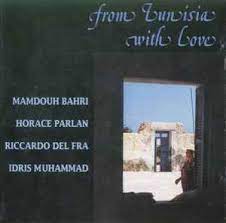
From 1989 to 1993, he played in a quartet with pianist Horace Parlan, Italian bassist Riccardo Del Fra and New Orleans drummer Idris Muhammad. In 1991, they recorded From Tunisia with Love, live in Carthage, Tunisia. The same year, Bahri moved to New York City, where he joined the collective Spirit of Life Ensemble with saxophonist T.K. Blue, trumpeter Ted Curson and drummer Winard Harper among others. He recorded seven albums with the group between 1993 and 2002.
He has played many concerts throughout France and performed in northern Europe, the Middle East, China and the United States. Mamadouh has appeared on broadcast television in Tunis and Abu Dhabi. His recordings have gotten radio airplay in France, New York City and Tunisia. Guitarist Mamadouh Bahri continues to combine Afro-Mediterranean music with a jazz tradition.

More Posts: bandleader,guitar,history,instrumental,jazz,music
Daily Dose Of Jazz…
Walt Weiskopf was born in Augusta, Georgia on July 30, 1959 and grew up outside of Syracuse, New York. His father, a physician by profession, was also a serious classical pianist. Classically trained, it wasn’t the albums of Al Hirt or Herb Alpert his mother brought home but Miles Ahead that turned his attention. Already filled with Charlie Parker, Stan Getz, Dexter Gordon and John Coltrane at 14 he set his sight in earnest on jazz. At 16, he began playing alto saxophone in a local big band alongside the great tenorist J.R. Monterose, who became his first mentor.
Heading to the Eastman School of Music in Rochester, New York, Walt acquired a B.A. and after a move to New York City at twenty in 1980 he made a name for himself in jam sessions and was drafted into the Buddy Rich Big Band, adding tenor to his arsenal. By 1983, he began a 14-year association with Toshiko Akiyoshi, touring and recording with her jazz orchestra and small group.
The late ’80s, saw him playing with and writing for his first quartet that included his brother Joel, bassist Jay Anderson, and drummer Jeff Hirshfield. In 1989, he released his debut album as a leader, Exact Science, with that band. A sextet album followed as his sophomore project with Conrad Herwig, Andy Fusco, Joel Weiskopf, Peter Washington, and Billy Drummond. This began a long association with Criss Cros,s Jazz in which eleven albums were recorded and released.
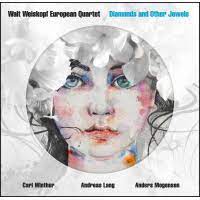
His latest project, the debut of the European Quartet takes him further into his composing, arranging and thematic compositions. The group has released a number of albums, such as Worldwide, Introspection and Introspection 2.0, and a three song ep A Little Christmas Music.
As outstanding as this output is and all of his efforts as a sideman are (he is especially great on Billy Drummond’s Dubai), Weiskopf is best known to many fans for his work with Steely Dan over the past 20 years—before and after the untimely passing of its genius co-founder Walter Becker in 2017.
As an educator he has taught at numerous schools including the Eastman School of Music, Temple University, New Jersey City University and the New School. He published numerous books, Intervalic Improvisation, Around the Horn, and Understanding the Diminished Scale. Moving to Virginia, he retired from teaching and working commercially and is concentrating on practicing and composing.
Tenor saxophonist, composer, arranger and educator Walt Weiskopf, who was a 20 year staple of the studio-only jazz rock fusion band Steely Dan, continues to push the realm of his music.
More Posts: arranger,bandleader,composer,educator,history,instrumental,jazz,music,saxophone
Daily Dose Of Jazz…
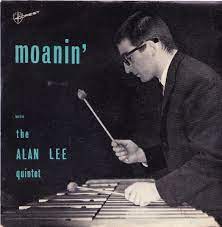
Alan Lee was born on July 29, 1936 in Melbourne, Australia. He was one of the first Australian jazz musicians to fuse classical music with jazz and to utilize Latin American rhythms in his music.
He led several jazz bands in Melbourne and Sydney from the late 1950s through the 1980s. Some of his recorded albums include his Seventies’ projects Gallery Concerts, The Alan Lee Jazz Quartet, Moomba Jazz ’76, Live from the Dallas Brooks Hall, and Alan Lee and Friends: Jazz at the Hyde Park Hotel in 1990, among others.
Bandleader, vibraphonist, guitarist, and percussionist Alan Lee at 86 continues to dabble in music.
More Posts: bandleader,guitar,history,instrumental,jazz,music,percussion,vibraphone