

The Quarantined Jazz Voyager
Reading the history of humanity, evidence proves that bad decisions are not relegated to bad people but are also made by good people. If taking off a face mask is your back to normal, in my opinion, you’re not reaching high enough and the brass ring has passed you by. Legislators and the media are confounding the public with different opinions, playing the he said she said game. The collusion is abomidable and most are buying into it. Remain vigilant, protect yourself, remain healthy.
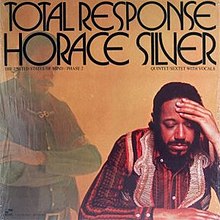
This week I have chosen Total Response (subtitled The United States of Mind Phase 2) for our listening pleasure. It is an album by pianist Horace Silver that was recorded on two separate dates, November 15, 1970 (tracks 1,2,6,9) and January 29, 1971 (tracks 3,4,5,7,8). It was recorded at Van Gelder Studios in Englewood Cliffs, New Jersey, released in April 1972 on Blue Note Records, and produced by Francis Wolff and George Butler.
In 2004, it was included as the second of a trilogy of albums compiled on CD as The United States of Mind. Track List | 45:11 All compositions by Horace Silver
- Acid, Pot or Pills ~ 4:26
- What Kind of Animal Am I ~ 3:38
- Won’t You Open up Your Senses ~ 3:56
- I’ve Had a Little Talk ~ 3:46
- Soul Searching ~ 4:15
- Big Business ~ 5:22
- I’m Aware of the Animals Within Me ~ 3:45
- Old Mother Nature Calls ~ 6:17
- Total Response ~ 5:22
- Horace Silver – electric piano
- Cecil Bridgewater – trumpet, flugelhorn
- Harold Vick – tenor saxophone
- Richie Resnicoff – guitar
- Bob Cranshaw – electric bass
- Mickey Roker – drums
- Salome Bey (1, 2, 5-7, 9), Andy Bey (3, 4, 8) – vocals

More Posts: adventure,album,club,genius,jazz,museum,music,piano,preserving,restaurant,travel

Daily Dose Of Jazz…
Alain Mion was born of French extraction on January 14, 1947 in Casablanca, Morocco but was raised in Paris, France.Influenced by Bobby Timmons, Ray Charles and Les McCann, his style varies between jazz, soul jazz and funky music. By the time he was 19 he formed his own trio and performed at the Blue Note. This subsequently led to him gigging at various festivals with Hank Mobley and Philly Joe Jones.
1974 Alain created the jazz funk group Cortex and recorded a dozen albums before embarking upon a career under his own name in 1982, recording to date eleven albums, such as Pheno-Men, Alain Mion in New York recorded with David Binney and Marc Johnson, and Some Soul Food recorded in Stockholm, Sweden with Patrik Boman and Ronnie Gardiner.
In 2008, he emerged with a new group, Alain Mion FunKey Combo with drums, bass and a saxophone section consisting of Italian and French musicians. He reinvented his new group Alain Mion & The New Cortex with the singer Adeline de Lépinay reprising the role originally performed by Mireille Dalbray on the Troupeau Bleu album.
In the United States, Alain Mion and Cortex’s songs have been sampled by several hip-hop artists including but not limited to Madlib, Fat Joe, DJ Day, MF DOOM, Wiz Khalifa, Curren$y, Mellowhype, Tyler The Creator, Rick Ross, and Lupe Fiasco.
Pianist, composer, arranger, and vocalist Alain Mion continues his exploration of the jazz idiom.
More Posts: arranger,bandleader,composer,history,instrumental,jazz,music,piano,vocal
Daily Dose Of Jazz…
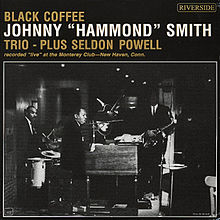
Eddie Lee McFadden was born on August 6, 1928 in Baltimore, Maryland and as a small child tried the piano but later settled on guitar. After his military service, he concentrated on jazz guitar. By the 1950s the guitarist was playing in Philadelphia, Pennsylvania clubs. From 1957-58 he was in organist Jimmy Smith’s band and recorded a dozen albums with Smith as part of a trio and sextet. The trio included Donald Bailey on drums.
Staying with organists he next joined Johnny “Hammond” Smith and during the period 1960–63 and one more in 1966, McFadden made eight recordings. Two further sideman appearances on albums came to fruition in the late 1970s.
In November 1967, the Al Grey & Eddie McFadden Quartet played at Count Basie’s Lounge in New York. During the late Seventies he recorded with Sonny Phillips and Don Patterson.
Guitarist Eddie McFadden, who also wrote music for some of his bands, passed away on September 23, 1992 in Philadelphia.

More Posts: bandleader,composer,guitar,history,instrumental,jazz,music
Daily Dose Of Jazz…
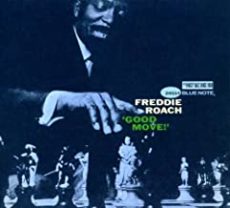
Frederick Roach was born on May 11, 1931 in The Bronx, New York. He made his record debut in 1960 with saxophonist Ike Quebec on the albums Heavy Soul and It Might as Well Be Spring and played with Willis Jackson.
>From 1962-64 he recorded five albums as a leader for the Blue Note Records label. He also recorded with Donald Byrd on the album I’m Tryin’ to Get Home. His original writing, steady basslines, and highly musical fleet-fingered right hand set him apart.
1966-67 saw Freddie recording three more albums as a leader for Prestige Records, which are in a more commercial vein than his Blue Note dates. He left the music business in 1970 and became involved in theater, playwriting and film.
Roach was a soulful organist, certainly influenced by Jimmy Smith, but with a distinct sound and a quite original concept, which was perhaps best heard on “Good Move” for Blue Note. His Blue Note albums are critically acclaimed
Soul jazz Hammond B3 organist Freddie Roach, who moved to California for the film industry, suffered a heart attack and passed away on October 3, 1980.

More Posts: bandleader,composer,history,instrumental,jazz,music,organ
The Quarantined Jazz Voyager
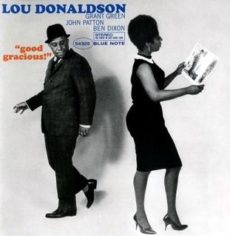
Fourteen months and the end of social distancing and mask wearing is not in sight, and remains the fare for the times as does my continual joy of listening to music. So going into my music room I’ve selected for this week’s enjoyment from the shelves the album Good Gracious!. The studio album was recorded on January 24, 1963 at the Van Gelder Studios in Englewood Cliffs, New Jersy and released on the Blue Note label by saxophonist Lou Donaldson. The album was produced by Alfred Lion and released in the early part of June 1964.
If you’re a fan of Donaldson’s you will notice that his tone is richer and fuller than it is on many of his early-’60s records. He connects with the laid-back R&B grooves and soul-jazz vamps and it remains one of his best soul-jazz sessions.
Track List | 41:59
All compositions by Lou Donaldson except where noted- Bad John ~ 8:18
- The Holy Ghost ~ 8:38
- Cherry (Don Redman) ~ 5:17
- Caracas ~ 7:19
- Good Gracious ~ 6:52
- Don’t Worry ‘Bout Me (Rube Bloom, Ted Koehler) ~ 5:35
- Lou Donaldson – alto saxophone
- Grant Green – guitar
- Big John Patton – organ
- Ben Dixon – drums
More Posts: adventure,album,club,genius,jazz,museum,music,preserving,restaurant,saxophone,travel