

Daily Dose Of Jazz…
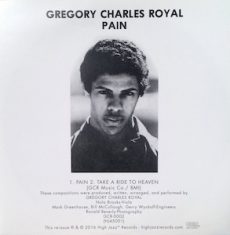
Gregory Charles Royal was born on October 10, 1961 IN Washington, D.C. As a student at Howard University he received the 1982 DownBeat Magazine Student Music Award for Jazz Vocal Group and Graduate College Outstanding Performance in the Jazz Instrumental Soloist Category. He graduated from Howard University with a Master of Music in Jazz Studies.
Royal went on to play with the Duke Ellington Orchestra for a decade beginning in 1989, then with Art Blakey and The Jazz Messengers, Slide Hampton and his World of Trombones, and Howard University Jazz Ensemble. He has appeared onstage as a trombonist with the Broadway shows Five Guys Named Moe and Jelly’s Last Jam.
He has written and appeared in a play God Doesn’t Mean You Get To Live Forever, which was presented at the Baruch Performing Arts Center. and at Theatre Row on 42nd Street in New York. Royal also wrote and appeared in the short film World’s Not for Me. The film won the Harlem Spotlight Best Narrative Short Award at the Harlem International Film Festival in 2016.
Trombonist, composer, writer Chuck Royal, who is the co-founder of The BeBop Channel Corporation, the former parent owner of JazzTimes, continues to pursue his career in music.

More Posts: bandleader,composer,history,instrumental,jazz,music,trombone,writer
Daily Dose Of Jazz…
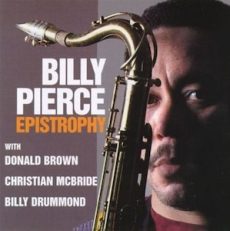
Bill Pierce, known to many as Billy Pierce, was born September 25, 1948 in Hampton, Virginia. He studied with Joe Viola and Andy McGhee at Berklee College of Music, and with Joe Allard.
In the early 1980s he was recruited by Art Blakey and the Jazz Messengers. Through the late Eighties and into the late 1990s he recorded simultaneously as a leader while also in Tony Williams’s quintet in the mid-1980s to early 1990s.
As a leader he has recorded seven albums and another 18 as a sideman with Art Blakey and the Jazz Messengers, Geoff Keezer, Kevin Eubanks, Makoto Ozone, Superblue, Tony Williams, and Lazlo Gardony.
As an educator Billy says he likes seeing music being carried on by young people developing, achieving their dreams, and being a part of history. Many of his students have made a name for themselves: Antonio Hart, Mark Gross, Javon Jackson, Walter Smith, Mark Turner, Miguel Zenon.
Saxophonist Billy Pierce, who is the former chair of the Berklee woodwind department, continues to perform, tour and educate.

More Posts: bandleader,educator,history,instrumental,jazz,music,saxophone
Daily Dose Of Jazz…
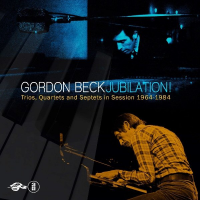
Gordon James Beck was born on September 16, 1935 in Brixton, London, England where he attended Pinner County Grammar School. He studied piano in his youth, but decided to pursue a career as an engineering technical draughtsman and moved to Canada in 1957 for this reason.
Largely self-taught, he returned to music after returning home from Canada in 1958, where he had been exposed to the works of George Shearing and Dave Brubeck. He became a professional musician in 1960 and played with saxophonist Don Byas in Monte Carlo. Beck joined the Tubby Hayes group in 1962, then led his own bands from 1965, including Gyroscope, from 1968, a trio with bassist Jeff Clyne and drummer Tony Oxley.
1967 saw the Gordon Beck Quartet record the album Experiments with Pops released on Major Minor MMLP 21 in 1968. That same year they recorded with Joy Marshall and released as When Sunny Gets Blue decades later.
Beck first played with vocalist Helen Merrill in 1969 and continued the relationship into the 1990s when she toured Europe. From 1969 to 1972 he toured with saxophonist Phil Woods’s European Rhythm Machine.
In the Sixties and Seventies he was a house pianist at Ronnie Scott’s Jazz Club. Beck played experimental funk with George Gruntz from1973-75), and free jazz with improv drummer John Stevens and was a member of Nucleus between 1973 and 1974.
From middle age, Beck played predominantly in mainland Europe, recorded albums with Allan Holdsworth, Henri Texier, Didier Lockwood and others. He often played solo from the 1980s and started teaching music at the same poin and toured Japan with Holdsworth in 1985.
Pianist Gordon Beck stopped performing around 2005 because of poor health and died in Ely, Cambridgeshire, England on November 6, 2011.
More Posts: bandleader,history,instrumental,jazz,music,piano
Daily Dose Of Jazz…
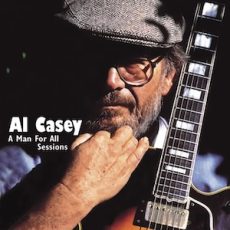
Albert Aloysius Casey was born September 15, 1915 in Louisville, Kentucky. He was a child prodigy who first played violin, then switched to ukulele. He began playing guitar in 1930 and attended DeWitt Clinton High School in New York City where he studied guitar. He met Fats Waller in 1933 and the following year, at eighteen, he became a member of Waller’s band.
Making several recordings with the band, he is known for having played the solo in Buck Jumpin’. After Waller’s death in 1943, he led his own trio and for two consecutive years in the 1940s, he was voted best guitarist in Esquire magazine.
From 1957, he was a member of a rhythm and blues band led by King Curtis. Four years later he dropped out of music, though he returned in the 1970s to record with Helen Humes and Jay McShann. Another absence followed until 1981, when he returned to music to play with the Harlem Blues and Jazz Band.
During his career, Casey worked with Louis Armstrong, Chu Berry, Coleman Hawkins, Lionel Hampton, Billie Holiday, Billy Kyle, Frankie Newton, Clarence Profit, Art Tatum, and Teddy Wilson.
Guitarist Albert Casey died of colon cancer on September 11, 2005, four days shy of his 80th birthday.
More Posts: bandleader,guitar,history,instrumental,jazz,music
Daily Dose Of Jazz…
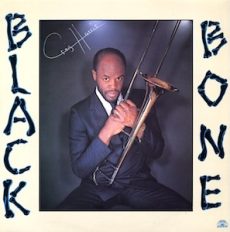
Craig S. Harris was born September 10, 1953 in Hempstead, New York. He graduated from the music program at State University of New York at Old Westbury and was influenced by its founder and director Makanda Ken McIntyre. He moved to New York City in 1978 established him with trombonists Ray Anderson, Joseph Bowie, and George E. Lewis.
He first played alongside another of his teachers at SUNY, baritone saxophonist Pat Patrick, in the Sun Ra Arkestra for two years. Harris then embarked on a world tour in 1979 with South African pianist Abdullah Ibrahim, formerly known as Dollar Brand. While on tour in Australia, he discovered the indigenous Australian wind instrument the didgeridoo, and added it to the collection of instruments he plays.
Craig subsequently performed with progressive musicians David Murray, Beaver Harris, Don Pullen, Sam Rivers, Lester Bowie, Cecil Taylor, Muhal Richard Abrams, Charlie Haden and many others, He also played in Lena Horne’s Broadway orchestra for a year. Along with Mark Isham composed the soundtrack for the 2021 film Judas and the Black Messiah.
He led his own ensembles, performed internationally and has recorded several albums. As leader, Harris. For the latter, he recorded with two groups. The Tailgater’s Tales was a quintet with clarinetist Don Byron, trumpeter Eddie Allen, Anthony Cox on double bass, and Pheeroan akLaff on drums. Harris’s large ensemble Cold Sweat was a tribute to the music of James Brown.
Trombonist Craig Harris, who has recorded since 1983 for India Navigation, Soul Note and JMT, continues to pursue his career.
More Posts: bandleader,history,instrumental,jazz,music,trombone