

Daily Dose Of Jazz…
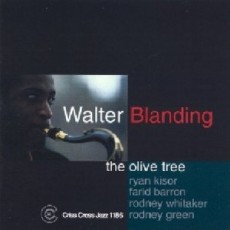
Walter Blanding Jr. was born on August 14, 1971 in Cleveland, Ohio to a musical family and began playing the saxophone at age six. In 1981, he moved with his family to New York City, and by age 16, he was performing regularly with his parents at the Village Gate.
Blanding attended LaGuardia High School for Music & Art and continued his studies at the New School for Social Research. Living in Israel for 4 years he had a major impact on the music scene, inviting great artists such as Louis Hayes, Eric Reed and others to perform. He also taught in several Israeli schools and toured the country with his ensemble.
Walter’s first recording, Tough Young Tenors, was acclaimed as one of the best jazz albums of 1991. He has performed or recorded with numerous musicians, such as Cab Calloway, the Wynton Marsalis Septet, Marcus Roberts, Illinois Jacquet, Eric Reed and Roy Hargrove among others. His last release, The Olive Tree, features fellow members of the Jazz at Lincoln Center Orchestra.
Clarinetist, tenor and soprano saxophonist Walter Blanding Jr. has taught at the Shanghai branch of Jazz At Lincoln Center, and continues to record as a sideman with a variety of musicians and perform as a member of the Jazz at Lincoln Center Orchestra.
Daily Dose Of Jazz…
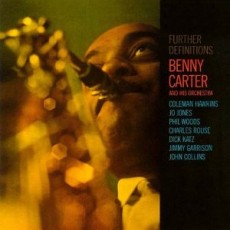
Benny Carter was born Bennett Lester Carter on August 8, 1907 in New York City. He received his first piano lessons from his mother but was largely self-taught. Growing up in Harlem under the influence of trumpeter Bubber Miley and was inspired to buy his own. Unable to play like Miley, he switched to saxophone.
By age fifteen he was sitting in at Harlem night spots and from 1924 to 1928, Carter gained valuable professional experience as a sideman in some of New York’s top bands. For the next two years he played with such jazz greats as cornetist Rex Stewart, Sidney Bechet, Earl Hines, Willie “The Lion” Smith, Fats Waller, James P. Johnson, Duke Ellington and others.
His first recordings of a prolific catalogue were made in 1928 with the Charlie Johnson’s Orchestra and he formed his first big band the following year. In the early 30s he played with Fletcher Henderson, led the McKinney’s Cotton Pickers in Detroit, then returned to New York to once again lead his own band. He would work with Sid Catlett, Chu Berry, Teddy Wilson and Dicky Wells.
Benny’s name first appeared on records with a 1932 Crown label, then on Columbia, Okeh and Vocalion. In 1935 he moved to Europe to play trumpet with Willie Lewis’s orchestra, became staff arranger for the BBC dance orchestra, made several records, returned home in 1938, formed another orchestra and spent much of 1939 and 1940 at Harlem’s Savoy Ballroom. He relocated to Los Angeles in 1943, moved increasingly into studio work and arrange for dozens of feature films and television productions, influencing and mentoring Quincy Jones, as well as arranging for Billie Holiday, Sarah Vaughan, Billy Eckstine, Pearl Bailey, Ray Charles, Peggy Lee, Lou Rawls, Louis Armstrong and Mel Torme among others over the course of his career.
Carter has been honored as a jazz master by the National Endowment for the Arts, received the National Medal of Arts from President Clinton, was a Kennedy Center honoree, was awarded the Grammy Lifetime Achievement Award, won six Grammy Awards, has a star on the Hollywood Walk of Fame and was inducted into the Downbeat Jazz Hall of Fame.
Alto saxophonist, clarinetist, trumpeter, composer, arranger and bandleader Benny Carter, who was a major figure known as “King” in the jazz community and the only musician to record in eight different decades, passed away on July 12, 2003 in Los Angeles, California at age 95.
More Posts: saxophone
Daily Dose Of Jazz…
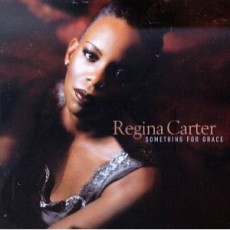
Regina Carter was born on August 6, 1966 in Detroit, Michigan and is the cousin of jazz saxophonist James Carter. She began piano lessons at the age of two after playing a melody by ear for her brother’s piano teacher. After deliberately playing the wrong ending note at a concert, the piano teacher suggested she take up the violin, was enrolled at the Detroit Community Music School when she was four years old and she began studying the violin, piano, tap and ballet.
As a teenager, she played in the youth division of the Detroit Symphony Orchestra and took master class with Itzhak Perlman and Yehudi Menuhin. Carter attended Cass Technical High School with jazz vocalist Carla Cook who introduced her to Ella Fitzgerald. She also played with the Detroit Civic Orchestra and the group Brainstorm.
She went on to study at the New England Conservatory of Music, switched to jazz, transferred to Oakland University, studied with Marcus Belgrave, in addition to taking viola, oboe and choir lessons. After graduating, she taught strings in Detroit public schools, moved to Europe and spent two years in Germany making connections, working as a nanny and teaching violin on a U.S. military base.
In 1987 Carter came to prominence in the all female pop-jazz quintet Straight Ahead. After three albums she went solo and moved to New York City working with Aretha Franklin, Lauryn Hill, Mary J. Blige, Billy Joel, Dolly Parton, Max Roach, and Oliver Lake and became a member of the String Trio of New York. She released her debut self-titled album in 1995 and has since followed up with a series of acclaimed recordings.
Regina is an active educator and mentor, has taught at numerous institutions, including Berklee College of Music and Stanford Jazz Workshop among others. She was awarded a MacArthur Fellows grant, has created her own violin voice and currently leads a quintet.
More Posts: violin
Daily Dose Of Jazz…
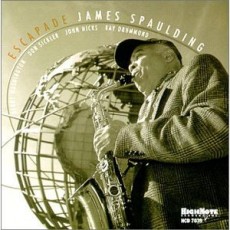
James Spaulding was born July 30, 1937 in Indianapolis, Indiana and started playing bugle while in grade school. He later learned to play trumpet and saxophone and flute. While in high school he studied clarinet and made his professional debut around his hometown in a rhythm and blues band.
After a three-year enlistment in the Army he settled to Chicago in 1957 leading his own groups. It was during this period he joined the Sun Ra Arkestra, making several recordings and remaining through 1959, while furthering his studies of flute at the Chicago Cosmopolitan School of Music. Spaulding subsequently freelanced as a studio musician and occasionally led his own groups before returning to Indianapolis in 1961.
Relocating to New York City in 1963, he recorded extensively for Blue Note Records as a sideman, and led several sessions as a leader for Storyville, Muse, 32 and High Note. He was also a member of the World Saxophone Quartet and recorded with Grant Green, Freddie Hubbard, Bobby Hutcherson, Lee Morgan, David Murray, Duke Pearson, Sam Rivers, Pharoah Sanders, Wayne Shorter, Stanley Turrentine, Larry Young and others.
As an educator he taught flute as an adjunct professor at Livingston College in New Jersey. Alto saxophonist James Spaulding continues to perform and record.
Daily Dose Of Jazz…
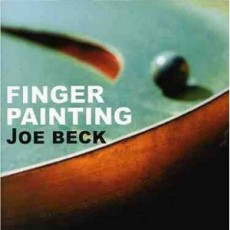
Joe Beck was born on July 29, 1945 in Philadelphia, Pennsylvania and learned to play guitar as a child. Briefly delving into 60’s and 70s rock music he turned his attention to jazz and got initiated in the post bop, mainstream, fusion and soul jazz eras.
Beck began as a member of the Gil Evans orchestra and in 1970 released Rock Encounter for Polydor, followed by a release on Kudu and a record session with Esther Phillips – What a Diff’rence a Day Makes in 1975 on the same label.
By the 1980s Beck was recording several CD’s for the DMP/Digital Music Products label including co-billed work with the noted flautist Ali Ryerson. To fill out the sound he wanted to present — bass lines, harmony, and melody—in the duo setting with Ali, he developed what he called the “alto guitar”. He would go on to collaborate with Jimmy Bruno and John Abercrombie, and record with Miles Davis, Herbie Hancock, Buddy Rich, Duke Ellington, Paul Desmond, Maynard Ferguson, Antonio Carlos Jobim, Woody Herman, Stan Getz, Sergio Mendes, Laura Nyro, Paul Simon, Houston Person and the list goes non.
On July 22, 2008, guitarist Joe Beck passed away from lung cancer in Woodbury, Connecticut after a career spanning more than 30 years in jazz and nearly two-dozen albums.
More Posts: guitar