

Daily Dose Of Jazz…
Jimmy Deuchar was born James Deuchar on June 26, 1930 in Dundee, Scotland. Taught trumpet by WWI bugler John Lynch, after national service he began his professional career in the John Dankworth Seven in 1950. He would go on to work with the Oscar Rabin Band, Ronnie Scott, and Kurt Edelhagen’s Orchestra through the decade.
By the Sixties he was working with Tubby Hayes and sitting in with visiting Americans at Ronnie Scott’s club. A highly gifted player and a leading exponent of the “modern” style, he was in demand and achieved success as a touring player in Europe and the United States.
He joined the Kenny Clarke-Francy Boland Big Band during the late 60 and early 70s, returned to London and freelanced, arranged for the BBC Big Band, the BBC Scottish Radio Orchestra and played in a number of settings.
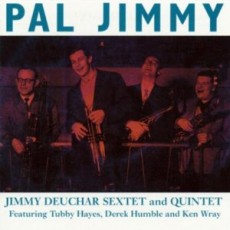
He recorded a number of albums as a leader and sideman beginning in the Fifties utilizing many of his compositions on albums such as The Deuchar Plays Deuchar, Down In The Village, Pal Jimmy and Live In London.
With his health deteriorated, on September 9, 1993 jazz trumpeter and arranger Jimmy Deuchar, who was influenced by Fats Navarro and whose small range was broad and fat toned, passed away at age 63.
More Posts: trumpet
Daily Dose Of Jazz…
Milt Hinton was born Milton John Hinton on June 23, 1910 in Vicksburg, Mississippi but grew up in Chicago, Illinois from age eleven. He attended Wendell Phillips High School and Crane Junior College and learned to first play violin followed by bass horn, tuba, cello and the double bass.
In the late 1920s and early 1930s, he worked as a freelance musician in Chicago playing with Jabbo Smith, Eddie South, and Art Tatum. In 1936, he joined Cab Calloway’s band playing alongside Chu Berry, Cozy Cole, Dizzy Gillespie, Illinois Jacquet, Jonah Jones, Ike Quebec, Ben Webster, and Danny Barker, where he was equally adept at bowing, pizzicato, and “slapping” a technique for which he became famous while playing in the big band from 1936 to 1951.
Milt later became a television staff musician, working regularly on shows by Jackie Gleason and Dick Cavett, recorded eleven albums as a leader and worked as a sideman on numerous albums with Lionel Hampton, Milt Jackson, Elvin Jones, Charles Mingus, Ike Quebec, Ralph Sutton, Ruby Braff, Clark Terry and Branford Marsalis.
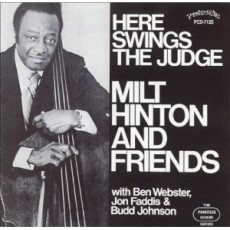
He has twice received awards from the National Endowment For The Arts for his work as a jazz educator and a fellow and is a 1993 NEA Jazz Master. Bassist Milt Hinton, who photographically documented many of the jazz greats, was nicknamed “The Judge”, was heralded as the “the dean of jazz bass players”, passed away on December 19, 2000 in New York City at age 90.
More Posts: bass
Daily Dose Of Jazz…
Nasheet Waits was born on June 15, 1971 in New York City, the son of legendary drummer Freddie Waits, and learned to play the drums as a child. Before pursuing a music career, he studied psychology and history at Morehouse College. Transferring to Long Island University, he graduated with a degree in music but during his matriculation, in 1970, drummer and instructor Michael Carvin, who laid a great foundation for Waits, secured him a spot in Max Roach’s M’Boom.
Waits has recorded or performed as a sideman with such talents as Fred Hersch, Antonio Hart, Joe Lovano, Jason Moran, Andrew Hill, Bunky Green, William Parker, Eddie Gomez, John Medeski, Ron Carter, Hamiett Bluiett, Steve Coleman, Bill Lee, Jackie McLean and Mark Turner among others.
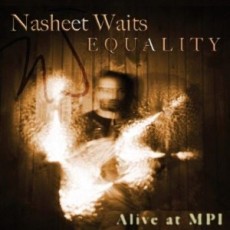
Acquiring the moniker “Heavy” as a part of his jazz legacy, Nasheet has been active on the jazz scene since 1993 and delivered his first album as a leader in 2009, titled “Equality”. Waits has recorded and toured extensively in Africa, Europe, Japan, Canada, South America and the United States. Amidst all of that, Nasheet teaches private lessons to youth and adults, stressing a personal approach to the drums and music and remains dedicated to exploring his role and creative path in music.
More Posts: drums
Daily Dose Of Jazz…
Karl Marsh was born on June 14, 1959 in Los Angeles, California. He learned to play the saxophone as a child coming out of the tradition of John Coltrane, Joe Henderson and Pharoah Sanders, with an added twist of Ben Webster.
Marsh’s big & warm toned tenor saxophone is comfortable in a variety of performance settings, from combos, duos and quintets delivering heartfelt ballads and standards and straight-ahead, earthy and spirit-filled original compositions.
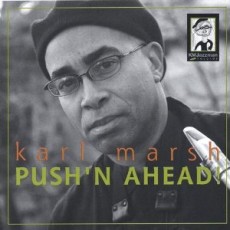
Since 2009 Karl has held a regular gig at the Left Coast Wine Bar and Gallery, has played Maggiano’s at The Grove and the LA Farmer’s Market Summer Jazz Concert series in Los Angeles, has performed at Belgocargo in France, the Joe Henderson Tribute Concert and art venues throughout metro Los Angeles. He released his debut album titled “Push’N Ahead!” in 2005.
Tenor saxophonist Karl Marsh currently serves as the saxophone instructor for the Pasadena Community Youth Orchestra and also offers private instruction.
More Posts: saxophone
Daily Dose Of Jazz…
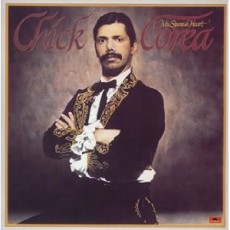
Chick Corea was born Armando Anthony Corea on June 12, 1941 in Chelsea, Massachusetts of Sicilian and Spanish descent. His father, a jazz trumpeter led a Dixieland band introduced him to the piano at the age of four. Growing up surrounded by jazz music, he was influenced at an early age by bebop stars Dizzy Gillespie, Charlie Parker, Bud Powell, Horace Silver and Lester Young. At eight Corea added drums, which later influenced his use of the piano as a percussion instrument.
Corea started taking piano lessons and musical composition at age eight and went on to spend several years in the drum and bugle corps, the Knights of St. Rose. By high school he was gigging, listening to Herb Pomeroy’s band at the time, and had a trio that performed Horace Silver’s music at a local jazz club.
A move to New York had him studying music at Columbia University and The Julliard School but found them both disappointing, subsequently immersing himself in the New York jazz scene. Corea’s first major professional gig was with Cab Calloway, followed by Blue Mitchell, Herbie Mann, Willie Bobo and Mongo Santamaria. He released his debut album Tones For Joan’s Bones in 1966 and has followed with an impressive discography.
He would venture into the avant-garde with Miles Davis on Filles de Kilimanjaro, In A Silent Way and Bitches Brew; and on Joe Farrell’s Song of the Wind. Hew would record and tour with Davis into the 70s until leaving to form the group “Circle” with Dave Holland, pushing more free jazz. Striking out on his own, in 1971 he formed the fusion band Return To Forever that featured Flora Purim on vocals and has spawned a multitude of albums with his most popular tune “Spain” coming from the Light As A Feather album.
He has done duet projects, delved into electric instrumentation, has won 18 Grammys out of 51 nominations, two Latin Grammy awards, has been inducted into the Grammy Hall of Fame for Now He Sings, Now He Sobs, formed the 5 Peace Band and continued to perform, tour and record until his death. Pianist, keyboardist, and composer Chick Corea passed away of a rare form of cancer at his home near Tampa Bay, Florida on February 9, 2021, at age 79
More Posts: piano