

Daily Dose Of Jazz…
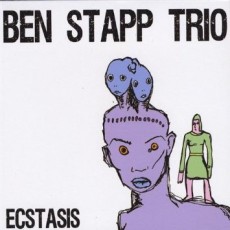
Born January 14, 1982 in California, Ben Stapp grew up as a brass musician before turning to jazz. Studying with his mentor, the late Tommy Johnson, the voice of the Jaws’ theme, at UCLA, he was awarded a fellowship during this period to play principal tuba in the Henri Mancini Orchestra. He obtained his masters from RNCM in Manchester, England where he studied with tuba legend Roger Bobo, and for composition, Anthony Gilbert.
While living in Europe, he played in numerous Euro/international festivals including Festival do Sodeste, Gulbenkian August Music Festival, Festival of New Music in Krems and the Barcelos Music Festival. Back in New York, tubist and composer Stapp hit the forefront in city’s creative music scene. His debut CD release, Ecstasis featuring Tony Malaby and Satoshi Takeishi, has received a critical acclaim from the New York Times and All About Jazz.
He has recorded for Clean Feed in Portugal, Dakah Hip Hop Orchestra in LA, Franz Hautzinger in Austria, James Gourlay in England, and has appeared with the NYJA All Stars on CNBC. Ben Stapp now plays and subs with such tuba luminaries like Howard Johnson and Bob Stewart. He also directs and composes for his large ensemble, the Zozimos Collective and continues to perform and tour.

Dose A Day – Blues Away
More Posts: tuba
Daily Dose Of Jazz…
Ramiro Flores was born on January 12, 1977 in Buenos Aires, Argentina. He began his musical training through the alto saxophone at the age of 11 years. He studied composition at the UCA and saxophone at the National Conservatory, while both played in the band folklorist César Isella, in addition to various projects.
In 1998 he traveled to Boston to continue his studies at Berklee College of Music, where he studied with musicians such as Joe Lovano, George Garzone and Jerry Bergonzi among others. He graduated with a dual major in Film Scoring and Performance in 2002 before moving to New York and continued developing his musical career in this city.
During this period he collaborated with Pedro Giraudo, Mr. Live Big Band, Pablo Ablanedo, The Monkeys, Ryle’s Big Band, Jerry Bergonzi and Slide Hampton. For a period he worked as a show band musician for Carnival Cruise Lines, was a composer for American Music Co. and wrote a book of instruction flute, and recorded for Music Sales Corporation NYC. He began his development as a leader to form his own band and performing his own music in Boston and New York.
Returning to Argentina in 2005, he participated in the projects of the local jazz including Mariano Otero, Ligia Piro, Juan Cruz de Urquiza, Pepi Taveira and Javier Malosetti amongst numerous others. The following year he won “80mundos, and by 2007 he produced and recorded his first CD “Flowers”, for BAU records, in which he collaborated with the likes of Juan Quintero,
That same year in December he received the Clarín Award as the revelation of jazz, voted best soprano saxophonist in 2008 by the newspaper La Nación. Alto saxophonist Ramiro Flores released his sophomore project “Son Dos” and continues to perform.
Inspire A Young Mind
More Posts: saxophone
Daily Dose Of Jazz…
Neal Caine was born in St. Louis, Missouri on January 11, 1973. Growing up in University City he started out with the Suzuki Method on violin at age three. He heard a lot of Miles Davis and Dizzy Gillespie around the house as a child, inheriting his mother’s passion for jazz and learned music as a native language. He played bass at University City High School until graduating in 1991. He was immersed in the school’s jazz scene and its widely recognized jazz program alongside trumpeter Jeremy Davenport, pianist Peter Martin and saxophonist Todd Williams.
After high school, Caine still played jazz bass as a hobby and he moved to New Orleans he enrolled in Tulane University, majoring in political science and heading towards a law degree. But his love for jazz proved too strong to resist. Soon Caine was playing with the Ellis Marsalis and at gigs around the city with trumpeter Nicholas Payton, saxophonist Donald Harrison and trombonist Delfeayo Marsalis, touring Europe with the later, leaving college in his sophomore year.
A move to New York saw him joining Elvin Jones’ Jazz Machine for four years, followed by a year with Diana Krall and then on to spending the final year of her life with Betty Carter, known for her creativity and nurturing young musicians seeking solo careers. After her passing in 1998, Neal worked on establishing his name in New York and in 2000 Harry Connick Jr. called on him to tour Europe with his big band, which has become his regular gig for half a year.
He was also a frequent presence on the Smalls scene for many years, performing often with regulars Sherman Irby, Gregory Tardy, Charles Owens, Harry Whitaker, Zaid Nasser, Frank Hewitt, and others. These days, he has dual residency between New Orleans and New York City, and is active on both scenes. He’s on a long list of recordings by artists such as Wynton Marsalis, Nicholas Payton, John Hicks, Wess Anderson, Billy Hart, Oliver Lake, and Harry Connick Jr.
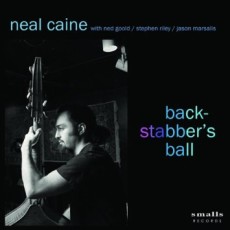
As a composer he has been influenced by the freedom and looseness of Wayne Shorter’s writings. With a long list of sideman gigs behind hem bassist Neal Caine has taken on the role of bandleader, putting a quintet together and releasing his debut recording “Backstabber’s Ball” on the Smalls Records label.
Give A Gift Of Jazz – Share
More Posts: bass
Daily Dose Of Jazz…
Matthew Clayton was born in Philadelphia, Pennsylvania on January 10, 1980. Picking up the saxophone at age ten his love of jazz was fueled playing in big bands in middle school when he played lead alto. It was during this time that he began venturing into improvisation. By high school he was a member of the National Grammy All Star High School Jazz Band, played the Village Vanguard, Birdland and Carnegie Hall in New York City. While there he also met and gigged with Grover Washington, Jr. and Al Grey, and was a featured performer at a winter jazz festival in Paris, France.
Matriculating through Yale University, Matthew went on to get his Masters and Ph.D. from Harvard University specializing in ethnomusicology, with an emphasis on the study of jazz. While at Harvard, Clayton directed the Harvard Graduate School Big Band and performed with students from the nearby Berklee College of Music, taught saxophone privately and at the Litchfield Summer Jazz Camp in Connecticut and privately while completing his studies.
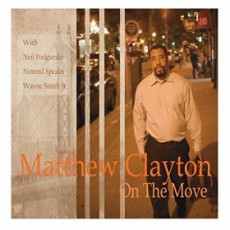
Dr. Matthew Clayton is currently on the faculty of the prestigious Nelly Berman School of Music, is the Director of Jazz Combos at the University of Pennsylvania, has released his debut album “On The Move” last year and continues to perform.
Jazz Is Global – Share
More Posts: saxophone
Daily Dose Of Jazz…
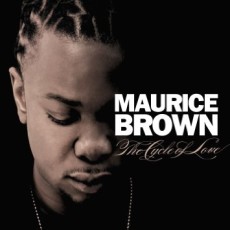
Maurice Brown was born on January 6, 1981 in Harvey, Illinois. Showing a remarkable affinity for the trumpet, he performed with Ramsey Lewis at Chicago’s Symphony Center while matriculating through Hillcrest High School. Following graduation, he received a full scholarship to attend Northern Illinois University, and later continued his studies at Southern University in Baton Rouge, Louisiana, where he worked with famed clarinetist Alvin Batiste.
Relocating to New Orleans shortly thereafter, Maurice began sitting in with numerous jazz veterans, including Clark Terry, Johnny Griffin, Ellis Marsalis and Lonnie Plaxico. He recorded as a sideman with Curtis Fuller, Fred Anderson, Roy Hargrove, Michelle Carr and Ernest Dawkins among others.
In 2001 Brown would win first place in the National Miles Davis Trumpet Competition and in 2003 he released his first album as a bandleader, heading his own quintet for Hip to Bop. The project showed an amazing affinity for bop-inflected jazz, along with a willingness to expand the genre’s lexicon through innovative techniques like playing trumpet solos through a wah-wah pedal.
Trumpeter Maurice Brown continues to live in New Orleans, playing both with his quintet and a hip-hop/funk combo called Soul’d U Out.
Dose A Day – Blues Away
More Posts: trumpet