

Daily Dose Of Jazz…
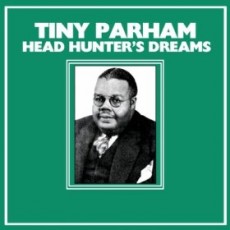
Tiny Parham was born Hartzell Strathdene Parham on February 25, 1900 in Winnipeg, Canada. The pianist and bandleader grew up in Kansas City and worked at The Eblon Theatre, mentored by ragtime pianist and composer James Scott. He would later tour with territory bands in the Southwest before moving to Chicago in 1926.
He is best remembered for the recordings he made in Chicago between 1927 and 1930 working with Johnny Dodds along with several female blues singers and with his own band. Most of the musicians Parham played with are not well known in their own right, though cornetist Punch Miller, banjoist Papa Charlie Jackson, saxophonist Junie Cobb and bassist Milt Hinton are exceptions.
His entire recorded output for Victor are highly collected and appreciated as prime examples of late 1920’s jazz. Tiny favored the violin and many of his records have a surprisingly sophisticated violin solos, along with the typical upfront tuba, horns and reeds.
After 1930 he found work in theater houses, especially as an organist and his last recordings were made in 1940. The cartoonist R. Crumb included a drawing of Parham in his classic 1982 collection of trading cards and later book “Early Jazz Greats” of which Parham was the only non-American born so included in addition to the book’s bonus cd containing a Parham track.
Tiny Parham passed away on April 4, 1943 in Milwaukee, Wisconsin.
More Posts: bandleader,history,instrumental,jazz,music,piano
Daily Dose Of Jazz…
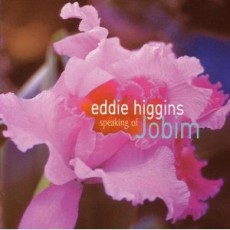
Eddie Higgins was born Edward Haydn Higgins on February 21, 1932 in Cambridge, Massachusetts and began study of piano with his mother. His professional career began in Chicago while attending Northwestern University. He played the most prestigious clubs in Chicago for more than two decades in the 50s and 60s with his longest tenure at the London House, playing opposite Cannonball Adderley, Bill Evans, Errol Garner, Stan Getz, Dizzy Gillespie, Oscar Peterson, and George Shearing among others.
As a leader he amassed a number of recordings during the Chicago years but as a sideman he added many more albums working with Wayne Shorter, Coleman Hawkins, Bobby Lewis, Freddie Hubbard, Jack Teagarden and Al Grey to name just a few.
Equally adept in every jazz circle Eddie was able to work in Dixieland, modal, bebop and swing as well as being a persuasive, elegant and sophisticated pianist whether he was soloing or accompanying a singer.
Higgins eventually moved to Fort Lauderdale, Florida, played in local clubs, performed the jazz festival circuit, toured Europe and Japan, and continued to record up until his death on August 31, 2009 at 77.
More Posts: piano
Daily Dose Of Jazz…
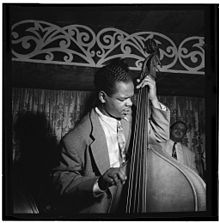
Alvin “Junior” Raglin was born March 16, 1917 and started out on guitar but had picked up bass by the mid-1930s. He played with Eugene Coy from 1938 to 1941 in Oregon and then joined duke Ellington’s Orchestra, replacing Jimmy Blanton. Junior remained in Ellington’s employ from 1941 to 1945.
After leaving Ellington’s orchestra, Raglin led his own quartet, and also played with Dave Rivera, Ella Fitzgerald and Al Hibbler. He returned to play with Ellington again briefly in 1946 and 1955, however he fell ill in the late 1940s and quit performing.
Junior Raglin, swing jazz double bassist, died on November 10, 1955 at age 38, never having the opportunity to record as a leader.
More Posts: bass
Daily Dose Of Jazz…
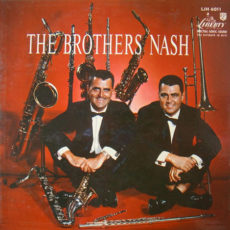
Dick Nash: The Trombone Voice Behind Hollywood’s Golden AgeRichard Taylor Nash was born on January 26, 1928, in Boston, Massachusetts, and discovered brass instruments at age ten but it was tragedy that would deepen his commitment to music. After his parents’ death, while living in boarding school, the young Nash threw himself into trumpet and bugle, finding solace and purpose in the discipline and beauty of making music. What began as comfort became calling.
From Big Bands to the Studio
Nash’s first professional work came in 1947 with bands like Tex Beneke’s popular ensemble, a solid apprenticeship with a name bandleader. After serving in the Army, where he continued playing, he joined Billy May’s swinging outfit, gaining experience in the competitive world of post-war big bands.
But Nash’s real destiny was waiting in Los Angeles, where he would become one of the most sought-after studio musicians in the entertainment capital of the world. When producers needed a trombonist who could nail it on the first take, who could read anything, who could deliver both technical perfection and emotional depth, they called Dick Nash.
Mancini’s Secret Weapon
Nash became the favorite trombonist of composer and conductor Henry Mancini, and if you know Mancini’s work, you understand the honor that represents. Mancini wrote sophisticated, jazz-inflected scores that required musicians who could swing, play with taste, and capture specific moods with just a few perfectly placed notes.
Nash was the featured trombone soloist on several iconic Mancini soundtracks: the cool, late-night jazz of Mr. Lucky and Peter Gunn, the exotic adventure of Hatari!, the wistful romance of Breakfast at Tiffany’s, and the achingly beautiful melancholy of The Days of Wine and Roses.
If you’ve ever heard that gorgeous trombone solo floating over “Moon River” or punctuating the Peter Gunn theme, that’s Dick Nash—his sound became part of America’s collective musical memory, even if most listeners never knew his name.
Equally at Home in Jazz
But Nash wasn’t just a studio musician grinding out commercial work. By 1959, he was playing bass trombone on saxophonist Art Pepper’s brilliant Art Pepper + Eleven: Modern Jazz Classics session—a challenging, ambitious album that showcased Nash’s ability to function in pure jazz settings alongside one of the West Coast’s most intense improvisers.
A Who’s Who of Collaborations
Over the course of his career, Nash remained predominantly associated with swing and big band genres, but his résumé reads like a directory of 20th-century popular music greatness. Besides working on countless film scores, the trombonist performed and recorded with Quincy Jones, Ella Fitzgerald, Harry James, Count Basie, Oscar Peterson, Louie Bellson, Nat King Cole, Mel Tormé, June Christy, Stan Kenton, Les Brown, Don Ellis, Jimmy Witherspoon, Frank Sinatra, Lena Horne, Peggy Lee, Erroll Garner, Anita O’Day, Teresa Brewer, Randy Crawford, The Manhattan Transfer, Sonny Criss… and the list goes on.
The Ultimate Professional
Think about that range: from Basie’s driving swing to Sinatra’s intimate balladry, from Kenton’s progressive big band experiments to Ellis’ avant-garde explorations, from pop sessions to pure jazz dates. Nash could do it all, and do it with the kind of musicality that elevated everything he touched.
The Invisible Artist
Dick Nash represents a particular kind of musical excellence that often goes unrecognized: the studio musician who serves the music rather than their own ego, who makes everyone around them sound better, whose artistry is heard by millions but whose name remains known primarily to fellow musicians and serious fans.
He didn’t need the spotlight. He was the light—illuminating countless recordings, soundtracks, and live performances with his warm tone, impeccable technique, and deep musicality.
From a grieving boy in boarding school finding comfort in a bugle to becoming Henry Mancini’s go-to trombonist and one of the most recorded musicians in American history, Dick Nash’s journey reminds us that sometimes the greatest artists are the ones who help others shine.
And if you’ve ever been moved by a film score, charmed by a classic pop recording, or thrilled by a big band arrangement, there’s a good chance Dick Nash’s trombone was part of what made you feel that way—even if you never knew it.
More Posts: trombone
Daily Dose Of Jazz…
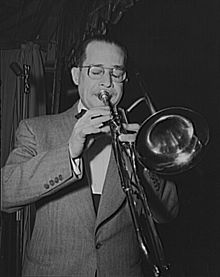
Juan Tizol: The Puerto Rican Trombonist Who Gave Duke Ellington “Caravan”
Imagine stowing away on a ship to chase your musical dreams, then ending up writing some of the most iconic compositions in jazz history. That’s not fiction—that’s Juan Tizol’s extraordinary story.
A Musical Education in Puerto Rico
Born January 22, 1900, in Vega Baja, Puerto Rico, Tizol grew up surrounded by music in a family where it was taken seriously. He started on violin but quickly switched to valve trombone, the instrument that would become his distinctive voice. His uncle Manuel Tizol, music director of the San Juan symphony, became his primary teacher, and young Juan soaked up everything—classical technique, ensemble discipline, professional standards. He played in his uncle’s band and gained invaluable experience performing with local operas, ballets, and dance groups. This was a classical education, Puerto Rican style. Tizol wasn’t learning jazz yet—he was learning music, period.
A Dangerous Leap of Faith
Then came 1920 and a decision that would change everything: Tizol joined a band heading to Washington, D.C. The catch? They traveled as stowaways on a ship, risking everything for the chance to play music in America.
Once they arrived safely, the group set up shop at the Howard Theater, one of Washington’s premier African American venues, playing for touring shows and silent movies while occasionally working small jazz and dance gigs on the side. It was at the Howard that Juan first crossed paths with a young Duke Ellington, who was just beginning to make a name for himself.
Joining the Duke Ellington Orchestra
Summer 1929 brought the call that every jazz musician dreams of—Duke wanted him in the band. Tizol became the fifth voice in Ellington’s brass section, and suddenly the maestro had entirely new compositional possibilities. Now he could write for trombones as an actual section instead of just doubling the trumpets. Tizol’s rich, warm valve trombone tone also blended beautifully with the saxophones, often carrying lead melodies that gave Ellington’s sophisticated arrangements their distinctive color and texture.
More Than Just a Sideman
But Tizol wasn’t just a player—he was essential to the band’s daily operation, meticulously copying parts from Ellington’s scores (no small task in the pre-Xerox era) and contributing his own remarkable compositions.
And what compositions! “Caravan” and “Perdido” are timeless jazz standards that musicians still play today, nearly a century later. Both have been recorded hundreds of times and have become part of the permanent jazz repertoire. Tizol also brought explicit Latin influences into the Ellington sound with pieces like “Moonlight Fiesta,” “Jubilesta,” and “Conga Brava,” adding rhythmic spice and exotic colors that made the band’s already rich palette even more distinctive.
California Calling
In 1944, Tizol made a difficult decision—he left Ellington to join Harry James’ Orchestra in Los Angeles. The reason was simple and human: he wanted more stable work and more time with his wife. The constant touring with Duke was glamorous but exhausting.
He returned to Ellington in 1951, then back to James two years later, spending most of his remaining career on the West Coast. There he worked with James’ popular orchestra, contributed to Nelson Riddle’s elegant arrangements, and appeared on the Nat King Cole television show, bringing his warm sound to America’s living rooms.
After one more brief reunion with Ellington in the 1960s—because that musical connection never really disappears—Tizol eventually retired in Los Angeles, where he passed away on April 23, 1984, in Inglewood, California.
A Legacy Beyond Borders
From stowaway to standard-bearer, Juan Tizol’s journey reminds us that jazz has always been an international language—and sometimes the most quintessentially “American” sounds come from somewhere else entirely.
Every time a band plays “Caravan,” with its mysterious, exotic melody suggesting desert caravans and distant lands, they’re playing Juan Tizol’s vision. Not bad for a kid from Puerto Rico who risked everything to follow the music north.
More Posts: trombone