

Daily Dose Of Jazz…
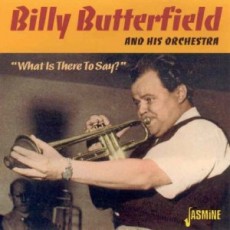
Billy Butterfield: The Trumpet Player Who Almost Became a Doctor
What if one of jazz’s most lyrical trumpet voices had ended up in a white coat instead of on a bandstand? Billy Butterfield, born January 14, 1917, in Middletown, Ohio, started out on cornet as a kid, then pivoted to pre-med studies before the irresistible pull of music brought him back—and thank goodness it did.
A Warm Tone Finds Its Audience
By the late 1930s, Butterfield’s warm, singing tone was turning heads when he joined Bob Crosby’s swinging orchestra. From there, he became the go-to trumpeter for the era’s biggest bandleaders—Artie Shaw, Les Brown, and Benny Goodman all recognized what they had when Butterfield stepped up to the microphone. His sound wasn’t about flash or fury; it was about beauty, control, and emotion that could break your heart.
War, Then a Perfect Recording
When World War II called, Butterfield served from 1943 to 1947, leading his own Army orchestra and bringing music to troops who desperately needed it. After the war, he signed with Capitol Records and delivered one of those perfect moments that defines an era: “Moonlight in Vermont,” featuring Margaret Whiting’s ethereal vocals floating over his exquisite muted trumpet. It’s the kind of recording that still stops people in their tracks seventy years later.
Leading His Own Way
The 1950s brought fruitful collaborations with arranger Ray Conniff, and by the 1960s, Butterfield was leading his own orchestra for Columbia Records—proof that the sideman had grown into a compelling leader. But perhaps his most enduring partnership came in the late 1960s when he joined the aptly named World’s Greatest Jazz Band alongside fellow trumpeter Yank Lawson and bassist Bob Haggart. It was a dream team of veteran musicians playing classic jazz with authority and joy, and Butterfield remained with them until his final days.
A Life Well Played
Throughout it all, Butterfield stayed busy as a sought-after guest artist, bringing his mastery of trumpet, flugelhorn, and cornet to stages around the globe. Whether in an intimate club or a grand concert hall, that distinctive tone—thoughtful, melodic, perfectly controlled—made every performance memorable.
A Legacy in Every Note
Billy Butterfield left us on March 18, 1988, but that gorgeous sound—warm as a summer evening, clear as a bell, romantic without being sentimental—lives on in every recording. The medical profession’s loss became jazz’s eternal gain.
Sometimes the world needs a great doctor. But sometimes it needs a trumpet player who can make “Moonlight in Vermont” sound like the most beautiful thing you’ve ever heard. Billy Butterfield was that player, and we’re all the richer for the choice he made.
More Posts: bandleader,flugelhorn,trumpet
Daily Dose Of Jazz…
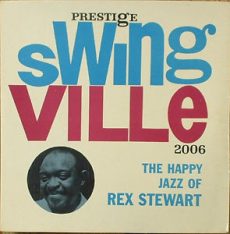
Jerome Darr was born on December 21, 1910 in Baltimore, Maryland. His first major professional affiliation was a jug band, the Washboard Serenaders. As a member of this group from 1933 through 1936, the guitarist enjoyed a well-received European tour.
During the 1940s he focused on work as a studio musician showing up on sessions from blues to bebop. His incredibly versatile and prolific career had him playing behind Frankie Lymon & The Teenagers.
Between 1935 and 1973 Jerome participated in roughly twenty jazz recording sessions. in total for this artist. Such a thin statistic indicates that the hefty, complete list of recordings Darr appears on include many other styles besides jazz.
He recorded and/or performed with the Marlowe Morris Trio, Paul Quinichette All-Stars and his Quartet, Rex Stewartand the Charlie Parker Quintet. In his final years, Darr was mostly swinging in the busy band of trumpeter Jonah Jones, in a sense coming full circle with the type of playing he had started out with.
Guitarist Jerome Darr died October 29, 1986 in Brooklyn, New York.

More Posts: guitar,history,instrumental,jazz,music
Daily Dose Of Jazz…
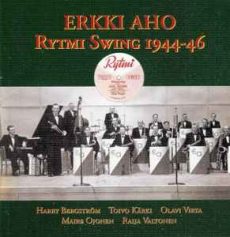
Erkki Vilhelm Aho was born December 10, 1918 in Helsinki, Finland. He led the Rytmi orchestra which was formed in 1938. In the orchestra, Olavi Virta and Raija Valtonen acted as soloists, the pianist was Toivo Kärki and another famous member was Pauli Granfelt.
Aho’s orchestra was one of the top Finnish orchestras. During the Continuation War, his orchestra consisted of 14 men before it was taken over in 1945 by drummer Osmo “Ossi” Aalto. In the spring of 1944, the orchestra recorded American evergreens arranged by Kärjen Syväri.
Trombonist, trumpeter and conductor Erkki Aho died on August 19, 2002.
More Posts: bandleader,conductor,history,instrumental,jazz,music,trombone,trumpet
Daily Dose Of Jazz…
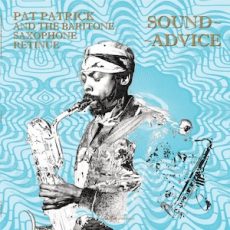
Pat Patrick was born Laurdine Kenneth Patrick Jr. on November 23, 1929 in East Moline, Illinois, to Laverne and Laurdine Kenneth Patrick. He first learned piano, drums, and trumpet as a child, and then switched to saxophones. He attended and studied music at DuSable High School in Chicago, Illinois where he met fellow students and future musicians bassist Richard Davis and saxophonists John Gilmore and Clifford Jordan. While still in school he was baritone saxophonist for the Regal Theater’s house band.
1949 saw Pat enrolled at Florida Agricultural and Mechanical University, but soon returned to Chicago to study at Wilson Junior College. Around 1950 he first played in one of Sun Ra’s bands as part of a trio and occasionally in Sun Ra’s Arkestra. By 1954 he became a regular member of the band. He moved to New York City in 1961, spent several years in the Arkestra’s communal residences in the East Village and Philadelphia, Pennsylvania.
He went on to play and record with John Coltrane, Blue Mitchell, Mongo Santamaría, Thelonious Monk, and Babatunde Olatunji. In 1972, Patrick co-founded the Baritone Saxophone Retinue, which featured Charles Davis and recorded two albums for Saturn Records.
He toured Europe with Sun Ra in 1970 and 1976, and was part of some other Arkestra performances in that decade, but he also devoted time to teaching at the State University of New York at Old Westbury.>
Baritone and alto saxophonist, bassist, flutist, percussionist and composer Pat Patrick, who is known for his 40-year association with Sun Ra, died from leukemia in Moline on December 31, 1991.

More Posts: bandleader,bass,composer,flute,history,instrumental,jazz,music,percussion,saxophone
Daily Dose Of Jazz…
Anthony K. Wright was born October 9, 1959 in London, England and began playing brass at school, before moving to clarinet at the age of 12, and later picked up the tenor saxophone. Turning professional in the early 1980s he played as a session musician and ran various rock bands in night clubs and on the gig circuit in London and South Wales. He maintained his interest in the clarinet, and in the early Nineties began playing jazz on the West Country ciecuit, whilst teaching Performing Arts at North Devon College.
Moving to Surrey late in the decade he is now widely known as a reeds teacher, with students ranging from adult beginners to advanced Grade 8 and Diploma-level specialists. His forte is improvisational jazz. leads a cool jazz band, Anthony’s AllStars, which features both clarinet and saxophone. He also plays with Riverside Shuffle Band and Vic Cracknell’s Swing Band, and other local bands.’
Tenor saxophonist Anthony Wright continues to perform and spends much of his time composing, arranging and creating his own recordings of what he has labeled intelligent pop..
Get a dose of the musicians and vocalists who were members of a global society integral in the making and preservation of jazz for over a hundred and twenty-five years…

More Posts: bandleader,clarinet,history,instrumental,jazz,music,saxophone