

Daily Dose Of Jazz…
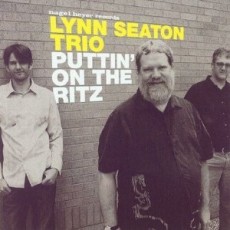
Lynn Seaton was born on July 18, 1957 in Tulsa, Oklahoma and began studying classical guitar vey young but by age nine switched to the bass. By the late 70s he was performing around the state and in 19080 he moved to Ohio with the Steve Schmidt Trio and later became the house bassist at the Blue Wisp Jazz Club in Cincinnati. This gig gave him the opportunity to accompany a host of big name jazz guest soloists every week.
Seaton joined Woody Herman in 1984 followed by the Count Basie Orchestra in ’85 and after two years began touring extensively with Tony Bennett and George Shearing. He went on to spend time touring with Monty Alexander and with the Jeff Hamilton Trio. Since the early ‘90s the bebop and swing bassist has free-lanced with the likes of Toshiko Akiyoshi, Ernestine Anderson, Buck Clayton, Al Cohn, Kenny Drew Jr., Scott Hamilton, Ken Peplowski, Wynard Harper, Frank Foster, Harry “Sweets” Edison, Mark Murphy, Joe Williams, Nancy Wilson, Mel Torme, Frank Wess and Blossom Dearie, just to name a few.
Rarely a leader, Lynn has recorded under his name as in 1991with “Bassman’s Basement” followed by “Solo Flights” and “Puttin’ On The Ritz” and as a sideman on over 100 recordings including Grammy-winning “Dianne Schuur and the Count Basie Orchestra”. He lived in New York from 1986 to 1998 and has performed at festivals worldwide such as Newport, North Sea, Kyoto and others. He currently teaches at the University of North Texas, home to one of the world’s largest jazz program.
More Posts: bass
Daily Dose Of Jazz…
Lennie Niehaus was born June 1, 1929 in St. Louis, Missouri. A musical family heralded a concert pianist sister and a father who was an excellent violinist who started his son on the violin at seven, then switched to the bassoon. At 13 he began learning the alto saxophone and clarinet.
Always interested in composing and writing music Lennie studied music in college and in 1946 began playing professionally with Herb Geller, Herbie Steward and Teddy Edwards in 1946. Six months later he joined Stan Kenton, then drafted in 1952 but two years late rejoined Kenton after his discharge.
Leaving Kenton in 1959, Niehaus began composing, moved back to Los Angeles and arranged for the King Sisters, Mel Torme, Dean Martin, and Carol Burnett. Three years later saw him orchestrating for film composer Jerry Fields, a relationship that yielded more than sixty TV shows and films.
He orchestrates his own pieces and never forgets his jazz roots in film, writing jazz and using jazz musicians like Marshall Royal, Bill Perkins, Pete Jolly, Mike Land, and Clint Eastwood. He was the musical director for the Charlie Parker bio-feature, Bird.
After many years of not playing his alto saxophone at all, Niehaus returned to performing, reportedly in top form. He continues to arrange, compose and play alto on the West Coast jazz scene.
Daily Dose Of Jazz…
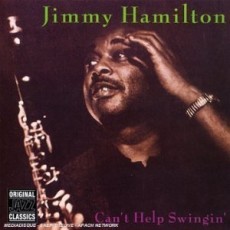
Jimmy Hamilton was born on May 25, 1917 in Dillon, South Carolina but grew up in Philadelphia. He learned to play piano and brass instruments and by the thirties he was playing the latter in local bands. He switched to clarinet and saxophone and by 1939 was playing with Lucky Millinder, Jimmy Mundy and Bill Doggett, then going to work for Teddy Wilson in 1940.
After a two-year stay with Wilson he played with Eddie Heywood and Yank Porter before replacing Barney Bigard in Duke Ellington’s orchestra in 1943. Over the next twenty-five years with Ellington his sound on saxophone had an R&B style while his clarinet was more precise, correct and fluent and it was during this time that he wrote some of his own material.
Leaving the Ellington orchestra, Hamilton played and arranged on a freelance basis, before spending the 1970s and 1980s in the Virgin Islands teaching music, occasionally returning to the U.S. for performances with John Carter’s Clarinet Summit. He retired from teaching but continued to perform with his own groups from 1989 to 1990.
The clarinetist, saxophonist, arranger, composer and music educator Jimmy Hamilton died in St. Croix, Virgin Islands at the age of seventy-seven on September 20, 1994.
Daily Dose Of Jazz…
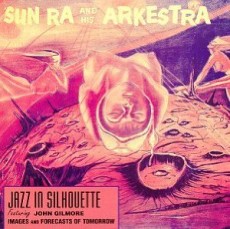
Sun Ra was born Herman Poole Blount in Birmingham, Alabama on May 22, 1914 and as a child was a skilled pianist. By twelve he was writing original songs and could sight read sheet music. With Birmingham being an important stop for touring musicians, during his childhood he was able to see famed musicians like Fletcher Henderson, Duke Ellington and Fats Waller.
By his teenage years he was producing from memory full transcriptions of big band songs he had heard and began playing semi-professional solo piano in ad hoc jazz bands. Attending Birmingham Industrial High School he took lessons the tutelage of John T. “Fess” Whatley, a demanding disciplinarian and producer of many professional musicians.
Claiming that he was of the “Angel Race” and not from Earth, but from Saturn, Sun Ra developed a complex persona of “cosmic” philosophies and lyrical poetry that made him a pioneer of “afro-futurism” as he preached awareness and peace above all. He abandoned his birth name and took on the name and persona of Sun Ra (Ra being the ancient Egyptian god of the sun).
From the mid-1950s to his death, Sun Ra led “The Arkestra”, an ensemble with an ever-changing lineup and names, asserting that the ever-changing name of his ensemble reflected the ever-changing nature of his music. His mainstream success was limited, but Sun Ra was a prolific recording artist and frequent live performer with music ranged from keyboard solos to big bands of over 30 musicians and music touching on virtually the entire history of jazz, from ragtime, swing, bebop, free improvisation, electronic and space music.
Sun Ra had several music periods during his lifetime – late 30s creating a conservatory workshop in his family home, conscientious objector during the war years, Chicago playing blues and jazz with Fletcher Henderson, Coleman Hawkins and Stuff Smith, New York Monday night gig at Slug’s Saloon and praise from Dizzy Gillespie and Thelonious Monk, and Philadelphia that would be the base of operations for the Arkestra until his death.
Sun Ra known for his “cosmic philosophy, musical compositions and performances was inducted into the Alabama Jazz Hall of Fame in 1979. The prolific Jazz composer, bandleader, piano and synthesizer player, poet and philosopher passed away on May 30, 1993, at 79.
Daily Dose Of Jazz…
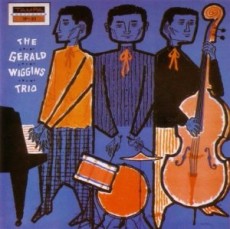
Gerald Wiggins was born on May 12, 1922 in New York City. He started classical piano lessons when he was four but by his teenage years became interested in jazz. He doubled on bass while attending High School & Art and for a period in the 40s accompanied Stepin’ Fetchit. Following this he worked and toured with the big bands of Les Hite, Louis Armstrong and Benny Carter. Stationed in Seattle while in the military he played in the local jazz clubs.
By the mid 40s Wiggins relocated to Los Angeles and played music for television and film. He has worked with Lena Horne, Kay Starr, Nat King Cole, Lou Rawls, Jimmy Witherspoon Helen Humes, Joe Williams, Ernie Andrews and Eartha Kitt to name a few. He also worked at the Hollywood studios as a vocal coach and worked with Marilyn Monroe and others.
Always a highly flexible pianist, Wiggins was comfortable in swing and bop settings with a consistently witty style filled with catchy riffs became his distinctive signature. His best-known recording as an organist was Wiggin’ Out but it was Wiggins’ trio work with Andy Simpkins and Paul Humphreys that is legendary. Pianist Gerald Wiggins passed away at the age of 86 on July 13, 2008.
More Posts: piano